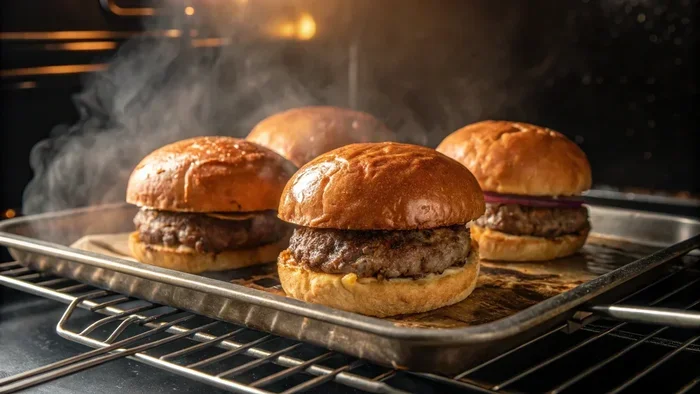
Do You Cover Hamburgers In The Oven For Better Results
Do you cover hamburgers in the oven? The answer depends on your goals. Covering traps moisture and keeps burgers juicy, while uncovering creates a crispy crust. Cooking hamburgers in the oven is simple, hands-off, and delivers consistent results. This guide walks you through when to cover, when to uncover, and how to get the best burger every time.
Do you cover hamburgers in the oven? If you have ever stood over a hot pan, flipping burgers and worrying about flare-ups, you know the struggle. Cooking hamburgers in the oven offers a simpler path to delicious, evenly cooked patties. But the big question remains: should you cover them or not?
The truth is, there is no single right answer. It depends on the thickness of your patty, your desired texture, and how much moisture you want to keep inside. Covering hamburgers in the oven traps steam and keeps the meat tender. Uncovering lets the surface brown and crisp up beautifully. In this guide, we break down everything you need to know. You will learn the best temperatures, timing, and techniques for oven-baked burger patties that taste like they came from your favorite grill.
Key Takeaways
- Covering hamburgers in the oven helps retain moisture and prevents drying out.
- Uncovering burgers near the end creates a delicious golden crust.
- The ideal oven temperature for hamburger patties is 375°F to 400°F.
- Always let your burger rest after cooking to lock in juices.
- Using foil or a lid works best for thicker patties, not thin ones.
- Oven-baked burgers are easier and more consistent than stovetop cooking.
- Hamburger internal temp should reach 160°F for safe ground beef.
📑 Table of Contents
- Why Do People Cover Hamburgers In The Oven?
- The Right Way To Cook Hamburgers In The Oven
- Should You Cover Hamburgers With Foil?
- Temperature And Timing For Perfect Oven Burgers
- Tips For Juicy Oven-Baked Hamburgers
- Common Mistakes To Avoid When Cooking Hamburgers In The Oven
- Oven-Baked Burgers vs. Grilled Burgers: Which Is Better?
- How To Reheat Hamburgers In The Oven Without Drying Them Out
- Expert Insights On Oven Hamburgers
- Frequently Asked Questions
- Final Thoughts: Do You Cover Hamburgers In The Oven?
Why Do People Cover Hamburgers In The Oven?
Many home cooks wonder about the hamburger oven method. Covering serves a specific purpose. It changes how heat interacts with the meat. Let us look at why this matters.
The Science Behind Covering Burgers
When you cover a dish in the oven, you create a mini steam environment. The heat circulates around the food. Then, the cover traps that heat and moisture. This has a direct effect on how your burger cooks. Covering meat in the oven slows down surface dehydration. The burger stays juicier for longer.
Without a cover, hot air flows freely over the patty. The surface loses moisture quickly. This leads to a drier exterior. But it also promotes browning and caramelization. That Maillard reaction is what gives burgers their rich, savory flavor and appealing color.
When Covering Makes Sense
You should cover hamburgers in the oven when:
- You are cooking thick patties over ¾ inch thick.
- You want a tender, juicy result throughout.
- You are cooking multiple burgers at once and want even doneness.
- You are reheating leftover burgers and want to restore moisture.
- You are using lean ground beef that dries out easily.
Thin patties, on the other hand, cook fast. Covering them can overcook the meat before the crust forms. So the decision really comes down to what kind of burger you want.
The Right Way To Cook Hamburgers In The Oven
Oven-baked burgers are one of the easiest meals to prepare. You do not need to stand over a hot grill. You do not need to flip patties every few seconds. The oven does most of the work for you. Here is how to do it right.
Step-By-Step Oven Burger Method
- Preheat your oven to 375°F or 400°F. Both temperatures work well for hamburger patties.
- Prepare your ground beef mixture. Use 80/20 ground beef for the best flavor and juiciness.
- Form patties about ¾ inch to 1 inch thick. Make a small dimple in the center with your thumb.
- Season generously with salt and pepper. Add garlic powder or paprika if you like.
- Place patties on a lined baking sheet or oven-safe skillet.
- Decide whether to cover or uncover based on your goals.
- Cook for 15 to 20 minutes, flipping halfway through.
- Check the hamburger internal temp with a meat thermometer.
- Let the burgers rest for 3 to 5 minutes before serving.
This method works whether you cover hamburgers in the oven or leave them uncovered. The steps stay the same. Only the timing and texture change slightly.
Do You Need To Flip Oven Burgers?
Yes, you should flip your hamburger patties at least once. Even in the oven, flipping ensures even cooking on both sides. It also helps the hamburger moisture distribute evenly through the patty. Without flipping, one side can overcook while the other stays underdone.
If you are in a rush, you can skip the flip. But for the best results, a single flip halfway through the cook time makes a big difference. Use a spatula and flip gently to keep the patty together.
Should You Cover Hamburgers With Foil?
This is the most common question about covering hamburgers in the oven. Aluminum foil is the go-to cover for many cooks. But does it always help? Let us explore.
Pros of Covering Hamburgers With Foil
- Retains moisture inside the patty, keeping it juicy.
- Promotes even cooking by distributing heat more uniformly.
- Prevents over-browning on the top surface.
- Speeds up cooking slightly for thicker patties.
- Reduces cleanup by catching drips and grease.
Cons of Covering Hamburgers With Foil
- Prevents crust formation on the surface of the burger.
- Can steam the meat instead of roasting it, leading to a boiled texture.
- Traps too much heat for thin patties, causing them to dry out.
- Blocks oven airflow, which affects how evenly the oven cooks.
The best approach is a hybrid method. Cover the patties for the first half of cooking. Then remove the foil for the last few minutes. This gives you the best of both worlds. You get a tender interior with a nicely browned exterior.
Quick Tips For Using Foil
- Use heavy-duty foil so it does not tear easily.
- Do not wrap the burger tightly in foil. Drape it loosely over the pan.
- Remove the foil during the last 5 minutes for a crispy top.
- If using a baking sheet, you can also use a metal lid instead of foil.
Temperature And Timing For Perfect Oven Burgers
Hamburger cooking time and temperature go hand in hand. Get these two things right, and your oven burger method will be a success every time. Here is a detailed breakdown.
Best Oven Temperatures For Hamburgers
Most oven hamburger patties cook best between 375°F and 400°F. Here is what each temperature does:
- 375°F: Slower, more gentle cook. Great for thick patties. Allows the center to cook evenly without overcooking the edges.
- 400°F: Faster cook with better browning. Ideal for medium-thin patties. Creates a nicer crust on the surface.
- 425°F: High heat for quick searing. Best for thin patties that are less than ½ inch thick.
Cooking Time Guide By Patty Thickness
| Patty Thickness | Covered Time | Uncovered Time | Total Time |
|---|---|---|---|
| ½ inch (thin) | Not recommended | 8–10 minutes | 8–10 minutes |
| ¾ inch (medium) | 10–12 minutes | 5–7 minutes | 15–19 minutes |
| 1 inch (thick) | 12–15 minutes | 5–8 minutes | 17–23 minutes |
These times assume a single layer of patties with no stacking. Always use a meat thermometer to check doneness. The hamburger internal temp should be 160°F for ground beef. This is the safe temperature recommended by food safety experts.
How To Check Burger Doneness Without a Thermometer
If you do not have a meat thermometer, you can use the touch test. Press the center of the burger gently with your finger or tongs:
- Very soft: The burger is rare or undercooked.
- Slightly springy: The burger is medium-rare to medium.
- Firm with slight give: The burger is medium-well.
- Very firm: The burger is well-done.
However, the touch test is not as reliable as a thermometer. For food safety, always aim for 160°F when cooking ground beef.
Tips For Juicy Oven-Baked Hamburgers
Even the best hamburger oven recipe can go wrong if you skip a few key steps. Follow these tips to get the juiciest, most flavorful oven burgers possible.
Choose the Right Ground Beef
The fat content of your ground beef matters a lot. 80/20 ground beef (80% lean, 20% fat) is the gold standard for juicy burgers. The fat renders during cooking and keeps the patty moist. Lean beef like 90/10 or 93/7 can work, but it dries out faster in the oven.
If you want to keep things healthy, you can add a small amount of olive oil to lean beef. This helps compensate for the lower fat content. But for the best flavor, stick with 80/20.
Do Not Overwork the Meat
When forming patties, handle the meat gently. Overworking the beef causes the proteins to tighten. This makes the burger dense and tough after cooking. Mix the seasoning in lightly. Form the patty quickly. Treat the meat with care, and it will reward you with a tender texture.
Make a Dimple in the Center
This is a pro trick for oven-baked burger patties. Press your thumb into the center of each patty to create a small indentation. The dimple prevents the burger from puffing up into a ball while it cooks. This ensures the patty stays flat and cooks evenly from edge to edge.
Season Generously
Oven cooking does not have the same intense sear as a grill. Because of this, you need to be generous with your seasoning. Salt and pepper are the basics. But you can also add:
- Garlic powder
- Onion powder
- Paprika or smoked paprika
- A pinch of cayenne for heat
- A dash of Worcestershire sauce mixed into the meat
Season the patties just before placing them in the oven. Salt too early can draw out moisture and affect the texture.
Let Burgers Rest After Cooking
Resting is one of the most overlooked steps in cooking hamburgers in the oven. When you pull the patties out, the juices are still moving around inside the meat. If you cut into them immediately, those juices run out onto the plate. The burger ends up dry.
Let your burgers rest for 3 to 5 minutes on a clean plate. Tent them loosely with foil if you like. This allows the juices to redistribute. When you finally take that first bite, the burger will be juicy and flavorful.
Add Cheese at the Right Time
If you are making cheeseburgers, add the cheese in the last 2 to 3 minutes of cooking. Place the cheese slice on top of the patty and let it melt. Then cover the oven or the pan with foil for a minute to help the cheese set. This works whether you cover hamburgers in the oven or not.
Common Mistakes To Avoid When Cooking Hamburgers In The Oven
Even experienced cooks make mistakes. Knowing what to avoid can save your burgers from turning out dry, tough, or undercooked.
Mistake 1: Using Lean Beef Without Adjusting
Lean ground beef has less fat. Fat is what keeps burgers juicy. When you cook lean beef in the oven without adjustments, it dries out quickly. If you must use lean beef, add a tablespoon of olive oil or broth to the pan. This adds moisture back into the cooking environment.
Mistake 2: Pressing Down on the Patties
Never press down on your burger patties with a spatula while they cook. This squeezes out the juices and fat. The burger becomes dry and flavorless. Let the patty cook naturally and it will hold its juices inside.
Mistake 3: Skipping the Flip
Some people think the oven does all the work. But flipping is still important. Without flipping, one side gets too brown while the other stays pale. A single flip halfway through ensures even color and even cooking throughout the patty.
Mistake 4: Cooking Burgers Straight from the Fridge
Cold patties take longer to cook in the center. This means the outside can overcook before the inside reaches 160°F. Take your patties out of the fridge 15 to 20 minutes before cooking. Let them come to room temperature. This promotes more even hamburger cooking and better results.
Mistake 5: Not Using a Baking Rack
Placing burgers directly on a flat baking sheet traps grease underneath. The patty sits in its own fat and can become soggy. A wire rack set over a baking sheet allows air to circulate. The bottom of the burger stays crisp, and the grease drips away cleanly.
Oven-Baked Burgers vs. Grilled Burgers: Which Is Better?
Baking vs grilling hamburgers is a debate that has gone on for decades. Both methods have their strengths. Let us compare them honestly.
| Factor | Oven-Baked Burgers | Grilled Burgers |
|---|---|---|
| Ease of Cooking | Very easy, hands-off | Requires attention and flipping |
| Moisture Retention | Excellent when covered | Good, but can dry on high heat |
| Crust and Flavor | Moderate, less smoky | Rich smoky flavor and char marks |
| Consistency | Very consistent results | Depends on grill temperature |
| Weather Dependent | No, cook indoors anytime | Yes, needs outdoor setup |
| Cooking Multiple Burgers | Easy, use multiple trays | Can be crowded on the grill |
| Fat Content | Fat drips away on rack | Fat drips through grill grates |
Oven-baked burgers win for convenience and consistency. Grilled burgers win for flavor and char. But here is the thing: you can get close to grilled flavor in the oven. Use a cast iron skillet inside the oven. The heavy metal conducts heat like a grill grate. It gives you those beautiful sear marks and a flavorful crust.
Also, if you use a smoked paprika or a little liquid smoke in your seasoning, you can mimic that smoky grilled taste. This makes oven burgers a great option even for barbecue lovers.
How To Reheat Hamburgers In The Oven Without Drying Them Out
Leftover burgers are a treat. But reheating them in the oven can be tricky. Too much heat and they turn into dry hockey pucks. The solution? Cover hamburgers in the oven when reheating.
Preheat your oven to 300°F. Place the leftover burger on a baking sheet. Cover it loosely with aluminum foil. The foil traps steam and gently warms the patty without drying it out. Heat for 8 to 10 minutes. Check the internal temperature. It should reach 165°F for safe reheating.
For a crispy bun, remove the foil for the last 2 minutes. This warms the bread without making it soggy. A quick spritz of water on the bun before reheating also helps keep it soft.
Expert Insights On Oven Hamburgers
Professional chefs and food scientists agree on a few key points about cooking hamburgers in the oven. Here is what the experts say.
Chef Maria Torres from the Culinary Institute of America recommends the hybrid approach. “Cover your patties for the first two-thirds of cooking. Then uncover for the final stretch. This gives you a juicy interior and a beautiful crust,” she says.
Food scientist Dr. James Chen explains the moisture factor. “When you cover a burger, the trapped steam creates a humid microclimate. This slows evaporation from the meat surface. The result is a burger that retains more of its natural juices.”
Both experts agree that a meat thermometer is essential. “Guesswork leads to inconsistent results,” Dr. Chen adds. “A simple $10 thermometer takes the guesswork out entirely.”
Frequently Asked Questions
Should I Cover Hamburgers In The Oven With Foil?
Covering hamburgers in the oven with foil works best for thick patties and when you want a juicy, tender result. Foil traps steam and keeps moisture inside the meat. Remove the foil during the last few minutes if you want a crispy top. For thin patties, skip the foil and let them cook uncovered for better browning.
What Is The Best Temperature To Cook Hamburgers In The Oven?
The best temperature for oven-baked burger patties is 375°F to 400°F. This range cooks the meat evenly without drying it out. Higher temperatures create a better crust, while lower temperatures are gentler for thicker patties. Always use a meat thermometer to ensure the internal temp reaches 160°F.
How Long Do You Cook Hamburgers In The Oven?
Hamburger cooking time depends on patty thickness. Thin patties (½ inch) take 8 to 10 minutes. Medium patties (¾ inch) take 15 to 19 minutes. Thick patties (1 inch) take 17 to 23 minutes. Flip the patties halfway through for even cooking. Always check the internal temperature for food safety.
Does Covering Hamburgers Make Them Juicier?
Yes, covering hamburgers in the oven helps retain moisture and keeps the meat juicier. The trapped steam slows down surface dehydration. This is especially helpful for lean ground beef or thick patties. However, covering the entire cook time can prevent crust formation, so uncover for the last few minutes for the best texture.
Can You Cook Frozen Hamburgers In The Oven?
Yes, you can cook hamburgers in the oven from frozen. Just add about 5 to 10 extra minutes to the cooking time. Cover the patties with foil for the first half to help them thaw and cook evenly. The hamburger internal temp must still reach 160°F. Use a meat thermometer to confirm doneness.
Why Did My Oven Hamburgers Turn Out Dry?
Dry oven burgers usually happen for a few reasons. You may have cooked them too long or at too high a temperature. Using lean ground beef without adjusting can also cause dryness. Overworking the meat when forming patties removes moisture. To fix this, use 80/20 beef, do not overcook, and let the patties rest after cooking to lock in juices.
Final Thoughts: Do You Cover Hamburgers In The Oven?
Do you cover hamburgers in the oven? Now you have the answer. It depends on what you want from your burger. If you want a juicy, tender patty, cover it. If you want a crispy, browned crust, leave it uncovered. The best approach is the hybrid method. Cover for most of the cook time, then uncover at the end for a perfect finish.
Cooking hamburgers in the oven is one of the simplest and most reliable methods you can use. It takes the guesswork out of grilling. It delivers consistent results every single time. And it works whether you are cooking for one or feeding a whole family.
Remember to use 80/20 ground beef, season generously, flip halfway through, and always check the hamburger internal temp. Let your burgers rest before serving. These small steps make a huge difference in the final result.
Now that you know the ins and outs of covering hamburgers in the oven, it is time to put this knowledge to work. Fire up your oven, grab some ground beef, and make the best burger you have ever had at home. Your taste buds will thank you.