How To Make Dressing In The Oven Perfectly Every Time
Making dressing in the oven is simpler than you think, and the results are far better than boxed alternatives. This guide walks you through every step, from choosing the right bread to pulling a golden, crispy finished dish out of your oven. You will learn ingredient secrets, timing tricks, and flavor variations that turn a simple side dish into the star of your table. Whether you are a beginner or a seasoned home cook, oven-baked dressing will become your go-to recipe.
Key Takeaways
- Oven dressing bakes evenly and develops a crispy top: This method gives you better texture than stovetop stuffing every time.
- Use day-old bread for the best results: Dried bread absorbs broth without turning mushy, creating the ideal crumbly base.
- The secret to flavor lies in your aromatics: Sautéed onions, celery, and fresh herbs build a deep, savory foundation.
- Broth ratio matters: Too much liquid makes dressing soggy; too little leaves it dry. Follow the recommended measurements carefully.
- Cover with foil for the first half, then uncover: This two-stage baking method ensures the inside cooks through while the top turns golden and crispy.
- Customize with mix-ins like sausage, mushrooms, or nuts: Creative variations let you tailor dressing to any holiday menu or personal taste.
- Rest your dressing for 10 minutes before serving: This lets it set and makes slicing and serving much easier.
📑 Table of Contents
- What Is Dressing And Why Bake It In The Oven
- Ingredients You Need For Perfect Oven Dressing
- Step-By-Step Instructions For Making Dressing In The Oven
- Tips For Getting The Perfect Texture And Flavor
- Variations And Creative Twists On Classic Dressing
- Common Mistakes To Avoid When Making Oven Dressing
- How To Store And Reheat Leftover Dressing
- Frequently Asked Questions
- Conclusion
What Is Dressing And Why Bake It In The Oven
Dressing is a beloved side dish made from cubed bread, vegetables, broth, and seasonings. Many people use the word “stuffing” interchangeably, but there is a small difference. Stuffing goes inside the turkey. Dressing bakes separately in a pan, right in the oven. Baking it outside the bird gives you more control over texture and flavor.
Oven-baked dressing has several big advantages. First, you can make a larger batch for a crowd. Second, the top layer gets crispy and golden, which is hard to achieve inside a turkey. Third, you can monitor the cooking process closely. No need to worry about undercooked stuffing or overcooked bird.
People across America make dressing for Thanksgiving, Christmas, and Sunday dinners. It is comfort food at its finest. And the best part? You do not need to be a professional chef to nail it. A little patience and a hot oven are all you need.
The oven does the heavy lifting here. Dry heat circulates around the pan, toasting the bread cubes and melting the cheese on top. This creates layers of texture that no stovetop method can match. If you have always wondered how to make dressing in the oven, you are in the right place.
Ingredients You Need For Perfect Oven Dressing
Great dressing starts with great ingredients. You do not need anything fancy, but choosing quality items makes a real difference. Here is what you will need for a classic savory dressing.
The Bread Base
The bread is the foundation of your dressing. White sandwich bread works well for a soft, mild flavor. For a heartier option, try cornbread, sourdough, or French bread. The key is to use day-old bread that has dried out slightly. Fresh bread contains too much moisture and will make your dressing soggy.
Cut your bread into cubes about one inch in size. Spread them on a baking sheet and let them air-dry for a few hours. You can also toast them lightly in the oven at 250°F for 10 minutes. This step ensures even absorption of the broth later on.
The Aromatics
Onions and celery form the flavor base of most dressings. Dice them finely so they cook evenly and distribute throughout the dish. Butter is the traditional fat for sautéing these vegetables. It adds richness and helps them soften without burning.
Garlic is a welcome addition. Two or three cloves, minced finely, add a subtle warmth. Some cooks also like to add a small amount of grated apple or chopped pear for a touch of sweetness. This balances the savory elements beautifully.
The Liquid And Seasonings
Chicken broth or turkey broth is the standard liquid for dressing. It adds depth and moisture without overwhelming the bread. Vegetable broth works well for a vegetarian version. You will need enough to moisten the bread without pooling at the bottom of the pan.
Fresh sage is the classic herb for dressing. Thyme and rosemary add complexity. Poultry seasoning is a convenient shortcut that combines several herbs in one blend. Salt and black pepper are essential. A pinch of poultry seasoning goes a long way toward building that familiar holiday flavor.
Step-By-Step Instructions For Making Dressing In The Oven
Now that you have your ingredients ready, it is time to put them together. Follow these steps closely, and your dressing will come out perfect every single time.
Step 1: Prepare The Pan
Grease a 9×13-inch baking dish with butter or cooking spray. This prevents sticking and makes cleanup a breeze. A glass or ceramic dish works best because it distributes heat evenly. Metal pans can cause the edges to brown too quickly.
If you want extra crispy edges, you can lightly press the bread mixture into the corners of the dish. This creates more surface area for browning. But do not pack it too tightly. You want room for the heat to reach every piece of bread.
Step 2: Sauté The Vegetables
Melt two tablespoons of butter in a skillet over medium heat. Add your diced onions and celery. Cook for five to seven minutes until they turn soft and translucent. Add the minced garlic and cook for one more minute. Do not rush this step. Properly sautéed vegetables release their sugars and develop a deeper flavor.
Transfer the vegetables to a large mixing bowl. Let them cool for a few minutes before combining with the bread. Hot vegetables can start cooking the bread prematurely, which affects the final texture.
Step 3: Combine The Ingredients
Add your dried bread cubes to the bowl with the vegetables. Toss everything gently with your hands or a large spoon. Pour the broth over the mixture slowly. Start with two cups and add more if needed. The bread should feel moist but not soaked.
Add your herbs, salt, and pepper. Toss again until everything is evenly distributed. At this point, taste a small piece of bread from the mixture. This is your chance to adjust seasoning before baking. Most people find they need a little more salt than they think.
Step 4: Bake In The Oven
Preheat your oven to 350°F. Cover the baking dish tightly with aluminum foil. This traps steam and helps the inside of the dressing cook through without drying out the top.
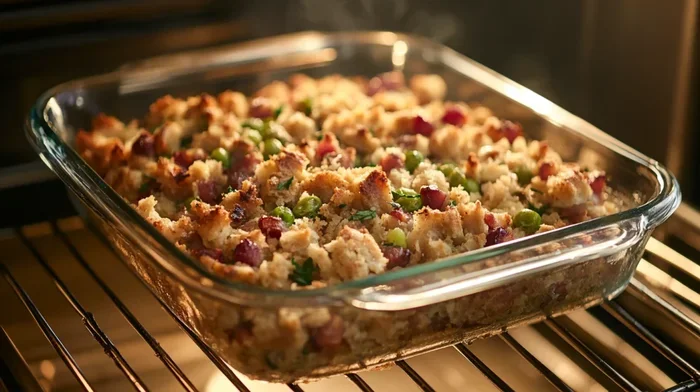
Bake for 25 minutes covered. Then remove the foil and bake for another 15 to 20 minutes uncovered. The top should turn golden brown and slightly crisp. You will know it is done when a knife inserted in the center comes out hot and the edges are pulling slightly away from the pan.
Step 5: Rest And Serve
Let the dressing sit for 10 minutes after removing it from the oven. This resting period allows it to set and makes serving much easier. Use a spatula to scoop portions into bowls or onto a serving dish.
Garnish with a sprinkle of fresh parsley or chopped chives for color. Serve it alongside roasted turkey, chicken, or pork. It pairs beautifully with gravy, so have some extra on hand.
Tips For Getting The Perfect Texture And Flavor
Making great dressing is about the details. Small adjustments can take your dish from good to outstanding. Here are some tried-and-true tips from experienced home cooks.
Use The Right Broth Temperature
Warm your broth before adding it to the bread mixture. Cold broth slows down the absorption process and can leave some pieces dry. Gently heat the broth on the stove until it is warm, not boiling. This helps the bread soak it up evenly.
Do Not Over-Saturate
Too much broth is the most common mistake people make. The bread should be moist but not swimming. If you add too much liquid, the dressing will be soggy and fall apart when you try to serve it. Start with less broth and add more gradually. You can always add, but you cannot take away.
Let The Bread Dry Out
Fresh bread has too much water content. Stale bread absorbs broth like a sponge without becoming mushy. If you forget to leave your bread out overnight, spread the cubes on a sheet pan and bake them at 300°F for 10 minutes. This quick trick works every time.
Add Cheese For Extra Richness
A cup of shredded cheddar or gruyere cheese stirred into the mixture adds incredible flavor. The cheese melts during baking and creates a rich, creamy layer between the bread cubes. This is a favorite variation in many Southern kitchens.
Make Ahead And Reheat
You can prepare dressing the night before and refrigerate it. Cover the pan tightly with plastic wrap and foil. In the morning, remove the plastic wrap, add a splash of extra broth, and bake as directed. The flavors meld overnight, making the taste even better.
Quick Tips
- Always preheat your oven before placing the dressing inside. A cold start leads to uneven cooking.
- Use a meat thermometer to check that the center of the dressing reaches 165°F for food safety.
- Grease the pan well to prevent sticking and make cleanup effortless.
- Taste before baking to adjust salt and seasoning levels.
- Let it rest for at least 10 minutes after baking for cleaner slices.
Variations And Creative Twists On Classic Dressing
Once you master the basic recipe, you can get creative. Different cultures and regions have their own beloved takes on oven-baked dressing. Here are some popular variations to try.
Sausage And Sage Dressing
This is a classic Southern favorite. Brown one pound of breakfast sausage in a skillet and drain the fat. Crumble the cooked sausage and mix it into your dressing before baking. The smoky, savory pork pairs perfectly with sage and thyme. Add a little extra broth since the sausage absorbs some liquid.
Mushroom And Onion Dressing
Sauté sliced mushrooms with extra onions for an earthy, rich flavor. Cremini mushrooms work best because they have a meaty texture. This variation is wonderful for vegetarian holiday tables. Add a splash of white wine to the mushrooms while sautéing for an extra layer of depth.
Cornbread Dressing
Replace white bread with crumbled cornbread for a sweet, Southern-style dressing. The cornbread gives the dish a slightly crumbly texture and a hint of sweetness. Many families consider cornbread dressing the only acceptable version for Thanksgiving. It pairs beautifully with roast turkey and cranberry sauce.
Nutty Dressing With Pecans Or Walnuts
Toast a cup of chopped pecans or walnuts and fold them into the mixture right before baking. The nuts add a satisfying crunch and a toasty flavor. This variation works especially well with sausage and mushroom dressings. The nuts also make the dish feel more elegant and special.
Apple And Celery Dressing
Dice a tart green apple and add it to your sautéed vegetables. The apple breaks down slightly during baking and adds a bright, fruity note. This works beautifully with sage and a touch of maple syrup drizzled on top before the final 10 minutes of baking.
Common Mistakes To Avoid When Making Oven Dressing
Even experienced cooks can slip up when making dressing. Knowing what to avoid saves time and prevents disappointment.
Using Fresh Bread
Fresh bread is full of moisture and will not absorb broth properly. The result is a wet, dense mess that never crisps up in the oven. Always use bread that has been sitting out for at least a day, or toast it briefly before using.
Skipping The Sauté Step
Raw onions and celery will not soften properly during baking. They will remain hard and unpleasant to bite into. Always sauté your aromatics first. This step builds the flavor foundation of your entire dish.
Opening The Oven Too Often
Every time you open the oven door, heat escapes and the cooking temperature drops. This extends the baking time and can lead to uneven results. Resist the urge to peek. Trust the process and check the dressing only once or twice.
Using Too Much Broth
This cannot be stressed enough. Over-saturated dressing turns to mush. Start with the recommended amount and add more only if the bread seems very dry. The bread should be moist, not swimming.
Forgetting To Rest
Hot dressing right out of the oven is tempting to scoop immediately. But it needs time to set. Cutting into it too soon causes it to fall apart and lose its shape. A short rest makes all the difference in presentation and texture.
Not Seasoning Enough
Bread is bland on its own. It needs salt, pepper, and herbs to shine. Under-seasoned dressing tastes flat no matter how good your other ingredients are. Taste as you go and do not be shy with the seasoning.
Expert Insight
Many professional chefs recommend using a combination of bread types for the most complex flavor. Try mixing white bread cubes with a few pieces of cornbread or sourdough. This creates a more interesting texture and a deeper, layered taste that guests will rave about.
How To Store And Reheat Leftover Dressing
Leftover dressing is a treasure. It tastes even better the next day as the flavors continue to develop. Here is how to store and reheat it properly.
Let the dressing cool completely before storing. Place it in an airtight container and refrigerate within two hours. Properly stored, it keeps in the fridge for up to four days. You can also freeze it for up to three months. Wrap the dish tightly in plastic wrap and aluminum foil, or use freezer-safe bags.
To reheat, cover the dressing with foil and warm it in the oven at 325°F for 15 to 20 minutes. This restores the crispy top while heating the inside evenly. Microwaving works in a pinch, but it tends to make the top soggy. If you must use a microwave, do it in short bursts and stir between them.
For individual portions, you can reheat small amounts in a skillet on the stovetop over medium-low heat. Add a splash of broth to keep things moist. This method gives you a crispy edge on the bottom, which is absolutely delicious.
Frequently Asked Questions
Can I use store-bought bread for oven dressing?
Yes, store-bought bread works perfectly fine. In fact, many people prefer it because it is already partially dried out. Look for artisan-style loaves or bread from the bakery section for the best results. Avoid very soft, preservative-heavy white bread as it can make the dressing too dense.
What is the difference between stuffing and dressing?
The main difference is how they are cooked. Stuffing is cooked inside the cavity of a turkey or chicken. Dressing is baked separately in a pan, usually in the oven. The ingredients are similar, but dressing gives you more control over texture and allows you to make a larger batch for the whole table.
How long does it take to make dressing in the oven?
Total time is about one hour. You will spend roughly 15 minutes preparing the ingredients, 10 minutes sautéing the vegetables, and 40 to 45 minutes baking the dressing. The resting time adds about 10 more minutes. So plan for roughly 75 minutes from start to finish.
Can I make dressing ahead of time and bake it later?
Absolutely. You can prepare the mixture up to 24 hours in advance and refrigerate it. When ready to bake, remove it from the fridge 30 minutes before it goes in the oven. Add an extra splash of broth since the bread will have absorbed more liquid overnight. Cover with foil and bake as directed.
Why is my oven dressing soggy in the middle?
The most common cause is too much broth or using fresh, moist bread. Another possibility is not baking it long enough uncovered. Make sure to remove the foil for the final 15 to 20 minutes so the top can crisp and excess moisture can escape. Also, check that your oven temperature is accurate with a thermometer.
Can I add eggs to my oven dressing?
Yes, eggs act as a binder and help the dressing hold together better when sliced. Beat two eggs and mix them into the broth before pouring over the bread. This technique is popular in Southern-style dressing recipes. The eggs create a custard-like texture that is rich and satisfying.
Conclusion
Making dressing in the oven is one of the most rewarding things you can do in the kitchen. It is simple, customizable, and delivers results that store-bought versions simply cannot match. From the moment you cube the bread to the moment you pull that golden, steaming pan out of the oven, you are creating something special.
The beauty of oven-baked dressing is its flexibility. You can stick with a classic recipe or experiment with sausage, mushrooms, cornbread, or nuts. Every variation brings something new to the table, and your family will look forward to trying each version.
Remember the key principles: use dried bread, sauté your vegetables, balance your broth, and bake uncovered at the end for that perfect crispy top. Avoid the common mistakes, and you will have a side dish that earns compliments and requests for seconds.
Start with the basic recipe and build your confidence. Once you have mastered the fundamentals, you can make it your own. Oven dressing is a dish that brings people together, whether it is on Thanksgiving Day or a simple Tuesday night dinner. So preheat your oven, gather your ingredients, and make your best dressing yet. You have got this.