How To Properly Make French Press Coffee The Right Way
Making French press coffee the right way is simpler than you think. This guide walks you through every step, from choosing the right coffee grounds and water temperature to mastering the plunge for a rich, full-bodied cup. Whether you are a beginner or a seasoned coffee lover, you will find practical tips to elevate your coffee brewing game.
There is something magical about a morning cup of French press coffee. The rich aroma, the full body, and the deep flavor make it stand out from any other brewing method. Unlike drip machines or single-serve pods, a French press gives you complete control over every step of the process. If you have been wondering how to make the perfect cup at home, you are in the right place.
This guide covers everything you need to know about coffee brewing with a French press. We will walk through the equipment you need, the right grind size, the perfect water temperature, and the exact steeping time. By the end, you will know exactly how to make French press coffee that tastes like it came from a specialty café.
If you are new to immersion brewing, do not worry. The process is straightforward and forgiving. You do not need expensive equipment or years of practice. Just follow along, and you will be enjoying a perfect cup in no time.
Key Takeaways
- Use coarse grounds: A proper coarse grind prevents over-extraction and keeps your coffee smooth and clean.
- Master the water temperature: The ideal range is between 195°F and 205°F for the best flavor extraction.
- Follow the 1:15 brew ratio: One part coffee to fifteen parts water delivers a balanced and rich cup every time.
- Steep for exactly four minutes: Timing matters greatly for achieving the right coffee strength and flavor profile.
- Clean your press after every use: Proper maintenance removes built-up oils and keeps your coffee tasting fresh.
- Try different coffee beans: Medium to dark roasts work best in a French press for a full, robust taste.
📑 Table of Contents
What Is a French Press and How Does It Work
A French press is a simple coffee maker that uses immersion to extract flavor from ground beans. You add hot water to the grounds, let them sit for a few minutes, and then press a metal filter down through the liquid. The result is a rich, full-bodied cup of coffee with all the natural oils and flavors intact.
Unlike paper filter methods, a French press does not remove the fine oils and micro-grounds. This is what gives the coffee its distinctive heavy mouthfeel and deep flavor. Many coffee lovers prefer this method because it lets the true character of the beans shine through.
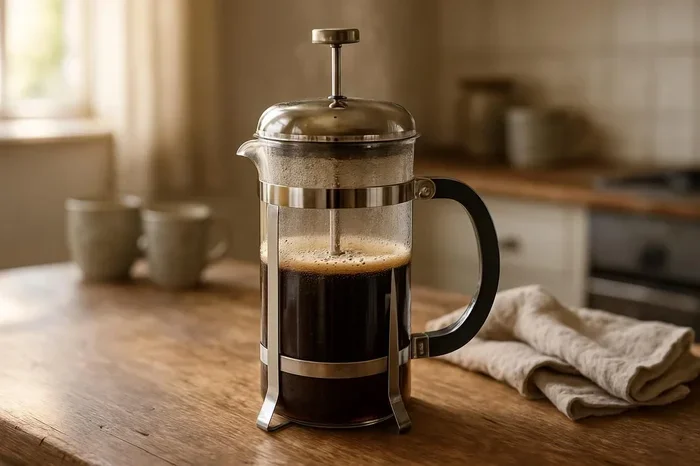
The basic design has not changed much since the device was invented. It consists of a glass or stainless steel carafe, a plunger with a metal mesh filter, and a lid. That is it. No electricity, no pods, no complicated parts. Just pure coffee brewing at its finest.
Why Choose French Press Over Other Methods
There are many ways to brew coffee at home. Each method has its own strengths. Here is why the French press stands out:
- Full flavor extraction: The immersion method pulls out more oils and flavors than paper filters.
- Simple operation: No buttons, no settings, no programming required.
- Affordable: A good French press costs less than most electric machines.
- Portable: You can use it anywhere with hot water, even on a camping trip.
- Eco-friendly: No paper filters or plastic pods to throw away.
If you enjoy a strong, rich cup of coffee without the hassle of machines, the French press is hard to beat. It is one of the most satisfying ways to start your day.
What You Need to Make French Press Coffee
The French Press Itself
Choose a press that fits how much coffee you drink. A small press holds about two cups, while larger ones can make four or more. Glass carafes look great and let you watch the coffee steep, but stainless steel keeps your drink warmer longer. Both work perfectly well for making great coffee.
Coarse Coffee Grounds
The grind size is one of the most important factors in French press coffee. You need a coarse, even grind that looks similar to sea salt. If the grounds are too fine, they will slip through the mesh filter and make your coffee gritty. Too coarse, and the water will not extract enough flavor, leaving you with weak, sour coffee.
Many people buy pre-ground coffee, but grinding your own beans right before brewing gives the best results. Freshly ground coffee releases more aroma and flavor. If you do not have a grinder, look for pre-ground options labeled specifically for French press.
Good Quality Water
Water makes up over 98 percent of your cup of coffee. So the quality of your water matters. Use filtered or spring water whenever possible. Avoid distilled water, which tastes flat, and tap water with strong chlorine flavors. Clean, fresh water lets the true taste of your beans come through.
A Kitchen Scale and Timer
While not strictly required, a small kitchen scale and a timer will transform your brewing consistency. Measuring by weight instead of scoops ensures you use the right ratio every time. A timer helps you hit the perfect steeping window without guessing.
Step-by-Step Guide to Making French Press Coffee
Now comes the fun part. Follow these steps carefully, and you will brew a fantastic cup of French press coffee every single time.
Step 1: Heat Your Water
Bring your water to a boil, then let it rest for about 30 seconds. The ideal water temperature for French press coffee is between 195°F and 205°F. If you do not have a thermometer, just wait a short time after boiling. Water that is too hot will scorch the grounds and create bitter flavors. Water that is too cool will under-extract and leave your coffee tasting sour.
Step 2: Add Coffee Grounds
Add your coarse grounds to the empty French press. The standard brew ratio is one part coffee to fifteen parts water. For a single cup, that means about three tablespoons of grounds to one and a half cups of water. Adjust to your taste from there. More grounds make stronger coffee, fewer grounds make it milder.
Step 3: Pour Water and Stir
Start pouring the hot water over the grounds slowly. Make sure all the coffee is saturated. Give it a gentle stir with a wooden spoon or chopstick. This helps the grounds expand and releases trapped gases for a more even extraction.
Step 4: Let It Steep
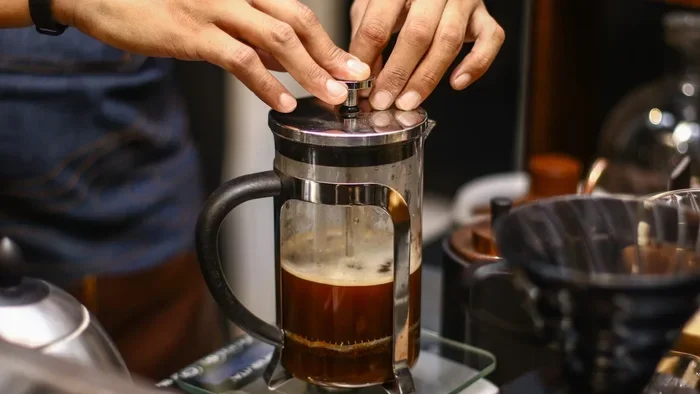
Place the lid on the press and let the coffee steep for exactly four minutes. This is the sweet spot for most beans. You can adjust slightly based on your preference. Three minutes gives a lighter, brighter cup, while five minutes produces a bolder, stronger brew.
Step 5: Press and Serve
After four minutes, press the plunger down slowly and steadily. Do not rush this step. A slow, even press keeps the grounds at the bottom and prevents sediment from mixing into your cup. Pour the coffee immediately into your mug or mug. French press coffee continues to extract even after pressing, so leaving it in the press will make it over-extracted and bitter.
Common Mistakes That Ruin French Press Coffee
Even experienced coffee drinkers make mistakes that affect the taste. Here are the most common errors and how to avoid them.
Using the Wrong Grind Size
This is the number one mistake people make. A fine grind will slip through the mesh and create a muddy, gritty cup. Always use a coarse grind. If your coffee tastes sandy, your grind is too fine.
Using Water That Is Too Hot
Boiling water burns coffee grounds and creates harsh, bitter flavors. Let your water cool slightly before pouring it over the grounds. The difference between a great cup and a terrible one often comes down to just a few degrees.
Steeping Too Long or Too Short
Timing is critical in coffee brewing. Under-steeping gives you weak, sour coffee. Over-steeping makes it bitter and astringent. Stick to the four-minute rule and adjust from there based on your taste preferences.
Skipping the Clean
Old coffee oils build up inside the press over time. These rancid oils taint the flavor of fresh coffee. Clean your French press thoroughly after every use. Disassemble the plunger, wash all parts with warm soapy water, and rinse well.
For a deeper clean, some people like to run their press through the dishwasher occasionally. Just make sure you disassemble it first. A clean press means better-tasting coffee every morning.
Pouring and Letting It Sit
French press coffee is best enjoyed right after pressing. Do not let it sit in the carafe for more than a few minutes. The coffee continues to extract and will become increasingly bitter. If you are not ready to drink immediately, pour it into a separate warm mug.
Tips for the Best French Press Coffee
Once you have the basics down, these tips will take your coffee to the next level.
Preheat Your Press
Before adding coffee and water, pour hot water into the empty press and let it sit for a minute. This warms the glass or stainless steel and helps maintain a stable brewing temperature. Discard the water before you start brewing.
Experiment with Different Beans
Not all coffee beans work equally well in a French press. Medium to dark roasts bring out the best flavors with this method. They produce a rich, full-bodied cup with chocolatey and nutty notes. Light roasts can work too, but they tend to taste more acidic and fruity in a press.
Bloom Your Grounds
Before adding all the water, pour just enough to saturate the grounds and wait 30 seconds. This is called blooming. It allows the coffee to release carbon dioxide, which leads to a more even extraction and a smoother taste.
Use the Right Ratio
The 1:15 ratio is a great starting point, but feel free to adjust. If you like stronger coffee, try 1:14. If you prefer a lighter cup, go to 1:16. The beauty of the French press is that you control every variable. Experiment until you find your perfect balance.
Store Your Beans Properly
Fresh beans make a noticeable difference. Store them in an airtight container in a cool, dark place. Avoid the refrigerator, where moisture and odors can affect the flavor. Buy beans in small batches and grind them just before brewing for the best results.
If you are exploring different coffee methods, you might enjoy learning how to make coffee without a filter or machine using other simple techniques. The French press shares the same philosophy of letting the beans speak for themselves.
Cleaning and Maintaining Your French Press
A well-maintained French press lasts for years and keeps your coffee tasting great. Here is how to care for yours properly.
After each use, disassemble the plunger assembly. Remove the mesh filter and the metal rod. Wash all parts with warm water and mild dish soap. A small bottle brush works wonders for cleaning the inside of the mesh filter. Rinse everything thoroughly to remove all soap residue.
For a deep clean, soak the metal parts in a mixture of baking soda and warm water once a week. This removes built-up coffee oils that can go rancid. You can also use a paste of baking soda and water to scrub away stubborn residue.
If you use your French press daily, give it a thorough cleaning at least once a week. Check the mesh filter for any damage or wear. A torn filter lets fine grounds pass through and affects the taste of your coffee.
When drying, let the parts air dry completely before reassembling. Moisture trapped in the press can lead to mold or stale flavors. A clean, dry French press is the foundation of great-tasting coffee every morning.
While you are in the kitchen preparing your morning routine, you might also enjoy pairing your coffee with a warm breakfast. For a cozy weekend treat, try making bacon in the oven without parchment paper alongside your fresh brew. The crispy, savory bacon pairs beautifully with a rich cup of French press coffee.
Conclusion
Making French press coffee at home is one of the simplest and most rewarding things you can do in the kitchen. With just a few minutes and basic tools, you can brew a cup that rivals anything from your favorite café. The key is mastering the fundamentals: the right grind size, the proper water temperature, the correct ratio, and the right steeping time.
Once you get the hang of it, you will never go back to other methods. The rich, full-bodied flavor and satisfying ritual of pressing your own coffee is hard to replace. Start with the steps in this guide, experiment with different beans and ratios, and make the process your own.
Remember, great coffee is not about expensive equipment. It is about understanding the basics and paying attention to the details. Your morning cup of French press coffee deserves that care and attention. So go ahead, grab your press, and brew the perfect cup today.
Frequently Asked Questions
What is the best grind size for French press coffee?
The best grind size is coarse, similar to sea salt. A coarse grind prevents fine particles from passing through the metal filter and keeps your coffee smooth and sediment-free. If you do not have a grinder, look for pre-ground coffee specifically labeled for French press.
How long should I steep French press coffee?
The standard steeping time is four minutes. This allows for optimal flavor extraction without over-extracting the grounds. You can adjust to three minutes for a lighter cup or five minutes for a stronger brew. Using a timer ensures consistent results every time.
Can I reuse French press coffee grounds?
Technically you can, but the second brew will be much weaker and lack flavor. The grounds have already released most of their oils and compounds during the first steep. For the best taste, always use fresh grounds for each cup.
What temperature should the water be for French press coffee?
The ideal water temperature is between 195°F and 205°F. Water that is boiling hot will scorch the coffee and create bitter flavors. If you do not have a thermometer, let boiling water cool for about 30 seconds before pouring it over the grounds.
How do I clean my French press properly?
Disassemble the plunger after each use and wash all parts with warm soapy water. Use a bottle brush to clean the mesh filter. For a deep clean, soak the metal parts in a baking soda solution once a week to remove built-up coffee oils. Always let parts air dry before reassembling.
Is French press coffee stronger than drip coffee?
French press coffee often tastes stronger because the metal filter allows more oils and fine particles to pass through. This gives the coffee a heavier body and richer mouthfeel. The actual caffeine content depends on the ratio of coffee to water, not the brewing method itself.
=== INTERNAL LINKS ===