How Much Citric Acid To Descale Your Coffee Machine
Using the right amount of citric acid is the key to removing limescale and keeping your coffee machine running smoothly. Most machines need just one to two tablespoons of citric acid per descaling cycle. This natural, affordable descaling solution works better than vinegar and protects your brew quality.
There is nothing worse than a coffee machine that starts brewing slowly or tasting off. Over time, mineral deposits build up inside your machine. These deposits are called limescale. They come from the minerals in your water. Left unchecked, limescale can ruin the taste of your coffee. It can also shorten the life of your machine.
The good news is that descaling is simple. And one of the best ways to do it is with citric acid. It is natural, inexpensive, and works incredibly well. But the real question is how much citric acid to descale coffee machine. Using too little won’t remove the buildup. Using too much can cause problems. In this guide, we will walk you through the exact amounts, the process, and everything else you need to know.
Citric acid is a weak organic acid found naturally in citrus fruits like lemons and limes. It is completely safe for food use. You can buy it as a white powder in most grocery stores or online. When you dissolve it in water and run it through your coffee machine, it dissolves the mineral deposits that clog your system.
Many people reach for white vinegar instead. But citric acid has some clear advantages. First, it does not leave a lingering smell. Vinegar can leave a sour odor that lingers in your machine for days. Second, citric acid does not affect the taste of your coffee. Third, it is a descaling agent that works faster and more thoroughly on mineral deposits.
Citric acid descaling is also gentler on your machine’s internal parts. It does not corrode seals or gaskets the way some harsh chemicals can. This makes it a top choice for coffee maker maintenance among home baristas and professionals alike.
Key Takeaways
- Use 1 to 2 tablespoons of citric acid per cycle: This is the standard ratio for most coffee machines and works effectively to dissolve mineral buildup.
- Citric acid is safer than vinegar: It descales without leaving behind a harsh smell or taste that can affect your coffee flavor.
- Descale every 1 to 3 months: Frequency depends on how often you brew and how hard your water is in your area.
- Always run a rinse cycle afterward: Flushing with fresh water removes any residual acid and keeps your machine ready to brew.
- Hard water speeds up scale buildup: If you live in a hard water area, you may need to descale more frequently.
- Never use more than recommended: Excess citric acid can damage internal components and affect taste.
📑 Table of Contents
How Much Citric Acid To Descale Your Coffee Machine
Getting the ratio right is the most important part of the process. The amount you need depends on a few factors, including the size of your machine and how bad the buildup is.
The Standard Ratio
For most standard coffee machines, the descaling ratio is simple. Use one to two tablespoons of citric acid per 32 ounces of water. That is about one cup of water. This ratio works for drip coffee makers, single-serve machines, and espresso makers.
If you have a large machine with a big water reservoir, you can scale up. For a full reservoir of 60 to 80 ounces, use two to three tablespoons of citric acid. Always start with the lower amount. You can add more if needed, but you cannot take it away.
Adjusting for Machine Size and Severity
Not all machines are the same. Here is a quick breakdown of how much citric acid you need based on your machine type.
- Single-serve machines (Keurig, Nespresso): Use 1 tablespoon per 12 ounces of water.
- Standard drip coffee makers: Use 1 to 2 tablespoons per full reservoir.
- Espresso machines: Use 1 tablespoon per 16 ounces of water for the internal system.
- Pod or capsule machines: Use 1 teaspoon per 8 ounces of water.
If you have not descaled in a long time, the buildup may be heavy. In that case, you can run the solution through twice. Let the first cycle finish, then run a fresh batch of the citric acid solution through again.
What If You Have Hard Water?
Hard water contains more minerals like calcium and magnesium. These minerals cause limescale to form faster. If you live in a hard water area, you may need to descale more often. You might also want to use the higher end of the citric acid range. Hard water scale removal requires a bit more effort, but citric acid handles it well.
Regular descaling is one of the best things you can do for your coffee equipment care. It keeps your machine running efficiently and your coffee tasting great.
Step-by-Step: The Descaling Process
Now that you know how much citric acid to use, let us walk through the process. It is easier than you might think.
What You Will Need
Before you start, gather these items. You will need citric acid powder, clean water, a measuring spoon, and a clean cloth or sponge. That is it. No special tools required.
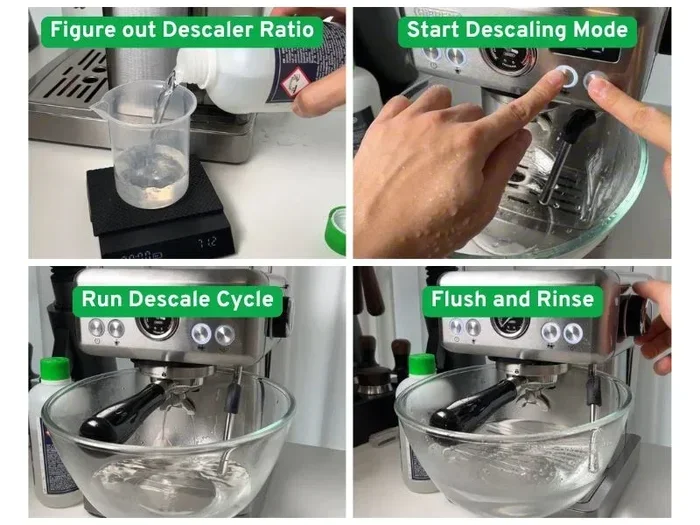
Step 1: Empty the Water Reservoir
Start by removing any leftover water from the reservoir. Dump out old coffee grounds if applicable. You want a clean, empty machine before you begin.
Step 2: Mix the Solution
Measure your citric acid. Add one to two tablespoons to the water reservoir. Fill the reservoir with fresh, clean water up to the max line. Stir gently to dissolve the powder.
Step 3: Run a Brew Cycle
Place a large mug or container on the drip tray. Start a brew cycle without any coffee grounds. Let the citric acid solution run through the machine completely. This is your cleaning cycle.
Step 4: Let It Sit
Once the solution has run through, let it sit in the machine for 15 to 30 minutes. This gives the acid time to break down the limescale inside the tubes and heating element.
Step 5: Run Rinse Cycles
After the soak, run two to three full cycles with fresh clean water. This rinses out all the citric acid solution. Taste the water from the final rinse. If it still tastes sour, run one more rinse cycle.
Step 6: Wipe Down the Exterior
While the machine is rinsing, wipe down the exterior with a damp cloth. Clean the drip tray and any removable parts. This keeps the whole machine fresh.
How Often Should You Descale?
Descaling frequency depends on how much you use your machine and the quality of your water. Here are some general guidelines.
- Daily use: Descale every 4 to 6 weeks.
- Occasional use: Descale every 2 to 3 months.
- Hard water areas: Descale every 3 to 4 weeks.
- Soft water areas: Descale every 2 to 3 months.
Pay attention to the signs your machine gives you. A slower brew time is a clear signal. Strange noises during brewing can also mean mineral buildup. If your coffee starts tasting bitter or off, that is another sign. Some machines have a descaling light or indicator that tells you when it is time.
Just like you would clean the bottom tray of your toaster oven to keep it working properly, regular maintenance of your coffee machine keeps it in top shape. The same principle applies to all kitchen appliances.
Common Mistakes to Avoid
Even with the right amount of citric acid, people make mistakes. Here are the most common ones and how to avoid them.
Using Too Much Citric Acid
More is not better. Using too much citric acid can leave a sour taste in your machine. It can also irritate the internal seals over time. Stick to the recommended amounts. The descaling agent works effectively at the right ratio.
Skipping the Rinse Cycle
This is a big one. Some people run the citric acid solution and then immediately brew coffee. This is a mistake. Always run at least two rinse cycles. Any leftover acid will affect the taste of your next pot.
Using Boiling Water
Do not use boiling water to dissolve the citric acid. Hot water is fine, but boiling water can activate the acid too aggressively. Use warm or room-temperature water for mixing.
Ignoring the Water Filter
If your machine has a water filter, replace it before descaling. A dirty filter can interfere with the descaling process. It can also trap the citric acid solution, which is not ideal.
Not Reading Your Machine’s Manual
Every machine is a little different. Some manufacturers have specific descaling instructions. Always check your manual first. This ensures you do not void your warranty.
Tips for Keeping Your Coffee Machine Limescale-Free
Prevention is always easier than cure. Here are some simple tips to keep your machine running well between descaling sessions.
- Use filtered water: Filtered water has fewer minerals, which means less limescale buildup over time.
- Empty the reservoir after each use: Do not leave standing water in the machine overnight.
- Wipe down the machine weekly: A quick wipe keeps dust and residue from building up.
- Descale on a regular schedule: Set a reminder on your phone so you do not forget.
- Use the right water temperature: Brewing at the correct temperature helps prevent mineral deposits from forming as quickly.
Think of it like maintaining any other kitchen appliance. Whether you are learning how to use a brand new oven or keeping your coffee machine in top shape, regular care makes all the difference.
Descaling your coffee machine does not have to be complicated. With the right amount of citric acid and a simple process, you can keep your machine running like new. The key is consistency. Make it part of your regular kitchen routine.
The amount of citric acid you need is straightforward. One to two tablespoons per cycle covers most machines. Adjust for size and severity of buildup. And always rinse thoroughly afterward.
Your coffee tastes better when your machine is clean. The flavors come through cleaner and brighter. Your machine also lasts longer. This saves you money in the long run.
So grab your citric acid, follow the steps in this guide, and give your coffee machine the care it deserves. A clean machine brews a better cup. That is a fact every coffee lover can appreciate.
Frequently Asked Questions
Can I use lemon juice instead of citric acid?
Yes, you can, but it is less effective. Lemon juice contains citric acid, but in a much lower concentration. You would need a lot more lemon juice to get the same descaling power. Pure citric acid powder is more concentrated and easier to measure accurately.
Is citric acid safe for all coffee machine types?
Citric acid is safe for most coffee machines, including drip makers, espresso machines, and single-serve brewers. However, always check your machine’s manual first. Some manufacturers recommend specific descaling products, and using citric acid may void certain warranties.
What happens if I use too much citric acid?
Using too much citric acid can leave a sour or acidic taste in your machine. It may also irritate rubber seals and gaskets over time. If you accidentally use too much, run extra rinse cycles to flush out the excess before brewing again.
How do I know if my coffee machine has limescale buildup?
Common signs include a slower brew time, strange noises during brewing, and a change in coffee taste. You may also notice white or chalky deposits around the water outlet or inside the reservoir. If you see any of these signs, it is time to descale.
Can I reuse the citric acid solution?
No, you should not reuse the solution. After the first pass, the solution has already dissolved minerals and is less effective. Always mix a fresh batch for each descaling session to get the best results.
How long does the descaling process take?
The entire process takes about 30 to 45 minutes. This includes mixing the solution, running the brew cycle, letting it sit for 15 to 30 minutes, and completing two to three rinse cycles. It is a quick and easy way to keep your machine in great shape.