How Long To Cook Chestnuts In The Oven For Best Results
Cooking chestnuts in the oven is easy when you know the right time and temperature. Most recipes call for roasting at 425°F for about 15 to 20 minutes. This guide covers everything you need to achieve perfectly roasted chestnuts every single time.
Roasting chestnuts in the oven is one of the most satisfying kitchen experiences you can have. The warm, nutty aroma that fills your home is hard to beat. Whether you are preparing them for a holiday meal or just snacking on a cold evening, knowing the right cooking time makes all the difference.
The short answer to how long to cook chestnuts in the oven is about 15 to 20 minutes at 425 degrees Fahrenheit. But there is so much more to it than just setting a timer. The type of chestnuts you use, whether you soak them first, and how you score them all affect the final result. This guide walks you through every step so you get perfectly roasted chestnuts every time.
Key Takeaways
- Roasting Time: Chestnuts typically need 15 to 20 minutes at 425°F for the best results.
- Scoring Is Essential: Always score the flat side of each chestnut before roasting to prevent bursting.
- Fresh vs. Packaged: Fresh chestnuts may need a bit more prep time than vacuum-sealed ones.
- Peeling While Warm: The skins come off much easier while the chestnuts are still hot.
- Oven Variance Matters: Every oven runs slightly different, so start checking at the 12-minute mark.
- Soaking Adds Moisture: A quick soak in hot water helps the chestnuts steam better inside the oven.
- Storage Tips: Store roasted chestnuts in an airtight container for up to a week.
📑 Table of Contents
- Why Roast Chestnuts In The Oven?
- How Long To Cook Chestnuts In The Oven
- Step By Step Guide To Roasting Chestnuts
- Common Mistakes To Avoid
- Best Oven Temperature For Chestnuts
- Serving Ideas And Uses For Roasted Chestnuts
- Storing Roasted Chestnuts
- Expert Tips For Perfect Chestnuts Every Time
- Health Benefits Of Chestnuts
- Frequently Asked Questions
- Conclusion
Why Roast Chestnuts In The Oven?
Roasting chestnuts in the oven is the most popular method for good reason. It gives you even heat distribution and consistent results. You do not need any special equipment either. A basic baking sheet and a few simple tools are all you need.
The Flavor Difference
Oven-roasted chestnuts have a rich, sweet, and slightly smoky flavor that is hard to replicate with other methods. The dry heat of the oven caramelizes the natural sugars inside the nut. This creates a depth of flavor that boiling or microwaving simply cannot match.
Many people say that oven-roasted chestnuts taste like a holiday tradition. They bring back warm memories of family gatherings and cozy evenings. Once you learn the right technique, you will want to make them all the time.
Convenience And Control
Using the oven gives you full control over the roasting process. You can check the chestnuts at any time and adjust the temperature if needed. This level of control is especially helpful if you are roasting a large batch.
Unlike a stovetop pan or a microwave, the oven lets you roast many chestnuts at once. You can easily fit two pounds of chestnuts on a single baking sheet. This makes the oven the best choice for feeding a crowd or meal prepping for the week.
How Long To Cook Chestnuts In The Oven
The standard cooking time for chestnuts in the oven is 15 to 20 minutes at 425 degrees Fahrenheit. However, several factors can change this time. Let us break down the different scenarios so you know exactly what to expect.
Standard Roasting Time
For most fresh chestnuts, 15 to 20 minutes is the sweet spot. The shells should be open and the meat inside should be tender and creamy. You will know they are done when you see the shells splitting open and the edges starting to char slightly.
Here is a quick reference for oven-roasted chestnuts:
- 425 degrees Fahrenheit: 15 to 20 minutes
- 400 degrees Fahrenheit: 20 to 25 minutes
- 375 degrees Fahrenheit: 25 to 30 minutes
Higher temperatures cook faster but require closer attention. Lower temperatures give you more time to monitor them without the risk of burning.
Factors That Affect Cooking Time
Not all chestnuts are the same size. Some are larger and need a few extra minutes. Others are smaller and may be done in 12 minutes. The age of the chestnuts also matters. Older chestnuts tend to be drier and may roast faster than fresh ones.
Your oven type plays a role too. Convection ovens circulate hot air, which can reduce cooking time by a few minutes. Standard ovens may need the full 20 minutes. Always start checking at the 12-minute mark to avoid overcooking.
How To Tell When Chestnuts Are Done
Knowing when your chestnuts are ready is important. You want them roasted through but not burnt. Look for these signs:
- The shells have split open along the score marks
- The edges of the shell are slightly darkened or charred
- The nuts feel firm but yield slightly when pressed through the shell
- A strong, sweet, nutty smell fills the kitchen
If you are unsure, pull one out and let it cool for a minute. Peel back the shell and check the meat. It should be golden and tender, not hard or rubbery. Once you find the right timing for your oven, it becomes second nature.
Step By Step Guide To Roasting Chestnuts
Follow these steps to get the best results every time. The process is simple but a few small details make a big difference.
Step 1: Choose Your Chestnuts
Start with fresh, high-quality chestnuts. Look for nuts that feel heavy for their size. Avoid any that are lightweight or have cracks in the shell. Fresh chestnuts should feel firm and smooth.
If you buy vacuum-sealed chestnuts from the store, they are usually ready to go. Fresh chestnuts from a farmers market or a tree may need a bit more prep work. Either way, the roasting process is the same.
Step 2: Rinse And Score
Rinse the chestnuts under cold water to remove any dirt or debris. Then pat them dry with a clean towel. Now comes the most important step: scoring.
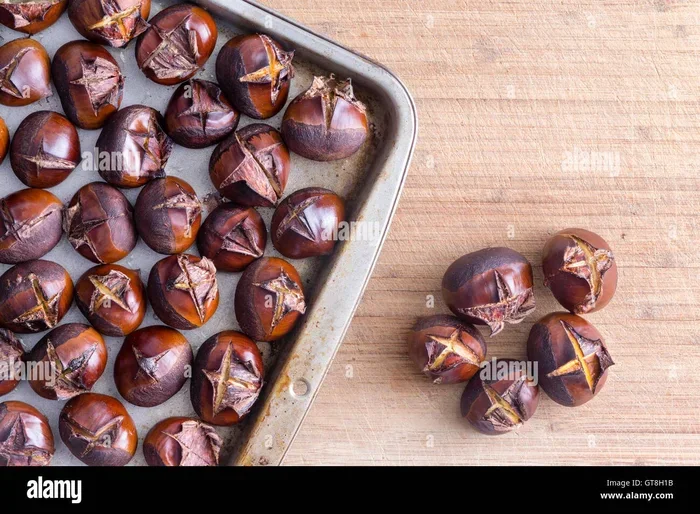
Use a sharp knife to make a shallow cut along the flat side of each chestnut. The cut should be about a quarter inch deep. This allows steam to escape during roasting and prevents the nuts from exploding in the oven.
Do not skip this step. Many people learn this the hard way when their oven fills with the smell of exploding nuts. A simple X-shaped cut works best for even roasting.
Step 3: Soak The Chestnuts
Soaking is optional but highly recommended. Place the scored chestnuts in a bowl of hot water for 10 to 15 minutes before roasting. This adds moisture to the nuts and helps them steam inside the oven.
The result is a creamier, more tender chestnut. Some people skip this step and still get good results, but soaking is a small effort that pays off. It also makes the nuts easier to peel after roasting.
Step 4: Roast In The Oven
Preheat your oven to 425 degrees Fahrenheit. Spread the scored chestnuts on a baking sheet in a single layer. Make sure they are not touching or overlapping. This ensures even heat exposure on all sides.
Place the baking sheet on the middle rack of the oven. Set a timer for 15 minutes. At the 12-minute mark, start checking them. You want to hear a gentle popping sound, which means the shells are splitting open.
If the shells have not opened by the 15-minute mark, give them another 3 to 5 minutes. Do not walk away from the oven. Chestnuts can go from perfectly roasted to burnt very quickly.
Step 5: Steam And Peel
Once the chestnuts are out of the oven, transfer them to a bowl and cover with a clean towel for 5 minutes. This steaming step softens the inner skin and makes peeling much easier.
While they are still warm, peel away the shell first, then remove the thin brown skin underneath. Use your fingers or a small knife. The chestnuts should be soft and creamy inside.
If the nuts are too hot to handle, let them cool for a minute or two. But do not wait too long. The skins become harder to remove as the chestnuts cool down.
Common Mistakes To Avoid
Even experienced cooks make mistakes when roasting chestnuts. Here are the most common ones and how to avoid them.
Skipping The Score
This is the number one mistake people make. Without a score, the steam has nowhere to go. The chestnuts will burst inside the oven, making a mess and potentially burning. Always take the extra 30 seconds to score each nut.
Overcrowding The Pan
Putting too many chestnuts on the baking sheet blocks airflow. This leads to uneven roasting. Some nuts will be done while others are still raw. Spread them out in a single layer for the best results.
Roasting Too Long
It is easy to go from perfectly roasted to charcoal in just a couple of minutes. Set a timer and stay nearby. Overcooked chestnuts become bitter and dry, which ruins the flavor.
Peeling Too Late
Waiting too long to peel the chestnuts makes the inner skin stick tightly to the meat. The warmth right after roasting is the perfect time to peel. Use a towel to protect your hands and work quickly.
Using Old Or Dry Chestnuts
Old chestnuts have less moisture, which means they roast faster and can turn bitter. Always check the freshness of your chestnuts before roasting. Fresh chestnuts should feel heavy and look plump.
Best Oven Temperature For Chestnuts
The recommended temperature for roasting chestnuts is 425 degrees Fahrenheit. This high heat quickly opens the shells and cooks the meat inside. It also creates a nice light char on the outside that adds flavor.
However, some people prefer a lower temperature for a longer roast. At 400 degrees Fahrenheit, you get a gentler roast that is less likely to burn. At 375 degrees Fahrenheit, you have more control but need to add extra time.
Here is a quick comparison of oven temperatures and their effects:
- 425 degrees Fahrenheit: Fastest roast, 15 to 20 minutes. Best for experienced cooks who can watch the oven closely.
- 400 degrees Fahrenheit: Balanced roast, 20 to 25 minutes. Great for beginners who want a safety margin.
- 375 degrees Fahrenheit: Slow and gentle roast, 25 to 30 minutes. Good for very large batches or older chestnuts.
Convection ovens work well at 400 degrees Fahrenheit because the fan circulates the heat evenly. If you have a convection oven, reduce the temperature by 25 degrees from the standard recommendation.
Always preheat your oven before adding the chestnuts. A cold oven throws off the timing and leads to uneven cooking. Take the extra five minutes to let it heat up fully.
Serving Ideas And Uses For Roasted Chestnuts
Once you have mastered how long to cook chestnuts in the oven, it is time to enjoy them. Roasted chestnuts are delicious on their own, but there are many other ways to use them.
Add them to stuffing for a classic holiday side dish. Toss them into pasta with butter and sage for a cozy fall meal. You can also blend them into soups for a creamy, nutty flavor. Chestnut flour is another great use for any leftovers.
For a simple snack, warm roasted chestnuts with a sprinkle of sea salt. They pair wonderfully with hot cocoa or mulled wine during the colder months. The possibilities are endless once you have the roasting technique down.
Storing Roasted Chestnuts
If you have leftover roasted chestnuts, store them properly to keep them fresh. Let them cool completely before storing. Place them in an airtight container and keep them in the refrigerator.
Roasted chestnuts last up to five days in the fridge. For longer storage, you can freeze them. Spread them on a baking sheet to freeze individually, then transfer to a freezer bag. They will keep in the freezer for up to three months.
Reheat frozen chestnuts in the oven at 350 degrees Fahrenheit for about 5 minutes. This brings back their warmth and texture without drying them out.
Expert Tips For Perfect Chestnuts Every Time
Here are some pro tips that will elevate your chestnut roasting game:
- Buy chestnuts in the fall: They are freshest and most flavorful during autumn months.
- Use a sharp knife: A dull knife can slip and cause injury. A sharp paring knife gives you clean, precise scores.
- Do not wash before roasting: Moisture on the shell before roasting can create steam pockets that cause uneven cooking.
- Shake the pan halfway through: This redistributes the chestnuts for more even roasting.
- Keep a bowl of water nearby: If a chestnut does catch fire briefly, a quick splash will extinguish it safely.
- Taste test early: Pull one out at 10 minutes and check the texture. This helps you calibrate for your specific oven.
These small adjustments make a noticeable difference in the quality of your roasted chestnuts. Once you get into a rhythm, the whole process becomes quick and effortless.
Health Benefits Of Chestnuts
Chestnuts are not just delicious. They also offer several health benefits that make them a great addition to your diet. Unlike most nuts, chestnuts are low in fat and high in carbohydrates. This makes them a unique and nutritious snack option.
They are a good source of fiber, which supports digestive health. Chestnuts also contain vitamin C, which is rare for nuts. They provide important minerals like potassium and magnesium that support heart health.
Roasting preserves most of these nutrients. Eating roasted chestnuts is a tasty way to get these nutritional benefits without any added oils or fats. They are a naturally healthy snack that the whole family can enjoy.
Frequently Asked Questions
Can You Roast Chestnuts Without Scoring Them?
You can, but it is not recommended. Without scoring, the steam builds up inside the shell and the chestnuts will burst. This can create a mess in your oven and lead to uneven cooking. Always score each chestnut before roasting for the best results.
How Do You Know If Chestnuts Are Bad?
Bad chestnuts feel lightweight and hollow when you shake them. They may also have a dark or moldy spot on the shell. Fresh chestnuts should feel heavy and look plump. If they smell sour or off, discard them immediately.
Can You Reuse Roasted Chestnuts?
Yes, roasted chestnuts can be reused in many recipes. Chop them up and add them to salads, stuffings, or grain bowls. You can also blend them into a paste for spreads or desserts. Just make sure they are stored properly in the refrigerator.
Why Are My Chestnuts Still Hard After Roasting?
This usually means they were not roasted long enough or the oven temperature was too low. Try increasing the temperature by 25 degrees and roasting for an additional 5 minutes. Older or drier chestnuts may also need longer cooking times.
Is It Better To Soak Chestnuts Before Roasting?
Soaking is not required, but it is highly recommended. A 10 to 15 minute soak in hot water adds moisture and helps the chestnuts steam more evenly. The result is a creamier texture and easier peeling after roasting.
Can You Cook Chestnuts In An Air Fryer?
Yes, air fryers work well for chestnuts. Set the temperature to 400 degrees Fahrenheit and cook for 10 to 15 minutes. Shake the basket halfway through. The cooking time is shorter because the air fryer circulates heat more intensely than a traditional oven.
Conclusion
Now you know everything about how long to cook chestnuts in the oven. The key is keeping the temperature at 425 degrees Fahrenheit and roasting for 15 to 20 minutes. Score the shells, soak if you like, and watch them closely as they roast.
Roasting chestnuts is a simple yet rewarding process. Once you get the timing down, you will be able to make them effortlessly every time. The warm, sweet flavor of perfectly roasted chestnuts is truly hard to beat.
Start with fresh chestnuts, follow the steps in this guide, and enjoy the process. Whether you are cooking for the holidays or just treating yourself, oven-roasted chestnuts are a delicious and satisfying choice. Grab a baking sheet, fire up your oven, and give it a try today.