Oven Smells Bad When Turned On Here Is What You Should Do
When your oven smells bad when turned on, it’s usually a sign of food residue, grease buildup, or a more serious issue like a wiring problem. This guide walks you through the most common causes, quick fixes, and safety steps to eliminate the odor and prevent it from coming back. You’ll learn how to identify the smell, clean your oven effectively, and know when to call a professional for help.
You fire up the oven to bake a simple meal, and then it hits you. A sharp, unpleasant odor fills the kitchen. Your oven smells bad when turned on, and it can be really alarming. The good news is that most causes are fixable. This guide explains exactly why your oven stinks, what each smell means, and how to get rid of it for good. We’ll also cover safety steps so you can cook with confidence again.
Bad oven odors are more than just annoying. They can signal grease buildup, food spills, or even electrical problems. Ignoring them could lead to bigger issues or safety hazards. That’s why it’s so important to pay attention to the type of smell and act quickly. In the sections below, we break down every common cause and give you clear, actionable steps to fix the problem.
Key Takeaways
- Identify the smell type: burning plastic, electrical, or gas odors each point to a different cause.
- Clean food residue and grease: a quick oven cleaning often removes the source of bad smells.
- Run a self-cleaning cycle carefully: it can burn off residue but may release smoke if not done right.
- Check for gas leaks immediately: a gas smell requires urgent action and professional inspection.
- Inspect heating elements and wiring: damaged parts can cause burning or electrical odors and need replacement.
- Prevent future odors: regular maintenance, using oven liners, and proper ventilation keep your oven fresh.
- Call a pro when in doubt: safety first—don’t ignore persistent smells or electrical issues.
📑 Table of Contents
Why Does Your Oven Smell Bad When Turned On?
Every time you turn on the oven, heat activates whatever is inside or on the surfaces. A brand-new oven might release a plastic or chemical smell from manufacturing residues. An older oven often holds baked-on grease, food bits, and carbonized grime. When you heat those up, they burn and release a foul odor. Sometimes the smell is a warning sign of a wiring fault or a gas leak. Understanding the root cause is the first step to a fresh kitchen.
Common Odor Types and What They Mean
Not all bad smells are the same. The scent you notice can tell you a lot about what’s going on inside your oven. Here are the most common odor types and their likely meanings:
- Burning plastic or chemical smell: Often from new oven packaging, a melting plastic part, or insulation off-gassing.
- Burnt food or smoky smell: Caused by food residue, grease drips, or crumbs that have been baked onto the oven walls.
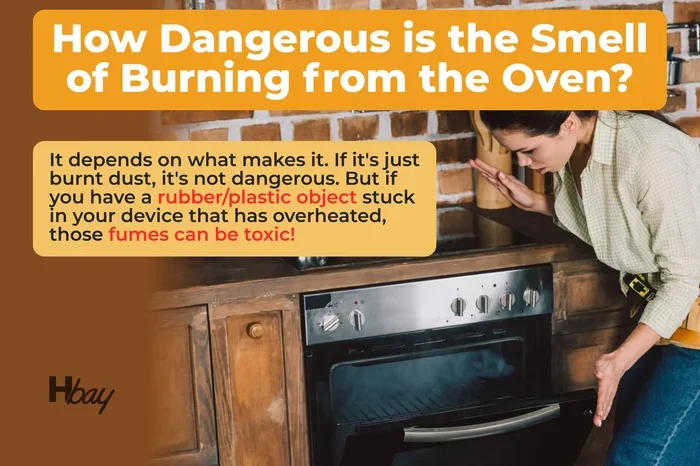
- Electrical burning or metallic smell: Points to overheating wiring, a faulty heating element, or a motor issue.
- Rotten eggs or sulfur smell: A strong indicator of a natural gas leak, which requires immediate attention.
- Gas odor (rotten egg or sulfur): Utility companies add a scent to natural gas so leaks are easy to detect.
- Dusty or musty smell: Usually just dust burning off the heating elements or inside the oven cavity.
If you notice a gas smell, stop reading and go to the section on gas leaks right away. Safety always comes first.
Common Causes of Bad Oven Smells
Several things can make your oven smell bad when turned on. Let’s look at each cause in detail so you can pinpoint the problem.
Food Residue and Grease Buildup
This is the number one reason for a bad oven smell. Every time you cook, tiny food particles and grease splatter onto the oven walls, the bottom, and the racks. Over time, this residue builds up and turns into a sticky, carbonized layer. When you preheat the oven, that baked-on gunk burns and releases a smoky, acrid odor. Even a small spill can create a strong smell if it’s been there for a while.
Grease buildup is especially common in ovens that aren’t cleaned regularly. The smell often gets worse when you bake fatty foods like pizza or roasted meat. A dirty oven not only smells bad but can also affect the taste of your food. Regular oven cleaning is the best way to prevent this.
Burning Plastic or Electrical Wiring Issues
A burning plastic smell is never normal. It can come from a few different sources. In a new oven, it might be the insulation or protective coating on internal parts. This usually goes away after a few uses. But if you have an older oven, a plastic smell could mean a wire casing is melting, a plastic part is touching a hot element, or an electrical component is failing.
Electrical burning smells are a serious safety hazard. They often indicate a wiring issue, a short circuit, or an overheating motor. If you see sparks, smoke, or a persistent electrical burning odor, turn off the oven immediately and unplug it if safe to do so. Do not use the oven again until a professional has inspected it.
Gas Leaks and Gas Odors
If your oven smells like rotten eggs or sulfur, you might have a gas leak. Natural gas is odorless, but gas companies add a chemical called mercaptan so leaks are easy to smell. A gas odor inside the oven or near the stove is a red flag. It could be a faulty gas valve, a loose connection, or a damaged gas line.
A gas leak is a safety emergency. It can lead to fires, explosions, or carbon monoxide poisoning. If you suspect a gas leak, do not turn on any electrical switches, light a match, or use the oven. Open windows, leave the house, and call your gas company or emergency services right away.
New Oven Smell and Off-Gassing
Brand-new ovens often have a strange smell the first few times you use them. This is called off-gassing. During manufacturing, ovens are exposed to heat, oils, and chemicals that leave a residue on the interior walls and heating elements. When you first turn on the oven, the heat burns off this residue, releasing a plastic or chemical odor. The new oven smell is usually harmless and goes away after a few self-cleaning cycles or a thorough wipe-down.
To speed up the process, you can run the oven empty at a high temperature for 30 minutes with the windows open. This helps ventilate the fumes and removes the manufacturing residues faster. If the smell persists after several uses, check the manual or contact the manufacturer.
Self-Cleaning Cycle Problems
Many modern ovens have a self-cleaning feature that uses extreme heat to burn off food residue and grease. While this is effective, it can sometimes cause a temporary bad smell. During the self-cleaning cycle, the oven reaches very high temperatures, which can produce smoke and a strong burning odor. This is normal if the oven is heavily soiled. However, if the smell is overwhelming or you see excessive smoke, you might have too much grease buildup or a piece of food that has carbonized into a hard, smelly lump.
It’s best to run the self-cleaning cycle when you can ventilate the kitchen well. After the cycle finishes, wipe out the ash with a damp cloth. Never use chemical cleaners inside the oven during a self-cleaning cycle. The high heat can cause toxic fumes.
Faulty Heating Element or Thermostat
The heating element is the part that gets red-hot to cook your food. Over time, it can crack, blister, or burn out. A damaged element might glow unevenly, produce a burning smell, or cause food to cook unevenly. A faulty thermostat can also cause the oven to overheat, which leads to burning odors and potentially a safety hazard. If you notice an element that looks damaged or a smell that only comes from one part of the oven, a replacement is usually needed.
Oven Smell Comparison Table
Use this table to quickly identify what your oven odor might mean and what action to take.
| Smell Type | Likely Cause | What to Do |
|---|---|---|
| Burnt food or smoky | Food residue, grease buildup, crumbs | Deep clean the oven; remove racks and scrub; use a self-cleaning cycle |
| Burning plastic | New oven off-gassing, melting plastic part, damaged wire casing | Ventilate; if persistent, turn off and call a professional |
| Electrical burning or metallic | Overheating wiring, faulty element, motor issue | Turn off immediately; do not use; call an electrician or repair tech |
| Rotten eggs or sulfur | Natural gas leak | Leave the house; call gas company or emergency services; do not use any switches |
| Dusty or musty | Dust on heating elements, moisture, mold | Wipe interior with a damp cloth; run empty at low heat |
| Chemical or new product | New oven residue, packaging materials left inside | Remove all packaging; run empty at 400°F for 30 minutes with ventilation |
How to Get Rid of the Bad Smell
Once you know the cause, you can take the right steps to remove the odor. Here are the most effective methods for eliminating bad oven smells.
Step-by-Step Deep Cleaning
A thorough cleaning is the best way to remove food residue and grease that cause burning smells. Follow these steps for a deep clean:
- Remove the oven racks and any loose food debris.
- Make a paste of baking soda and water. Spread it on the inside walls, avoiding the heating elements.
- Let the paste sit for at least 12 hours or overnight.
- Wipe away the paste with a damp cloth. Use a sponge for stubborn spots.
- For tough grease, spray a mix of white vinegar and water. The fizzing action helps lift grime.
- Clean the racks separately in hot soapy water or the bathtub.
- Wipe the inside dry and replace the racks.
This method is safe, inexpensive, and works for most oven types. It removes the source of the bad smell without harsh chemicals.
Natural Deodorizing Methods
After cleaning, you can use natural deodorizers to leave your oven smelling fresh. Here are a few ideas:
- Vinegar steam: Place a bowl of white vinegar on the oven floor and heat at 200°F for 10 minutes. The steam absorbs lingering odors.
- Lemon water: Squeeze a lemon into a bowl of water and heat it in the oven for 15 minutes. This leaves a citrusy fresh scent.
- Baking soda box: Leave an open box of baking soda inside the oven overnight (turned off). It absorbs odors naturally.
These methods are great for maintenance and work well after a deep clean. They help keep your oven smelling neutral.
When to Use the Self-Cleaning Feature
The self-cleaning feature is powerful, but use it wisely. Run it only when the oven is heavily soiled and you can open a window or turn on the exhaust fan. The high heat will burn off carbonized food, but it can produce a lot of smoke. After the cycle, let the oven cool completely, then wipe out the ash with a damp cloth. Never use oven cleaner during a self-cleaning cycle. The heat can cause toxic fumes that are dangerous to breathe.
When to Call a Professional
Some oven smells are beyond a DIY fix. You should call a professional technician if you notice any of the following:
- A persistent electrical burning smell that doesn’t go away after cleaning.
- A gas odor that you can still detect after ventilating the kitchen.
- Visible damage to the heating element, such as cracks, blistering, or sparking.
- The oven trips the circuit breaker or shows error codes when you turn it on.
- You suspect a wiring fault or a problem with the control board.
Professional repair ensures the problem is fixed safely. Trying to fix electrical or gas issues yourself can be dangerous and may void your warranty. A qualified technician can inspect the oven, replace faulty parts, and give you peace of mind.
Preventing Future Bad Oven Smells
Prevention is the best way to keep your oven odor-free. A few simple habits can make a big difference.
Clean Up Spills Right Away
Don’t let food spills sit in the oven. As soon as the oven cools, wipe up any drips or crumbs. This prevents them from baking on and turning into a source of bad smells later. A quick wipe after each use takes only a minute and keeps your oven fresh.
Use an Oven Liner
An oven liner is a sheet of heat-resistant material that sits on the bottom of the oven. It catches drips and crumbs before they can burn onto the oven floor. Oven liners are easy to remove and clean. They are a simple, effective way to reduce grease buildup and prevent odors.
Ventilate While Cooking
Always turn on the range hood or open a window when you cook. Good ventilation removes smoke, steam, and odors before they settle into the oven or your kitchen. This is especially important when you’re broiling, frying, or baking fatty foods that can splatter and create grease fumes.
Run a Monthly Self-Clean or Steam Clean
Even if your oven looks clean, microscopic grease and food particles can build up over time. Running a self-cleaning cycle or a steam clean once a month helps keep the interior fresh. Steam cleaning is a gentler option that uses water and heat to loosen grime without the heavy smoke of a full self-clean cycle.
Check and Replace Parts Regularly
Inspect your oven’s heating elements, seals, and wiring every few months. A cracked element or a worn door seal can cause uneven heating, burning smells, or energy waste. Replacing a small part early can prevent bigger problems and keep your oven running safely and efficiently.
Quick Tips for a Fresh Oven
Here are some fast, easy tips you can use right away to keep your oven smelling good:
- Always preheat with the oven empty if you’ve just finished a self-clean cycle.
- Place a baking dish of water with lemon slices in the oven for 10 minutes to freshen the air.
- Never use aluminum foil to line the entire oven floor. It can block airflow and trap heat, causing odors.
- Keep the oven door slightly ajar after cooking to let steam escape and prevent musty smells.
- Store oven-safe cookware outside the oven to avoid accidental plastic or paper smells.
These small habits add up over time and help you avoid the frustration of a bad oven smell. A fresh oven means better cooking and a more enjoyable kitchen experience.
Conclusion
An oven that smells bad when turned on can be alarming, but it’s usually a sign of something fixable. Whether it’s grease buildup, food residue, a new oven smell, or a more serious electrical or gas issue, the right approach starts with identifying the odor type. Most causes respond well to a deep clean, natural deodorizers, and better ventilation. For more serious problems like a gas leak or electrical burning smell, always call a professional. With regular maintenance and a few simple habits, you can keep your oven fresh and safe. Now you know exactly what to do when your oven smells bad when turned on, so you can get back to cooking with confidence.
Frequently Asked Questions
Why does my oven smell like burning plastic?
A burning plastic smell often comes from a new oven’s manufacturing residues or a melting wire casing. If the smell is from a new oven, it should fade after a few uses. If it persists or you see sparks, turn off the oven and call a repair technician immediately.
Is a gas smell from the oven dangerous?
Yes, a gas smell is a serious warning sign. Natural gas is odorless, but utility companies add a chemical to help detect leaks. If you smell gas, do not use the oven, turn off the gas supply if safe, open windows, and leave the house. Call your gas company or emergency services right away.
Can I use vinegar to remove oven odors?
Absolutely. White vinegar is a natural deodorizer. Place a bowl of vinegar on the oven floor and heat it at 200°F for 10 minutes. The steam will absorb lingering smells. You can also wipe the interior with a vinegar-and-water solution after cleaning.
How often should I clean my oven to prevent smells?
A quick wipe after each use helps, but a deep clean every one to three months is ideal. If you cook fatty or messy foods often, you may need to clean more frequently. Using an oven liner can also reduce the need for frequent deep cleaning.
What does an electrical burning smell mean?
An electrical burning smell usually indicates overheating wiring, a faulty heating element, or a motor problem. This is a safety hazard. Turn off the oven, unplug it if possible, and do not use it again until a qualified professional has inspected it.
Should I worry about a new oven smell?
A new oven smell is normal and usually harmless. It comes from the burning off of manufacturing residues. Ventilating the kitchen and running the oven empty a few times should eliminate it. If the smell lasts more than a few weeks, contact the manufacturer for guidance.