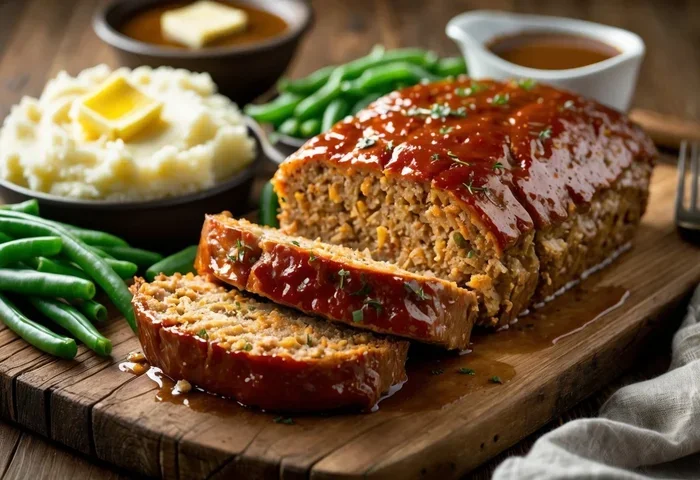
How Long To Put Meatloaf In Oven For Perfect Results
How Long To Put Meatloaf In Oven depends on size, shape, and oven temperature, but most meatloaves bake perfectly at 350°F for about 45 to 60 minutes. The internal temperature should reach 160°F for ground beef or 165°F for poultry-based loaves. Following a few simple tips ensures your meatloaf recipe turns out moist and flavorful every single time.
This is a comprehensive guide about How Long To Put Meatloaf In Oven.
Key Takeaways
- Standard baking time: Most meatloaves take 45 to 60 minutes at 350°F depending on size and ingredients.
- Internal temperature matters: Use a thermometer to check that your meatloaf reaches 160°F for beef or 165°F for turkey.
- Pan choice affects cooking: A loaf pan traps moisture while free-form meatloaves develop a better crust.
- Resting is essential: Let your meatloaf rest for 10 minutes after baking for cleaner slices.
- Size changes timing: A small meatloaf may be done in 40 minutes, while a large one needs up to 90 minutes.
- Glaze adds flavor: Apply your glaze in the last 15 minutes of baking for the best results.
- Avoid overcooking: Overcooked meatloaf becomes dry and crumbly, so watch the internal temperature closely.
[FEATURED_IMAGE_PLACEHOLDER]
The Ideal Oven Temperature for Meatloaf
When you are figuring out how long to put meatloaf in oven, the first thing to nail down is temperature. Most meatloaf recipes call for 350°F. This temperature works beautifully because it cooks the meat evenly without drying it out too fast.
Some cooks like to start at a higher temperature, around 400°F, for the first 15 minutes. This helps create a nice browned crust on top. After that initial sear, you drop the heat down to 350°F and let the oven-baked meatloaf finish cooking through gently.
Here is a quick look at common temperature settings for cooking meatloaf:
- 350°F: The most popular choice. Even cooking throughout. Great for beginners.
- 375°F: Slightly faster. Good if you want a firmer outer crust.
- 400°F (initial burst): Used for the first 10 to 15 minutes only. Helps with browning.
- 325°F: Lower and slower. Works well for very large meatloaves.
No matter which temperature you pick, the key is consistency. Opening your oven door every few minutes drops the heat and can throw off your baking time. Trust the process and let the oven do its job.
Why 350°F Works So Well
At 350°F, the heat surrounds the meatloaf evenly. The outside browns nicely while the inside cooks through without turning into a dried-out brick. This temperature also gives the fats in the ground beef or ground turkey time to render properly. That rendering is what keeps your loaf moist and tender.
If you set the oven too hot, the outside burns before the inside is cooked. If you set it too low, the meatloaf dries out over a long stretch. 350°F hits the sweet spot every time. This is the go-to temperature for almost every homemade meatloaf I have ever made or tested.
How Long to Bake Meatloaf at 350°F
Now let us get to the heart of the matter. How long to put meatloaf in oven at 350°F? The answer depends on a few factors, but here is the general rule of thumb. A standard single-loaf meatloaf made with about 2 pounds of meat takes roughly 45 to 60 minutes at 350°F.
A smaller meatloaf, around 1 pound, might be done in 35 to 45 minutes. A larger one, 3 pounds or more, could need 60 to 90 minutes. The shape of your loaf matters too. A wide, free-form loaf cooks faster than a tall one packed into a pan.
Here is a simple breakdown to help you plan your meatloaf cooking time:
- 1-pound meatloaf: 35 to 45 minutes at 350°F
- 2-pound meatloaf (standard): 45 to 60 minutes at 350°F
- 3-pound meatloaf: 60 to 90 minutes at 350°F
- Mini meatloaves (individual): 25 to 35 minutes at 350°F
These times are starting points. Always use a meat thermometer to check for doneness. The internal temperature is the real indicator, not the clock alone. Every oven is slightly different, and every meatloaf recipe varies in ingredients and density.
The Role of Ingredients in Baking Time
What you put inside your meatloaf changes how long it needs to bake. A loaf loaded with vegetables like onions, bell peppers, and mushrooms holds more moisture. This extra moisture can add a few minutes to the baking time because the oven needs to evaporate that liquid before the center sets.
On the other hand, a lean meatloaf made with ground turkey or very lean ground beef cooks a bit faster. There is less fat to render, so the heat penetrates more quickly. If you are using a mix of meats, like beef and pork, expect a middle-ground cooking time.
Also, breadcrumbs and eggs add structure. They absorb moisture and help the loaf hold its shape. More binder means a denser loaf, which takes a little longer to heat through. Keep all of this in mind when you are setting your timer.
Meatloaf Size and Its Effect on Cooking Time
Size really does matter when you are baking meatloaf. A standard loaf pan holds about 2 pounds of meat mixture. But many people use bigger pans or make free-form loaves on a sheet pan. Each choice changes the cooking time significantly.
A loaf crammed into a tight pan cooks slower because the heat has to work around the dense center. A free-form loaf spread out on a sheet pan has more surface area exposed to heat. It cooks faster and develops a better crust on the bottom and sides too.
Here is a handy comparison of different meatloaf shapes and sizes:
| Shape and Size | Approximate Weight | Baking Time at 350°F |
|---|---|---|
| Standard loaf pan | 1.5 to 2 lbs | 45 to 60 minutes |
| Free-form on sheet pan | 2 lbs | 40 to 55 minutes |
| Large loaf pan | 3 lbs | 60 to 90 minutes |
| Mini loaves (muffin tin) | 4 oz each | 20 to 30 minutes |
| Small individual loaf pan | 1 lb | 35 to 45 minutes |
If you want to speed things up, go with a free-form shape or mini loaves. They are also great for portion control. Kids love individual meatloaf portions because they feel like their own special meal.
Choosing the Right Pan for Your Meatloaf
The pan you choose affects both cooking time and texture. A traditional loaf pan traps steam. This keeps the meatloaf moist but can make the bottom soggy if you leave it in the pan too long after baking.
A sheet pan or a wire rack lets air circulate around the loaf. The crust gets crispy all over, and excess fat drains away. This is my preferred method for a homemade meatloaf that looks and tastes restaurant-quality.
If you do use a loaf pan, consider lifting the meatloaf out after 10 minutes of resting. This prevents the bottom from steaming in its own juices. You get a better texture and a more even meatloaf doneness from edge to center.
Tips for Perfect Meatloaf Every Time
Baking a great meatloaf is easier than you think. A few simple tips can take your meatloaf recipe from good to outstanding. Here is what I have learned from years of testing and tweaking.
Do not overmix the meat. This is the number one mistake people make. When you work the ground beef or ground turkey too much, the meatloaf becomes dense and tough. Mix just until everything is combined. Use your hands gently and stop as soon as the meatloaf ingredients are evenly distributed.
Use a thermometer. I cannot stress this enough. A meat thermometer is the only way to know for sure that your meatloaf is done. The internal temperature should read 160°F for ground beef and 165°F for ground turkey or chicken. Poking it with a fork is not accurate enough.
Let it rest. Once your oven-baked meatloaf comes out of the oven, let it sit for 10 minutes before slicing. This allows the juices to redistribute. If you cut too soon, the meatloaf falls apart and loses moisture. A good rest makes for clean, neat slices every time.
Add flavor with a glaze. A simple glaze of ketchup, brown sugar, and mustard brushed on during the last 15 minutes of baking adds a sweet and tangy kick. You can also use barbecue sauce or a tomato-basil mix. The glaze caramelizes and creates a beautiful sticky top that everyone loves.
Quick Tips for Better Meatloaf
- Mix ingredients gently and just until combined.
- Preheat your oven before placing the meatloaf inside.
- Use a wire rack for a crispier crust all around.
- Let the meatloaf rest for 10 minutes before cutting.
- Apply your glaze in the last 15 minutes only.
- Use a meat thermometer for accurate doneness.
- Soak breadcrumbs in milk for a juicier texture.
- Add grated vegetables for moisture and hidden nutrition.
How to Tell When Meatloaf Is Done
Knowing when your meatloaf is ready is one of the most important skills for any home cook. Relying on the clock alone is risky because ovens vary and meatloaf size differs from recipe to recipe. You need visual and temperature cues to be sure.
The best and most reliable method is using a meat thermometer. Insert it into the center of the loaf, avoiding any bones or large chunks of vegetable. For ground beef meatloaf, you want 160°F. For poultry-based loaves, aim for 165°F. These temperatures ensure that harmful bacteria are destroyed while the meat stays juicy.
There are also visual signs to watch for. A fully cooked meatloaf will have a firm surface that springs back lightly when you press it. The juices that run out should be clear, not pink or bloody. The edges may start to pull slightly away from the sides of the pan.
Another trick is the jiggle test. Gently shake the pan. If the center of the meatloaf jiggles like jelly, it needs more time. When it has a slight, controlled wobble but is mostly firm, it is close to done. Let carryover cooking finish the job as it rests.
Carryover cooking is a real thing. The meatloaf continues to cook after you pull it from the oven. The internal temperature can rise 5 to 10 degrees during resting. This is why I recommend pulling the meatloaf out when it is 5 degrees below your target temperature. It gives you a perfect result every time.
Common Signs of Undercooked or Overcooked Meatloaf
- Undercooked: Pink juices, soft center, internal temp below 160°F.
- Perfectly cooked: Clear juices, firm but springy center, 160 to 165°F internally.
- Overcooked: Dry and crumbly texture, dark brown edges, internal temp above 170°F.
Nobody wants an overcooked meatloaf. It turns into a dry brick that nobody enjoys. Checking the temperature early and often helps you catch the sweet spot right when the meatloaf is perfectly done.
Common Meatloaf Mistakes to Avoid
Even experienced cooks make mistakes with meatloaf from time to time. Learning from common errors saves you from a disappointing dinner. Here are the pitfalls I see most often and how to avoid them.
Skipping the preheat. Putting your meatloaf into a cold oven throws off the baking time and leads to uneven cooking. Always preheat your oven to the target temperature before the meatloaf goes in. This ensures consistent oven temperature from the very first minute.
Overmixing the meat. This is the classic mistake. When you knead the meatloaf mixture too aggressively, the proteins tighten up. The result is a dense, rubbery loaf. Mix with your hands using a light touch. Stop the moment the meatloaf ingredients are just combined.
Using too much filler. Breadcrumbs, eggs, and milk are essential binders. But too much of a good thing creates a loaf that tastes more like bread than meat. Stick to the ratios in your meatloaf recipe. A good rule is about 1 cup of breadcrumbs and 1 egg per 2 pounds of meat.
Not resting the meatloaf. Cutting into a hot meatloaf right out of the oven releases all the juices onto the cutting board instead of staying in the loaf. Give it 10 minutes. The wait is worth it for slices that hold together and stay moist.
Ignoring the thermometer. Guessing whether your meatloaf is done leads to either undercooked or overcooked results. A simple meat thermometer costs just a few dollars and takes the guesswork out completely. It is the single best tool for perfect meatloaf doneness.
Expert Insights on Meatloaf Perfection
Professional chefs often emphasize that meatloaf is a forgiving dish. It does not need constant attention like a delicate sauce. But it does need respect for the basics. Preheat, mix gently, check temperature, and let it rest.
The beauty of oven-baked meatloaf is that once you understand the fundamentals, you can get creative. Swap in different meats, add new spices, or try a different glaze. The core principles stay the same. Master those and you will never serve a bad meatloaf again.
One final thought on how long to put meatloaf in oven: write down what works for your oven. Keep a kitchen notebook. Note the time, temperature, and result. Over time, you build a personal reference that takes all the guesswork out. Your future self will thank you when dinner comes together perfectly every night.
Conclusion
Getting the meatloaf baking time right is simpler than you might think. Most meatloaves bake beautifully at 350°F for 45 to 60 minutes. The real secret is using a meat thermometer to check that the internal temperature reaches 160°F for beef or 165°F for poultry. How long to put meatloaf in oven varies with size, shape, and ingredients, but now you have all the tools to get it right.
Remember to mix gently, let the meatloaf rest, and never skip the preheat. These small habits make a huge difference in the final result. Whether you are making a classic homemade meatloaf or experimenting with a new meatloaf recipe, the principles stay the same. Trust your thermometer, respect the clock, and let the meatloaf rest before you slice.
Now that you know the ins and outs of cooking meatloaf, it is time to put this knowledge to work. Preheat that oven, grab your favorite meatloaf ingredients, and get baking. Your kitchen is about to smell amazing, and your family is about to have the best meatloaf they have ever tasted.
Frequently Asked Questions
Can I cook meatloaf at a higher temperature to save time?
Yes, you can cook at 375°F or even start at 400°F for the first 15 minutes. Just keep a close eye on the internal temperature. Higher heat can dry out the edges before the center is fully cooked. A meat thermometer is your best friend here.
How do I know if my meatloaf is undercooked?
Undercooked meatloaf will have pink or red juices running out when you cut into it. The center will feel soft and squishy. Always check with a meat thermometer to be safe. The internal temperature should reach at least 160°F for ground beef and 165°F for poultry.
Can I use a loaf pan for a crispier meatloaf?
A loaf pan actually traps steam, which keeps the bottom soft. For a crispier crust all around, try a free-form meatloaf on a sheet pan or a wire rack. This allows heat to circulate and excess fat to drain away during cooking meatloaf.
Should I cover my meatloaf with foil while baking?
Generally, no. Leaving the meatloaf uncovered allows the top to brown and the sides to develop a nice crust. If your oven tends to brown things too quickly, you can loosely tent foil over the top for the first half of the baking time. Remove it for the last 15 minutes.
Can I freeze leftover meatloaf?
Absolutely. Cooked meatloaf freezes well for up to 4 months. Wrap it tightly in plastic wrap and aluminum foil, or store it in an airtight container. Reheat slices in the oven at 325°F until warmed through. This makes homemade meatloaf a great make-ahead meal.
What is the best way to reheat leftover meatloaf?
The oven is the best method for reheating meatloaf. Wrap slices in foil and heat at 325°F for about 15 to 20 minutes. This keeps the meat moist and prevents it from drying out. Avoid microwaving if possible, as it can make the texture rubbery and uneven.