Should You Filter Cold Brew Coffee for Better Taste
Should you filter cold brew coffee? The answer depends on your taste preferences and brewing style. Filtering cold brew coffee removes sediment, oils, and fine particles, resulting in a cleaner, smoother cup. Whether you use a cheesecloth, mesh strainer, or paper filter, the method you choose directly impacts your coffee flavor. This guide covers everything you need to know about filtering cold brew for the best possible taste.
Cold brew coffee has taken the coffee world by storm. People love its smooth, low-acid profile and rich flavor. But one question keeps popping up among coffee lovers: should you filter cold brew coffee for the best taste? The short answer is yes, but there is more to it than that. How you filter your cold brew changes everything about the final cup. It affects the texture, the strength, and even the flavor profile. In this guide, we will walk through every reason why filtering matters and how to do it right.
Cold brew coffee starts with coarse grounds steeped in cold water for 12 to 24 hours. This long steeping process extracts flavors slowly. The result is a concentrate that can be diluted with water or milk. But here is the thing. Without proper filtering, that concentrate can carry fine particles, oils, and sediment straight into your glass. These extras can make your coffee taste bitter or gritty. Filtering gives you control over the final product. It lets you decide how clean or how bold you want your drink to be.
So whether you are a beginner just starting your cold brew journey or a seasoned pro looking to refine your process, understanding filtering is essential. Let us dive into the details and help you make the best cup possible.
Key Takeaways
- Filtering removes sediment and bitterness: A proper filter catches fine coffee grounds that make your drink gritty and harsh.
- Multiple methods work well: Cheesecloth, mesh strainers, paper filters, and fine mesh bags all produce great results.
- Unfiltered cold brew has its fans: Some people love the bold, full-bodied texture of unfiltered coffee concentrate.
- Cleaning your equipment matters: Residue from previous brews can affect flavor, so keep your filters and strainers fresh.
- Timing is everything: How long you steep and filter impacts the final strength and smoothness of your cold brew.
- Experiment to find your style: Everyone’s palate is different, so try multiple filtering methods to discover your perfect cup.
📑 Table of Contents
What Is Cold Brew Coffee and Why Does Filtering Matter?
Cold brew coffee is not just iced coffee. It is a specific brewing method where coffee grounds steep in room temperature or cold water for an extended period. This slow extraction pulls out different compounds than hot brewing does. The result is a drink that is naturally sweeter, less acidic, and incredibly smooth.
But the steeping process leaves behind fine coffee particles. These particles are called sediment. They float in your concentrate and settle at the bottom of your glass. Filtering cold brew removes these particles and excess oils. This creates a cleaner cup that tastes more balanced. Without filtering, you get a heavier, more intense drink that some people love and others find overwhelming.
The importance of filtering also depends on what you are using to brew. If you steep your grounds in a large jar, you will need a reliable straining method. If you use a dedicated cold brew maker, it may have a built-in filter. Either way, the goal is the same: a smooth, enjoyable drink without unwanted grit.
The Role of Coffee Grounds in Cold Brew
The type of grind you use matters a lot. Coarse grounds work best for cold brew because they extract more slowly. Fine grounds, on the other hand, can slip through most filters and create a muddy texture. Even with coarse grounds, some fine particles will always make it through. That is exactly why filtering is so important. It catches those tiny particles that would otherwise ruin the mouthfeel of your coffee.
Why People Skip Filtering
Some coffee drinkers prefer the unfiltered approach. They like the heavy, full-bodied texture that comes with sediment in the cup. Unfiltered cold brew also retains more of the natural oils from the coffee bean. These oils carry a lot of flavor. So skipping the filter is not necessarily wrong. It just depends on what you enjoy. However, if you have ever tasted gritty cold brew and wondered why, the answer is simple. You skipped the filtering step.
The Case for Filtering Cold Brew Coffee
There are many strong reasons to filter your cold brew. Let us look at the biggest benefits that come with taking the extra few minutes to strain your concentrate.
Smoother Taste and Cleaner Mouthfeel
The most obvious benefit of filtering cold brew coffee is the taste. A well-filtered batch feels silky and clean on your palate. You notice the natural sweetness of the coffee instead of being hit with bitterness or grit. Each sip is consistent from the first drop to the last. This is especially important if you are serving cold brew to guests. Nobody wants a glass of coffee with sandy sediment at the bottom.
Better Concentration Control
When you filter your cold brew properly, you get a cleaner concentrate. This makes it easier to control the strength of your drink. You can dilute it exactly how you like. Too strong? Add more water. Too weak? Use less. Unfiltered concentrate is harder to gauge because the sediment adds unexpected texture and intensity.
Longer Shelf Life
Filtered cold brew lasts longer in the fridge. The particles and oils that remain in unfiltered coffee can go rancid over time. They can also breed bacteria faster. A clean filter removes these elements, keeping your cold brew fresh for up to two weeks. If you like to batch brew on Sundays, filtering helps your concentrate stay drinkable all week long.
Reduced Bitterness and Acidity
Cold brew is already known for being low in acidity. But unfiltered cold brew can still carry bitter compounds from the fine grounds. Filtering strips those compounds away. The result is a sweeter, more mellow cup that is easy on the stomach. If you have ever felt heartburn after drinking cold brew, filtering might be your solution.
What Happens If You Skip Filtering Cold Brew Coffee?
Skipping the filter is a choice, not a mistake. But it comes with trade-offs that every coffee drinker should understand.
The Sediment Problem
Without a filter, fine coffee grounds stay suspended in your drink. They settle at the bottom of your glass. Some people do not mind stirring them in. Others find it unpleasant. The sediment can also clog your teeth and leave a gritty feeling that lingers. If you have ever drunk unfiltered cold brew and felt like you were eating sand, you know exactly what this means.
Stronger, Heavier Flavor
Unfiltered cold brew carries more oils and compounds. This makes the flavor bolder and more intense. For some coffee lovers, this is a feature, not a bug. A heavy, rich cold brew can be incredibly satisfying, especially on a hot day. But for others, it can taste muddy or overpowering. The oils that give unfiltered coffee its punch can also mask the subtle flavor notes of the bean.
Potential Staining and Residue
Here is a practical concern. Unfiltered cold brew oils can stain your mugs, bottles, and brewing equipment. Over time, these oils build up and create a sticky residue. If you have ever noticed a greasy film inside your cold brew jar, that is the coffee oil left behind. Regular cleaning helps, but filtering at the source prevents much of this buildup. If you want to keep your equipment spotless, consider using a gentle cleaner like the Pink Stuff on your glassware and jars to remove stubborn stains.
Best Methods to Filter Cold Brew Coffee
Not all filtering methods are the same. Each one produces a different result. Let us explore the most popular options so you can choose the best one for your setup.
Method 1: Cheesecloth Filtering
Cheesecloth is one of the most affordable and effective ways to filter cold brew. It catches fine particles while letting the liquid pass through smoothly. You can layer multiple pieces of cheesecloth for an even finer filter. Simply place the cloth over a jar or bowl, pour your concentrate through, and let it drip.
One thing to keep in mind. Cheesecloth can be messy and hard to clean. It also tears easily if you reuse it too many times. But for the price and simplicity, it is hard to beat. If you are wondering whether cheesecloth can handle heat, check out this guide on using cheesecloth in the oven to learn more about its heat resistance and other uses.
Method 2: Fine Mesh Strainer
A fine mesh strainer is quick and convenient. It catches larger grounds but lets some fine particles through. This means your cold brew will be smoother than unfiltered but not as clean as cheesecloth or paper filtering. Fine mesh strainers work great for a first pass. You can follow up with a second filter for an even cleaner result.
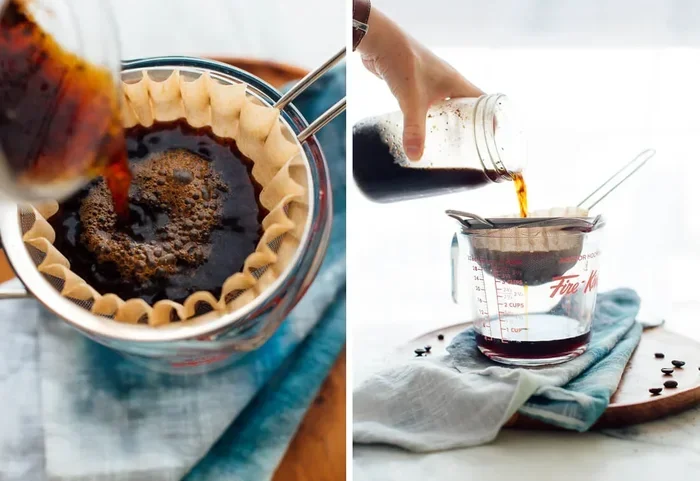
Method 3: Paper Coffee Filter
Paper filters produce the cleanest cold brew. They catch nearly all sediment and oils. The result is a very smooth, light cup. Many coffee shops use paper filters for their cold brew. The downside is that paper filters can slow down the dripping process. You may need to wait 15 to 20 minutes for all the liquid to pass through. But the clean taste is worth the wait.
Method 4: Metal Mesh Bag or Nut Milk Bag
A nut milk bag or metal mesh bag works similarly to cheesecloth. You place your grounds inside the bag and let the cold water steep. When the steeping is done, you simply lift the bag out. This method is mess-free and produces a clean concentrate. The bag is reusable and easy to rinse. Just make sure the mesh is fine enough to catch small particles.
Comparison Table: Filtering Methods
| Method | Smoothness | Ease of Use | Reusable | Cost |
|---|---|---|---|---|
| Cheesecloth | Very Smooth | Moderate | Limited | Low |
| Fine Mesh Strainer | Moderate | Very Easy | Yes | Low |
| Paper Filter | Extremely Smooth | Slow | No | Low |
| Nut Milk Bag | Very Smooth | Easy | Yes | Low |
Double Filtering for the Best Results
Here is a pro tip. For the smoothest cold brew possible, use two filtering stages. Start with a coarse strainer to remove the bulk of the grounds. Then pour the strained concentrate through cheesecloth or a paper filter for a second pass. This two-step process eliminates nearly all sediment and produces a crystal-clear cold brew that tastes amazing.
Common Mistakes When Filtering Cold Brew Coffee
Even experienced cold brew makers make filtering mistakes. Here are the most common ones and how to avoid them.
Using the Wrong Grind Size
If your grounds are too fine, no filter will save you. Fine grounds slip through cheesecloth and mesh strainers easily. Always use a coarse grind for cold brew. It is the foundation of a clean, filtered cup.
Rushing the Filtering Process
Patience is key. Pouring your concentrate through a filter too quickly can disturb the grounds and push sediment through. Let gravity do the work. Allow the liquid to drip slowly for the cleanest result. Rushing this step defeats the purpose of filtering in the first place.
Reusing Old Filters
Old filters collect grounds and oils from previous batches. Reusing them without proper cleaning can introduce off-flavors into your fresh cold brew. Always use a fresh cheesecloth or paper filter for each batch. If you use a mesh bag, rinse it thoroughly and let it dry completely between uses.
Forgetting to Rinse Paper Filters
Paper filters sometimes carry a papery taste. Before using one, rinse it with hot water. This removes the paper flavor and pre-warms your brewing vessel. It is a small step that makes a noticeable difference in taste.
Expert Tips for Perfect Filtered Cold Brew
Want to take your cold brew to the next level? These expert tips will help you get the best possible results every time.
Start with Fresh, Quality Beans
The quality of your coffee beans matters more than any filtering method. Use freshly roasted beans for the best flavor. Grind them just before steeping to preserve the aroma and oils.
Use the Right Coffee-to-Water Ratio
A standard ratio is 1 cup of coarse grounds to 4 cups of water. Adjust this to your taste. More grounds make a stronger concentrate. More water makes it lighter and easier to drink.
Steep for the Right Amount of Time
12 to 24 hours is the sweet spot for cold brew. Shorter steeping times produce a weaker concentrate. Longer times extract more flavor but can also pull out bitterness. Experiment with different times to find your ideal window.
Store Your Filtered Cold Brew Properly
Once filtered, transfer your cold brew to a clean glass jar with an airtight lid. Store it in the refrigerator. Properly stored filtered cold brew stays fresh for up to 14 days. If you notice any off-flavors or changes in color, it is time to make a fresh batch.
Clean Your Equipment After Every Use
Residue builds up fast. Rinse your strainers, jars, and bags right after each batch. A clean setup ensures that every cup of cold brew tastes fresh and pure.
Final Thoughts
So, should you filter cold brew coffee? The evidence speaks for itself. Filtering cold brew coffee delivers a smoother, cleaner, and more enjoyable drinking experience. It removes sediment, reduces bitterness, and extends the shelf life of your concentrate. Whether you choose cheesecloth, a fine mesh strainer, or a paper filter, the extra effort pays off in every sip.
Unfiltered cold brew has its place. It is bold, rich, and full of natural oils. But for most people, filtered cold brew is the better choice. It is consistent, easy to dilute, and gentle on the stomach. Start with the method that fits your lifestyle and adjust from there. The beauty of cold brew is that you can always experiment until you find your perfect cup.
Take the time to filter your next batch. Your taste buds will thank you.
Frequently Asked Questions
Do I really need to filter cold brew coffee?
Filtering is not strictly necessary, but it makes a big difference in taste and texture. Filtered cold brew is smoother, less gritty, and easier to drink. If you prefer a cleaner cup, filtering is highly recommended.
Can I use a regular coffee filter for cold brew?
Yes, paper coffee filters work well for cold brew. They produce a very clean cup by catching most sediment and oils. Just be patient, as the dripping process can take 15 to 20 minutes.
How many times can I reuse a cheesecloth for filtering?
Cheesecloth can typically be reused 2 to 3 times if it is washed thoroughly between uses. After that, it starts to tear and let more particles through. Replace it for the best results.
What is the difference between cold brew concentrate and filtered cold brew?
Cold brew concentrate is the undiluted liquid extracted from steeping coffee grounds. Filtered cold brew is that concentrate after the grounds and sediment have been removed. Concentrate is stronger and needs to be diluted before drinking.
Does filtering cold brew remove caffeine?
Filtering removes some caffeine along with oils and sediment, but the reduction is minimal. Most of the caffeine stays in the liquid. If you want less caffeine, you should dilute your concentrate more or use fewer coffee grounds.
Can I filter cold brew using a metal strainer alone?
A metal strainer works as a first pass but will not catch all fine particles. For the smoothest result, follow up with cheesecloth or a paper filter. Double filtering gives you the cleanest cup possible.