How Long To Cook Deer Jerky In Oven For Perfect Results
How Long To Cook Deer Jerky In Oven is usually 3 to 4 hours at 160°F to 170°F, allowing the meat to dry evenly without toughening. Thicker slices need the full time, while thinner ones may be done in 2.5 hours. For perfect results, keep a close eye on the oven and test for a leathery, bendable texture.
There is something truly special about biting into a piece of homemade deer jerky. It beats store-bought snacks every single time. If you love wild game, you know the joy of turning a fresh deer into delicious meals. Making your own venison jerky is a great way to use the whole animal. It also saves you money compared to buying fancy snacks at the store.
Many hunters and outdoor enthusiasts ask the same question. They want to know how long to cook deer jerky in oven. The answer depends on a few simple factors. Your oven type, the thickness of your meat slices, and your preferred texture all play a role. Some people like their jerky dry and crispy. Others prefer a soft and chewy venison snack. Both are easy to make if you follow the right steps.
This guide will walk you through the entire process. You will learn the right temperatures, the exact drying times, and the best tips for perfect results. I will share my own mistakes so you can avoid them. By the end, you will feel confident making your own venison jerky at home. Let us get started!
Key Takeaways
- Understanding How Long To Cook Deer Jerky In Oven: Provides essential knowledge for making informed decisions
- Practical applications: Can be applied in various real-world scenarios
- Key benefits: Offers significant advantages when properly implemented
- Important considerations: Requires attention to specific details and best practices
- Future implications: Continues to evolve and impact related fields
📑 Table of Contents
Why Oven Dehydration Works for Venison
Using an oven to make jerky is a classic method. It provides consistent heat and airflow. This combination removes moisture from the meat safely. When you cook deer jerky in oven, you control the environment completely. You do not need to buy a special food dehydrator for this task. Your kitchen oven works just fine.
Many people ask me if an oven is really the best tool. I always tell them yes. It is convenient and you likely already own one. Compared to smoking, oven drying is much faster. It also uses less wood or charcoal. You can add a little liquid smoke to your marinade if you want that smoky flavor. This gives you the taste of a smoke flavor without the extra work. It is a huge time saver for any jerky maker.
The Science of Slow Drying
Bacteria need moisture to grow. An oven gently heats the meat to drive out water. This leaves behind a flavorful, shelf-stable snack. The low heat also keeps the proteins tender. You do not need any fancy machines for this task. The process is simple and reliable.
Many people worry about ruining their venison. But an oven works just as well as a dedicated machine. The key is patience and steady temperatures. When you master this, your oven deer jerky will be chewy and delicious. It will also last for weeks without needing a fridge. This makes it perfect for camping trips and long hikes.
Essential Prep Work Before You Turn On the Heat
Before you start the drying process, prep is crucial. Good preparation leads to better jerky. Skipping this step often leads to uneven results. Taking a few extra minutes now saves you hours of frustration later. I always tell my friends that prep is half the battle.
Slicing the Meat Right
Start with a sharp knife or a meat slicer. You want uniform slices about a quarter-inch thick. If the strips vary in size, they will dry at different rates. Some pieces might burn while others stay damp. Always use lean meat from the deer. Fat goes rancid quickly and ruins the taste of your jerky recipe.
The direction you slice matters too. Cutting against the grain gives you a softer chew. Cutting with the grain gives you a tougher, stringier texture. Both are great, so choose based on your personal preference. After slicing, pat the meat dry with paper towels. This helps the surface brown faster. Now your meat is ready for the marinade.
- Trim away all visible fat from the deer meat.
- Slice against the grain for a softer chew.
- Slice with the grain for a tougher, stringier texture.
- Use a meat slicer for perfectly even cuts.
You can use a simple soy sauce mix or a complex jerky recipe from a book. The goal is to add flavor while the meat dries. A good marinade also helps tenderize the lean meat. Let the strips soak for at least four hours before you start the oven.
The Exact Timeline: How Long To Cook Deer Jerky In Oven
Now for the main event. You want to know exactly how long to leave the meat in the heat. How long to cook deer jerky in oven depends on the thickness and your desired chewiness. Oven oven drying times can vary based on your specific appliance. Every oven has its own hot spots and quirks.
Many people want a quick answer, but there is no single magic number. The time changes based on how thin you cut your meat. Humidity in your kitchen also plays a role. On a dry day, your jerky will dry faster. On a humid day, it takes longer. Keep these factors in mind as you plan your oven drying session.
Setting Your Oven Temperature
Set your oven to 160 degrees Fahrenheit. This is the safe internal temperature recommended by food safety experts. Some people start at 140 degrees for the first hour to gently dry the meat. However, 160 degrees ensures harmful bacteria are killed quickly. This step is very important for food safety. Do not skip it, even if it makes the jerky a bit drier.
If you are worried about the meat drying out too fast, you can place a pan of water in the oven. This adds a little moisture to the air. It is a simple trick that helps a lot. Just make sure the meat itself reaches 160 degrees internally.
Checking for Doneness
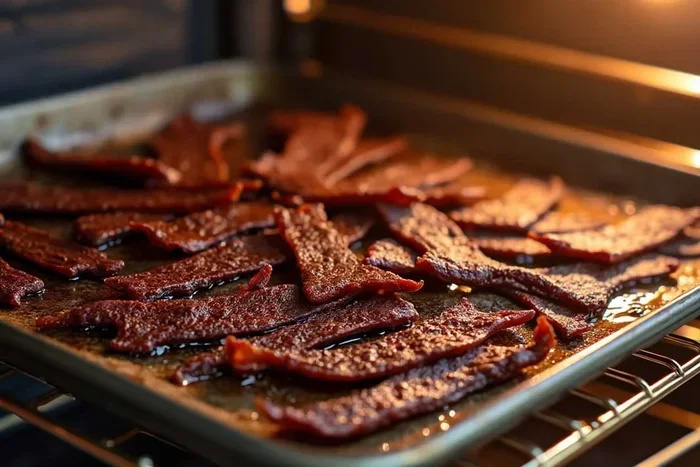
Jerky is done when it bends and cracks slightly. It should not snap in half. A good piece of deer jerky oven result will feel leathery but still pliable. Pull a piece out and let it cool for a few minutes. If it is still too soft, put it back in the oven.
Use the table below to estimate your drying time based on slice thickness. These times assume a steady 160-degree oven temperature and a quarter-inch slice width.
| Slice Thickness | Approximate Drying Time | Texture Result |
|---|---|---|
| Thin (1/8 inch) | 2 to 3 hours | Dry and crispy |
| Medium (1/4 inch) | 3 to 4 hours | Chewy and flexible |
| Thick (1/2 inch) | 5 to 6 hours | Very chewy, jerky-like |
Always check your meat every hour after the first two hours. Ovens vary, and you do not want to overcook your snack. If you are making beef jerky alongside your deer meat, the times are very similar. Lean cuts from any animal work well for this method.
Step-by-Step Oven Drying Process
Following a clear process makes the job easy. Here is how you cook deer jerky in oven like a pro. I have made dozens of batches, and this routine never fails me. It takes a little patience, but the results are always worth it.
Marinating and Loading the Pan
Soak your venison strips in your favorite marinade for at least four hours. Overnight is even better. Soy sauce, Worcestershire sauce, and garlic are popular choices. You can also add curing salt if you want to follow traditional meat curing methods. The marinade adds flavor and helps kill surface bacteria.
After marinating, lay the strips on a wire rack. Place the rack over a baking sheet lined with foil. Do not overlap the meat pieces. Air must flow around every strip. If pieces touch, they will steam instead of dry. This ruins the texture of your oven deer jerky. Use a wire rack that fits inside your baking sheet. This setup allows hot air to circulate all around the meat.
The Waiting Game
Place the rack in the center of your oven. Prop the door open slightly with a wooden spoon. This lets moisture escape. It also prevents the temperature from rising too high inside the oven. A wooden spoon is a simple trick that makes a big difference.
Rotate the pans every hour. This ensures even drying on all sides. The kitchen will smell amazing, but resist the urge to peek too often. Every time you open the door, you release heat and moisture. This extends the total drying time. Be patient and let the heat do the work. Your home will smell like a professional meat shop!
Common Mistakes That Ruin Your Venison Snack
Even experienced cooks make errors when making jerky. Knowing what to avoid saves time and meat. You want your venison snack to turn out perfect every time. Here are the most common pitfalls I see people fall into.
Overcooking vs. Undercooking
Overcooking makes jerky hard and brittle. Undercooking leaves moisture inside. This moisture invites bacteria to grow. Neither result is good. You want a perfect middle ground. The meat should be dry enough to store safely but soft enough to chew easily.
Another mistake is cutting the slices too thick. Thick strips take much longer to dry. You might be tempted to raise the oven temperature to speed things up. Do not do this. High heat cooks the outside while leaving the inside raw and unsafe. Keep the temperature low and steady. This is the secret to great oven deer jerky. Patience is your best tool here.
Many people also forget about the meat curing step. Adding a little curing salt to your marinade prevents spoilage. It also draws out excess moisture. This is an old technique used by meat curing experts for centuries. It makes your jerky safer and gives it a better texture.
- Do not skip the food safety step of reaching 160 degrees.
- Avoid using too much sugar in your marinade. Sugar burns fast.
- Do not forget to flip your meat strips halfway through.
- Do not leave the oven door fully closed during drying.
Keep an eye on your deer jerky oven recipe progress. Making jerky is not a race. Take your time, and you will be rewarded with a delicious venison snack that tastes far better than anything from a store shelf.
Storing Your Homemade Venison Jerky
Once your jerky is cool, you need to store it properly. Good storage keeps your snack fresh for weeks. Improper storage can ruin all your hard work. Nobody wants to toss out perfectly good meat because of a bad container.
Keeping It Fresh
Let the meat cool completely on the counter. Warm meat trapped in a container creates condensation. Moisture is the enemy of jerky. Once cool, place the strips in an airtight container. You can use zip-top bags or mason jars. For the longest shelf life, add an oxygen absorber packet. Vacuum sealing is another great option.
Store the container in a cool, dark place. Heat and light can degrade the quality of your venison jerky. A pantry or a cellar works perfectly. If you want to keep it even longer, the freezer is your best friend.
Properly stored oven deer jerky can last up to two weeks at room temperature. If you want it to last even longer, keep it in the freezer. Frozen jerky stays good for up to six months. Always check your jerky before eating. If it smells off or looks discolored, throw it away. Safety always comes first when making shelf-stable foods at home.
Making jerky at home is a rewarding experience. It lets you control the ingredients and flavors. Now you know exactly how long to cook deer jerky in oven and how to do it safely. The process takes a few hours, but the results are worth it.
Remember to slice your meat evenly, keep the temperature steady, and check for doneness. The key to perfect jerky is patience. You will have a delicious, protein-packed snack ready for your next hunting trip or hike. Enjoy your homemade venison jerky and share it with friends!
Frequently Asked Questions
What is How Long To Cook Deer Jerky In Oven?
How Long To Cook Deer Jerky In Oven is an important topic with many practical applications and benefits.
How can How Long To Cook Deer Jerky In Oven help me?
Understanding How Long To Cook Deer Jerky In Oven can improve your knowledge and provide practical solutions.