What Does Descale Mean On Your Keurig Coffee Machine
Descale means removing mineral buildup inside your Keurig machine. Limescale and calcium deposits can slow your brewer and affect coffee taste. Regular descaling keeps your machine running smoothly and your coffee tasting fresh. This guide covers everything you need to know about descaling your Keurig.
Your Keurig coffee machine is one of the easiest ways to get a hot cup of joe fast. But like any kitchen appliance, it needs regular care to keep working well. One of the most important things you can do is descale it. If you have ever wondered what does descale mean on Keurig coffee machine, you are in the right place.
Descaling is the process of cleaning out mineral deposits that build up inside your machine. These deposits come from hard water. Over time, they can clog your Keurig and change how your coffee tastes. This guide will walk you through everything you need to know. We will cover what descaling is, why it matters, how to do it, and how to avoid common mistakes.
Key Takeaways
- Descale removes mineral buildup: Hard water leaves calcium and limescale inside your machine over time.
- It improves coffee taste: Mineral deposits can make your brew taste off or weaker than normal.
- You should descale every 3-6 months: Frequency depends on how often you use your Keurig and your water quality.
- It is a simple process: You can use Keurig’s descaling solution or white vinegar from home.
- Ignoring descaling causes problems: Build-up can clog needles, reduce water flow, and even break the machine.
- Your machine will signal when it needs descaling: Most Keurig models have a descale light or message.
📑 Table of Contents
What Does Descale Mean?
So, what does descale mean exactly? The word descale simply means to remove scale from a surface. Scale is the hard, chalky buildup that forms when minerals in water heat up and stick to surfaces. Inside your Keurig, this buildup collects on the heating element, inside the water lines, and around the needles that puncture your K-Cup pods.
Think of it like soap scum in your shower. You do not see it at first, but over time it builds up and causes problems. The same thing happens inside your coffee maker. The minerals in water, mainly calcium and magnesium, form a hard layer that restricts water flow. This can slow down your brewing time and make your coffee taste different.
When you descale your Keurig, you are flushing out these mineral deposits. This restores proper water flow and helps your machine heat water to the right temperature. A clean machine brews better coffee. It also lasts longer and saves you money on repairs or replacements.
What Is Limescale?
Limescale is the most common type of mineral buildup found in coffee machines. It is white or chalky in color and very hard. Limescale forms when hard water is heated repeatedly inside your Keurig. The heat causes the minerals to separate from the water and cling to metal and plastic surfaces.
Even if your water looks clean, it may still contain minerals that cause limescale. This is why descaling is so important, even if you use filtered water. No water is 100% free of minerals, and your Keurig will eventually develop buildup no matter what.
Why Descaling Your Keurig Matters
You might be tempted to skip descaling if your machine still seems to work. But there are several strong reasons why you should not ignore this task. Let us look at why descaling matters so much.
It keeps your coffee tasting great. Mineral buildup can affect the temperature of your water. If your water is not hot enough, your coffee will taste weak or sour. Descaling ensures your machine heats water properly, which means better-tasting coffee every time. If you also want to improve your coffee grounds, check out will grinding coffee beans finer make it stronger for tips on getting more flavor from your brew.
It keeps your machine running efficiently. A Keurig clogged with scale takes longer to brew. It may also make strange noises or produce smaller cups than normal. Descaling removes these blockages and lets water flow freely through the system.
It extends the life of your machine. A well-maintained Keurig can last for years. Neglecting descaling can cause serious damage over time. The heating element has to work harder when there is buildup, which can lead to burnout. Regular descaling is a small effort that pays off in the long run.
It prevents bacteria growth. Mineral deposits can trap bacteria and mold inside your machine. This is a health concern, especially if you drink coffee every day. Descaling helps keep the inside of your Keurig clean and sanitary.
How Mineral Buildup Affects Brewing
Here is a simple way to understand what happens inside your Keurig. When you brew a cup, water is heated and pushed through a narrow needle into your K-Cup. If that needle and the water path are covered in scale, the water cannot flow properly. This means:
- Slower brewing times
- Weaker coffee because less water passes through the grounds
- Inconsistent cup sizes
- Strange noises during brewing
- Water leaking from unexpected places
None of these problems are fun to deal with. The good news is that descaling prevents all of them. It is one of the easiest maintenance tasks you can do at home.
How Often Should You Descale Your Keurig?
Most Keurig manufacturers recommend descaling every 3 to 6 months. However, the exact frequency depends on a few factors. If you use your machine every day, you may need to descale more often. The hardness of your local water also plays a big role.
In areas with very hard water, you might need to descale every 2 months. In areas with soft water, you could stretch it to every 6 months. A good rule of thumb is to watch for the descale light on your machine. Most modern Keurig models have a descale indicator that tells you when it is time to clean the machine.
Signs Your Keurig Needs Descaling
Even if the light has not come on, there are clear signs that your Keurig needs descaling. Watch for these warning signals:
- Your coffee tastes different or off. A metallic or flat taste is often a sign of mineral buildup.
- Brewing takes longer than usual. Scale slows down water flow through the machine.
- The water volume is smaller than expected. Your cup may not fill all the way, even if you selected a larger size.
- Your machine makes unusual noises. Gurgling or bubbling sounds can mean blocked water lines.
- The descale light is on. This is the most obvious sign. Do not ignore it.
- You see white or chalky residue. This may appear around the water reservoir or the exit needle.
If you notice any of these signs, it is time to descale. The sooner you do it, the easier the process will be. Catching buildup early prevents it from turning into a bigger problem.
How To Descale A Keurig Machine
Descaling your Keurig is simple and does not require any special skills. You can use a store-bought descaling solution or make your own with white vinegar. Both methods work well. Here is a step-by-step guide for each approach.
Method 1: Using Keurig Descaling Solution
Keurig sells its own descaling solution, and it is designed specifically for their machines. It is safe and effective. Here is how to use it:
- Power off your Keurig and unplug it from the wall.
- Remove the water reservoir and empty any remaining water.
- Mix the descaling solution with water according to the bottle instructions. Usually, you use equal parts solution and water.
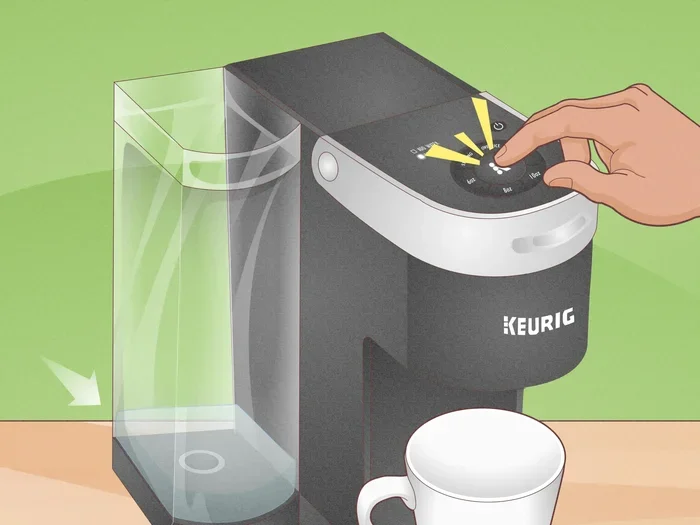
- Pour the mixture into the reservoir. Make sure you do not overfill it.
- Place a large mug on the drip tray to catch the liquid that comes out.
- Run a brew cycle without a K-Cup. Let the solution run through the machine. Repeat this until the reservoir is empty.
- Let the machine sit for 30 minutes. This gives the solution time to break down the mineral deposits.
- Rinse the reservoir thoroughly with clean water.
- Run 12 or more rinse cycles with fresh water. This removes any remaining descaling solution from the machine.
After the rinse cycles, your Keurig should be clean and ready to use. Brew a test cup to make sure everything tastes normal. If the water tastes strange, run a few more rinse cycles.
Method 2: Using White Vinegar
White vinegar is a natural and affordable alternative to store-bought descalers. It works just as well for most Keurig machines. Here is what to do:
- Fill the reservoir halfway with white vinegar and the other half with water.
- Run a brew cycle without a K-Cup. Let the vinegar mixture run through the machine.
- Let the machine sit for 30 to 60 minutes with the solution inside.
- Drain the reservoir completely.
- Rinse the reservoir with fresh water.
- Run several rinse cycles until the vinegar smell is gone. This usually takes 4 to 6 cycles.
Vinegar has a strong smell, but it will go away after rinsing. If you are sensitive to the odor, you can add a teaspoon of baking soda to the rinse water. This helps neutralize the smell.
After descaling, you may notice some flakes or chunks coming out of the machine. This is normal. It is just the mineral buildup breaking loose. Keep running water through the machine until it flows clean and clear.
Quick Tips for Descaling
- Always unplug your machine before starting the descaling process.
- Do not use lemon juice or other acidic cleaners. Stick to vinegar or Keurig’s official solution.
- Never use soap or detergent inside the machine. It can leave a residue that affects coffee taste.
- Clean the exterior and the water reservoir with warm soapy water while you are at it.
- Run extra rinse cycles if you are unsure. It is better to rinse too much than too little.
Common Descaling Mistakes To Avoid
Descaling is easy, but it is possible to make mistakes. Here are some common errors that people make when cleaning their Keurig. Avoiding these will help you get the best results.
Skipping the Rinse Cycles
The biggest mistake people make is not rinsing enough. Descaling solution and vinegar both have strong flavors that can linger. If you do not rinse thoroughly, your next few cups of coffee will taste bad. Always run at least 12 rinse cycles with fresh water after descaling.
Using the Wrong Cleaning Product
Not all cleaners are safe for coffee machines. Dish soap, bleach, and abrasive cleaners can damage the internal parts of your Keurig. They can also leave behind chemical flavors that transfer to your coffee. Only use products that are designed for coffee machine descaling.
Ignoring the Water Filter
Your Keurig has a water filter that helps reduce minerals and improve taste. If you do not replace this filter regularly, it becomes less effective. A clogged filter can also slow water flow. Replace your filter every 2 months or as recommended by Keurig. Pairing this with regular descaling keeps your machine in top shape.
Forgetting to Clean the Needles
The needles that puncture K-Cup pods can get clogged with coffee grounds and scale. After descaling the inside of your machine, take a moment to clean the needles too. You can use a paperclip or a Keurig needle cleaning tool to gently remove any buildup. This small step makes a big difference in brewing performance.
Tips To Keep Your Keurig Running Smoothly
Descaling is the most important maintenance task, but it is not the only one. A few simple habits can keep your Keurig in great shape between descaling sessions.
- Use filtered water in your reservoir. This reduces the amount of minerals that enter the machine in the first place.
- Empty the water reservoir when not in use. Stale water sitting in the machine can develop mold or bacteria.
- Wipe down the exterior regularly. A quick wipe with a damp cloth keeps your machine looking clean.
- Run a hot water cycle without a K-Cup once a week. This flushes out any residue and keeps the water lines clear.
- Replace parts as needed. The water filter, pod holder, and drip tray all wear out over time. Replacing them keeps your machine running at its best.
If you are also exploring other kitchen appliances for your coffee routine, you might want to learn about what an air fryer toaster oven is to see if it could complement your kitchen setup. And if you are interested in broader coffee preparation methods, check out how to make coffee without a filter or machine for alternative brewing techniques.
Taking care of your Keurig does not have to be complicated. A little regular maintenance goes a long way. Descaling every few months, using clean water, and keeping the machine tidy will ensure you enjoy great-tasting coffee for years to come.
Frequently Asked Questions
Can I use lemon juice instead of vinegar to descale my Keurig?
It is not recommended. Lemon juice is acidic and can work to some degree, but it is not as effective as vinegar or a proper descaling solution. It also has a weaker acid concentration, which means it may not break down mineral buildup as well. Stick with white vinegar or Keurig’s own descaling product for the best results.
How long does the descale process take?
The actual descaling process takes about 30 to 45 minutes. This includes running the solution through the machine and letting it sit. However, you should also factor in the rinse cycles, which can add another 20 to 30 minutes. Plan for about an hour total from start to finish.
What happens if I do not descale my Keurig?
If you skip descaling, mineral buildup will continue to accumulate. This can lead to slower brewing times, weaker coffee, and strange tastes. Over time, the buildup can clog the needles and water lines, potentially causing permanent damage to the heating element. In severe cases, the machine may stop working altogether.
Can I descale my Keurig with just water?
Water alone will not remove mineral deposits. You need an acidic solution like vinegar or a commercial descaler to break down the scale. Water rinses are important after descaling, but they do not do the actual cleaning work on their own.
Is descaling the same as cleaning the Keurig?
No, they are different tasks. Cleaning refers to wiping down external parts, washing the water reservoir, and removing coffee grounds. Descaling specifically targets internal mineral buildup that you cannot see or reach with a simple wipe-down. Both are important, but they serve different purposes.
Will descaling fix a Keurig that is already clogged?
Descaling can often fix minor clogs caused by mineral buildup. However, if the machine is severely clogged or damaged, descaling alone may not solve the problem. In that case, you may need to clean the needles manually or contact Keurig support for further assistance.
Conclusion
Now you know what does descale mean on your Keurig coffee machine. It is the process of removing mineral buildup that forms over time from hard water. This buildup can affect your coffee taste, slow down brewing, and even damage your machine if left unchecked. Descaling is simple, fast, and one of the best things you can do to keep your Keurig running at its best.
Make it a habit to descale every 3 to 6 months. Watch for the signs that your machine needs attention, and do not skip the rinse cycles. With just a little regular care, your Keurig will keep delivering delicious coffee cup after cup. Your machine will thank you, and your taste buds will too.