How To Reheat Pizza In Oven Without Drying It Out Today
Reheating pizza in the oven doesn’t have to be a struggle. Learn how to reheat pizza in oven without drying it out using simple foil and low-heat tricks that keep the crust crispy and the cheese melty. This guide shares foolproof steps to bring back that just-baked taste every single time.
Ever stared at a box of leftover pizza and wondered how to reheat pizza in oven without drying it out? You’re not alone. That sad, cardboard-like slice from the microwave is a crime against deliciousness. The oven, on the other hand, can bring back the crispy crust and melty cheese you crave. This guide will show you exactly how to do it right.
Reheating pizza is a skill anyone can learn. You don’t need fancy equipment or a secret recipe. Just a few simple steps and a little patience. By the end of this article, you’ll know the best oven temperature, the right tools to use, and the mistakes to avoid. Your leftover slices will taste almost as good as the night you ordered them.
We’ll walk through every detail, from the science of crust texture to the best way to reheat a deep dish pie. You’ll find quick tips, expert insights, and a step-by-step method you can use tonight. Let’s bring that pizza back to life.
Key Takeaways
- Oven beats microwave: The oven restores crispy crust and melted cheese, while the microwave makes pizza soggy and rubbery.
- Low and slow is key: Reheat at 275°F to 300°F for 10 to 15 minutes to dry out the crust just enough without overcooking the toppings.
- Use foil or a lid: Covering the pizza traps steam and keeps the cheese from drying out while the crust crisps up.
- A pizza stone helps: Placing the slice on a preheated pizza stone or baking sheet mimics the oven floor and delivers a crisp bottom.
- Avoid the cardboard: Never reheat pizza on its box. The cardboard can burn, impart a bad taste, and slow down heating.
- Add moisture for deep dish: A few drops of water or a light brush of olive oil on the crust prevents drying out for thicker styles.
📑 Table of Contents
- Why Reheating Pizza in the Oven Is the Best Choice
- Setting Up Your Oven for Perfect Pizza Reheating
- Step-by-Step: How To Reheat Pizza In Oven Without Drying It Out
- How to Reheat Different Pizza Styles Without Losing Texture
- Common Mistakes That Ruin Your Reheated Pizza
- Expert Tips to Make Reheated Pizza Taste Fresh-Baked
Why Reheating Pizza in the Oven Is the Best Choice
The microwave might be fast, but it’s not your friend when it comes to leftover pizza. A microwave heats food by exciting water molecules. That sounds helpful, but it turns your pizza crust into a chewy, rubbery mess. The cheese becomes a hot, gooey blanket that sticks to the roof of your mouth. Meanwhile, the bottom of the slice turns soft and limp.
The oven works very differently. It uses dry, indirect heat. This heat surrounds the pizza and warms it evenly. The crust gets crispy again because the dry air pulls out just enough moisture. The cheese melts gently without overcooking. The toppings stay warm and flavorful. It’s the closest thing to a fresh bake you can get from a slice that’s been sitting in the fridge.
Microwave vs Oven: A Quick Comparison
Let’s look at the difference side by side. A table can help you see why the oven wins for taste and texture.
| Method | Crust Texture | Cheese Result | Overall Taste | Time |
|---|---|---|---|---|
| Microwave | Soft, chewy, sometimes soggy | Overheated, rubbery | Bland, stale | 1 to 2 minutes |
| Oven | Crispy, golden, crunchy | Melted, bubbly, smooth | Fresh-baked, rich | 10 to 15 minutes |
| Air Fryer | Very crispy, almost fried | Melted, slightly browned edges | Great, but small batches | 4 to 6 minutes |
As you can see, the oven delivers the best balance of crispy crust and melted cheese. It takes a bit longer than the microwave, but the result is worth every minute. An air fryer is also a great option if you only have one or two slices. But for a full box, the oven is the clear winner.
Setting Up Your Oven for Perfect Pizza Reheating
Before you pop that leftover pizza in, you need to set the stage. A little prep work makes a big difference in the final texture. You want the oven temperature, the baking surface, and the covering method all working together.
The Right Oven Temperature
The secret to how to reheat pizza in oven without drying it out is a low temperature. You don’t want to blast the slice with high heat. That will burn the cheese and dry out the crust before the center warms up. Set your oven to 275°F (135°C) or 300°F (150°C). This gentle heat warms the pizza slowly and evenly. It gives the cheese time to melt without turning rubbery. The crust gets a chance to crisp up without becoming hard or burnt.
Some people like to go as low as 250°F for very thin crust pizza. That’s fine too. The key is to keep the temperature under 350°F. Higher temperatures will overcook the toppings and steal moisture from the crust. A low and slow method is the foundation of great reheated pizza.
Should You Use a Pizza Stone or Baking Sheet?
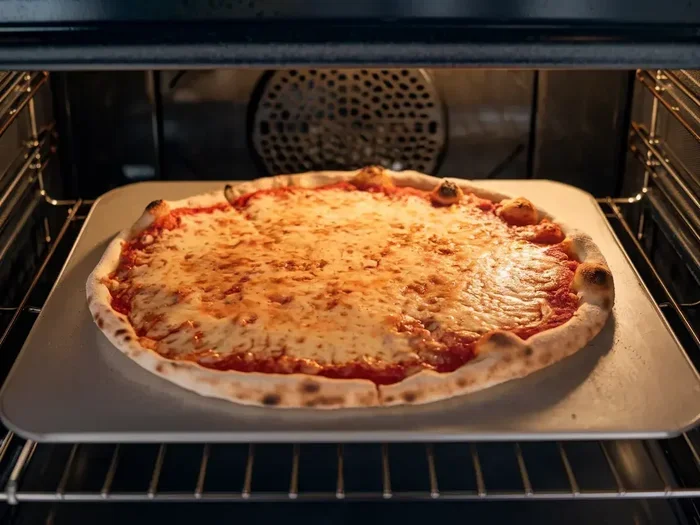
The surface you place the pizza on matters more than you might think. A pizza stone is the gold standard. It absorbs moisture from the bottom of the crust and reflects heat back up. This creates that satisfying crispy bottom you love in a fresh pizza. If you don’t have a pizza stone, a regular baking sheet works perfectly. Just place it on the middle oven rack.
You can also use an oven-safe skillet or cast iron pan. These heat up quickly and give the crust a nice sear. Just make sure the pan is oven-safe to the temperature you’re using. Avoid using the pizza box or cardboard. It can catch fire, burn, and give your pizza a smoky, bad taste. Always transfer the slice to a proper baking surface.
Foil or No Foil? The Great Debate
Covering the pizza is one of the most important steps. Aluminum foil or a loose tent of foil traps steam. That steam keeps the cheese from drying out and becoming tough. It also helps the toppings warm through without overcooking. Place the pizza on the baking sheet or stone, then cover it loosely with a sheet of foil. Don’t wrap it tightly. You want some air circulation.
Some people prefer to leave the pizza uncovered for the entire bake. This can give an even crispier crust all around. However, it increases the risk of the cheese drying out, especially for thicker slices. If you’re reheating a thin crust slice, you might skip the foil. For deep dish or extra cheese, use the foil cover. You can always remove the foil for the last two minutes if you want a browner top.
Step-by-Step: How To Reheat Pizza In Oven Without Drying It Out
Now that your oven is set up, let’s walk through the process step by step. This method works for almost any type of leftover pizza. Follow these instructions and you’ll get restaurant-quality results every time.
Step 1: Preheat the Oven
Start by preheating your oven to 275°F or 300°F. Don’t skip this step. Putting cold pizza into a cold oven leads to uneven heating. The crust will be soggy in the middle and crispy on the edges. A preheated oven surrounds the slice with gentle heat from the moment it goes in. If you have a convection oven, you can use the same temperature. The fan will circulate the heat even more evenly, which is a nice bonus.
Step 2: Prep the Baking Surface
While the oven heats, grab your pizza stone or baking sheet. If you’re using a stone, place it in the oven as it preheats. A hot stone gives the crust an instant crispy boost. If you’re using a baking sheet, just set it aside for now. Line the sheet with parchment paper if you want easy cleanup. Parchment paper prevents cheese from sticking and makes the whole process less messy.
Step 3: Arrange the Pizza Slices
Take your leftover pizza out of the fridge. Let it sit at room temperature for about 5 to 10 minutes. This small step helps the slice heat more evenly. Cold pizza straight from the fridge can have a cold center even after reheating. Place the slices on the baking sheet or pizza stone. Leave a little space between each slice. You want air to flow around them so the heat reaches every part of the crust.
Step 4: Cover and Bake
Loosely tent a sheet of aluminum foil over the pizza. Make sure the foil doesn’t touch the cheese directly. It should form a dome-like cover. Place the baking sheet or stone on the middle oven rack. The middle rack allows heat to circulate evenly from all sides. Bake the pizza for 8 to 10 minutes for thin crust. For thicker crust or deep dish, bake for 10 to 15 minutes. You want the cheese to be fully melted and the crust to be warm all the way through.
Step 5: Remove the Foil and Finish
Carefully remove the foil cover. Be careful of the steam that escapes. Now, if you like a little extra crispiness on top, you can pop the pizza back in uncovered for 2 to 3 minutes. Watch it closely. You’re looking for the cheese to get a few golden-brown spots and the crust edges to firm up. This quick finish adds a beautiful texture without drying out the slice. Once it looks and smells perfect, pull it out and let it cool for a minute or two.
Step 6: Serve and Enjoy
Use a spatula to lift the slice onto a plate. The crust should be firm and crispy on the bottom. The cheese should be soft, stretchy, and melty. The toppings should be hot all the way through. Take a bite and you’ll swear it was just baked. That’s the power of the right oven method. This low and slow approach works like magic for leftover pizza of any kind.
How to Reheat Different Pizza Styles Without Losing Texture
Not all pizza is the same. A thin Neapolitan-style slice needs a different approach than a thick Chicago deep dish. Understanding the style helps you adjust the method for the best results.
Thin Crust Pizza
Thin crust pizza reheats very quickly. The low and slow method is perfect here. Because the crust is already delicate, you don’t want to blast it with high heat. Follow the steps above but reduce the bake time to 8 minutes. Check at 6 minutes. Thin crust can go from perfectly warm to overcooked in a hurry. The foil cover is especially helpful for thin crust with a lot of cheese. It keeps the moisture in and prevents the delicate crust from turning brittle.
Deep Dish and Pan Pizza
Deep dish pizza has a thick, doughy crust and a hearty layer of toppings. It needs more time to heat through. Start with the same 275°F to 300°F temperature. Bake for 12 to 15 minutes with the foil on. The thick crust can handle a longer bake without drying out. For an extra touch, add a few drops of water on the crust before covering with foil. The steam created will keep the deep dish crust soft and pillowy on the inside while the edges crisp up. Remove the foil for the last 3 minutes to brown the top cheese.
Frozen or Take-and-Bake Pizza
Frozen pizza and take-and-bake pizza need a slightly different approach. You can still use the oven, but you should bake them a bit longer. Preheat to 375°F for frozen pizza. Place the pizza directly on the oven rack or on a preheated pizza stone. Bake for the time recommended on the box, usually 12 to 18 minutes. For take-and-bake pizza, you’re essentially baking it for the first time. Use the same low and slow method if you’re reheating a leftover take-and-bake. The crust will respond well to the gentle heat.
Common Mistakes That Ruin Your Reheated Pizza
Even with the best method, a few simple mistakes can ruin your leftover pizza. Avoid these pitfalls and you’ll always get great results.
Using Too High a Temperature
This is the number one mistake. Cranking the oven up to 400°F or higher will burn the cheese and dry out the crust before the center is warm. The outside becomes a crunchy, overcooked shell while the inside is still cold. Stick to the low temperature range of 275°F to 300°F. Patience is the secret ingredient here. A low oven gives you even, gentle heating that preserves the texture of the original bake.
Skipping the Foil or Covering
Leaving the pizza uncovered the whole time might sound like a good idea for extra crispiness. But it often leads to a dry, rubbery cheese layer. The moisture escapes too quickly. The toppings can also dry out and lose their flavor. If you want a crispy top, uncover the pizza only for the last 2 to 3 minutes. This gives you the best of both worlds. The inside stays moist while the outside gets that satisfying crunch.
Reheating Straight from the Fridge
Cold pizza goes straight from the refrigerator into the oven. This creates a temperature gradient. The outside of the slice might be hot while the center is still cold. Letting the pizza sit out for 5 to 10 minutes before reheating helps it start at a more even temperature. The heat penetrates more uniformly. You also reduce the risk of a cold, doughy center. This tiny step makes a huge difference in the final result.
Reheating on the Cardboard Box
Never, ever put the pizza box in the oven. The cardboard can catch fire at high temperatures. Even at low temperatures, it can impart a stale, papery taste to your pizza. The box also slows down the heating process because it insulates the pizza. Always transfer the slice to a baking sheet, pizza stone, or oven-safe pan. It’s a simple habit that keeps your pizza safe and delicious.
Expert Tips to Make Reheated Pizza Taste Fresh-Baked
Once you’ve mastered the basic method, these pro tips will take your reheated pizza to the next level. These small additions can make a big impact on flavor and texture.
Add a Splash of Water for Steam
For thicker pizza styles, a few drops of water on the crust before baking creates extra steam. The steam gently moistens the dough as it heats. This prevents the crust from becoming hard or crackery. Sprinkle just a teaspoon of water on the crust, then cover with foil. The steam gets trapped and works its magic. The result is a crust that’s crispy on the outside and soft on the inside, just like a fresh pizza.
Use Parchment Paper for Easy Cleanup
Cheese and grease can stick to your baking sheet. Lining the sheet with parchment paper prevents this mess. The pizza slides right off after baking. Parchment paper also promotes a little extra crispiness on the bottom of the crust. It acts as a barrier between the dough and the metal pan. Just make sure the parchment paper can handle the oven temperature you’re using. Most parchment paper is safe up to 425°F, so your low-temperature bake is perfectly safe.
The Power of a Light Olive Oil Brush
Before you bake, take a small brush and lightly coat the crust edges with olive oil. This adds a subtle richness and helps the crust brown beautifully. The oil also creates a moisture barrier that keeps the crust from drying out. Use just a tiny amount. You don’t want the pizza to look greasy. A light brush on the crust edges before covering with foil gives you a golden, flavorful finish that tastes almost like a fresh bake.
The Convection Oven Advantage
If your oven has a convection setting, use it. The fan circulates hot air around the pizza. This means more even heating and a crispier crust in less time. You can lower the temperature by about 25°F when using convection. So set it to 250°F or 275°F instead of 275°F or 300°F. Keep an eye on the pizza a few minutes early. Convection ovens can brown things faster than standard ovens. The result is a perfectly reheated slice with a beautiful, even crust texture.
Now you know exactly how to reheat pizza in oven without drying it out. The secret is a low temperature, a little foil, and a bit of patience. Whether you’re dealing with thin crust, deep dish, or a simple cheese slice, these steps will bring back the flavor and texture you love. Your leftover pizza can taste just as good as the night you first enjoyed it. So next time you have a box of cold slices in the fridge, don’t reach for the microwave. Warm up your oven and give these methods a try. You’ll never go back to soggy, sad pizza again.
Frequently Asked Questions
Can I reheat pizza in the oven without foil?
Yes, you can. Leaving the pizza uncovered will give you a crispier crust all over. However, the cheese might dry out a bit more, especially on thicker slices. If you skip the foil, watch the pizza closely during the last few minutes to prevent over-browning.
What is the best oven temperature to reheat pizza?
The best temperature is between 275°F and 300°F. This low and slow method warms the pizza evenly without burning the cheese or drying out the crust. If you use a convection oven, you can drop the temperature by about 25 degrees.
How long should I reheat pizza in the oven?
Thin crust pizza needs about 8 to 10 minutes. Thick crust or deep dish pizza needs 10 to 15 minutes. The exact time depends on your oven and how cold the pizza was. Check for melted cheese and a warm center before pulling it out.
Can I reheat pizza on the cardboard box?
No, never reheat pizza on its cardboard box. The cardboard can catch fire or release harmful fumes. It also slows down heating and can make the crust soggy. Always transfer the slice to a baking sheet, pizza stone, or oven-safe pan before reheating.
Does a pizza stone make a difference when reheating?
Yes, a pizza stone makes a noticeable difference. It absorbs moisture from the bottom of the crust and reflects heat back up. This creates a crispier crust compared to a regular baking sheet. If you have a pizza stone, preheat it in the oven before placing the pizza on it.
Can I reheat multiple slices at once in the oven?
Absolutely. You can reheat several slices at the same time. Just make sure they don’t overlap. Leave space between each slice so hot air can circulate. You might need to add a minute or two to the bake time if you’re reheating a full box of pizza at once.