How To Clean Your Coffee Maker Naturally The Easy Way
Keeping your coffee maker clean ensures every cup tastes fresh and lasts longer. You can use natural ingredients like white vinegar, baking soda, and lemon to remove mineral buildup, coffee stains, and odors without harsh chemicals. This guide walks you through simple steps to deep clean your coffee maker at home.
There is nothing better than a fresh cup of coffee in the morning. But did you know that a dirty coffee maker can ruin the taste of your favorite brew? Over time, mineral deposits, coffee oils, and bacteria build up inside your machine. This affects both the flavor of your coffee and your health.
The good news is that you do not need expensive cleaners to fix this. You can how to clean your coffee maker naturally using things you probably already have in your kitchen. White vinegar, baking soda, and lemon work wonders. They remove buildup, kill bacteria, and eliminate odors. Best of all, they are safe and non-toxic.
In this guide, we will show you exactly how to do it. We cover every part of your coffee machine, from the water reservoir to the carafe. You will learn simple steps, helpful tips, and common mistakes to avoid. By the end, you will know how to keep your brewer sparkling clean with zero harsh chemicals.
Let us get started. Your coffee maker deserves some love, and so does your morning cup.
Key Takeaways
- Vinegar and baking soda are the best natural cleaners for coffee makers. They dissolve mineral deposits and remove stubborn stains safely.
- Cleaning your coffee maker every month keeps it running smoothly. Regular maintenance prevents buildup and extends the life of your machine.
- Every part of the coffee maker needs attention. This includes the water reservoir, carafe, filter basket, and drip tray.
- Natural cleaning solutions save money and are better for your health. You avoid chemical residues that can end up in your coffee.
- Descaling is essential for hard water areas. It removes calcium and lime deposits that affect coffee taste and machine performance.
- Preventing odors is easy with simple habits. Rinsing parts after each use and drying them properly keeps your coffee maker fresh.
📑 Table of Contents
- Why You Should Clean Your Coffee Maker Naturally
- What You Need Before You Start
- Step-by-Step Guide to How To Clean Your Coffee Maker Naturally
- How Often Should You Clean Your Coffee Maker
- Common Mistakes to Avoid When Cleaning
- Expert Tips for Keeping Your Coffee Maker Fresh
- Benefits of Using Natural Cleaners for Your Coffee Machine
- Quick Tips for Busy Mornings
- Conclusion
Why You Should Clean Your Coffee Maker Naturally
Many people reach for harsh chemical cleaners when their coffee maker looks dirty. But these products leave behind residues. Those residues can end up in your next cup of coffee. That is why natural coffee maker cleaning is the smarter choice.
Natural cleaners like vinegar and baking soda are gentle but effective. They break down mineral deposits without damaging the internal parts of your machine. They also do not leave behind any harmful chemical taste.
Health Benefits of Natural Cleaning
Your coffee maker is a warm, moist environment. That makes it a perfect breeding ground for bacteria and mold. If you do not clean regularly, these germs can affect your health. Using a natural cleaning solution kills bacteria without introducing toxic chemicals into your brewing system.
Natural cleaners are also safer for your household. If you have kids or pets, you do not want harsh chemicals sitting around. Vinegar and baking soda are completely food-safe. They pose no risk if any residue remains in the machine.
Environmental Benefits
Chemical coffee cleaners often come in plastic bottles. They contain synthetic ingredients that harm the environment. Choosing natural coffee maker maintenance reduces your household waste and chemical footprint. It is a small change that makes a big difference over time.
What You Need Before You Start
Before you begin, gather a few simple items. You do not need anything fancy. Most of these items are already in your pantry.
- White distilled vinegar – the star of natural descaling
- Baking soda – great for scrubbing away coffee stains
- Lemon juice – adds a fresh scent and extra cleaning power
- Warm water – for rinsing and mixing solutions
- Soft microfiber cloth – for wiping exterior surfaces
- Soft brush or old toothbrush – for scrubbing hard-to-reach areas
- Mild dish soap – for washing removable parts
Having these items ready makes the whole process faster and easier. You will not need to stop mid-cleaning to run to the store.
Step-by-Step Guide to How To Clean Your Coffee Maker Naturally
Now let us get into the actual cleaning process. Follow these steps in order for the best results. Each step targets a specific part of your coffee machine.
Step 1: Clean the Water Reservoir
The water reservoir is where bacteria and mineral deposits build up the most. Start by unplugging your machine and removing any leftover water. Mix equal parts white vinegar and warm water. Pour this solution into the reservoir.
Let it sit for about 30 minutes. This gives the vinegar time to dissolve mineral deposits and kill bacteria. After 30 minutes, run a full brew cycle with the vinegar solution. Do not use a coffee filter for this step. Let the solution run through the machine and into the carafe.
Once the cycle is complete, discard the vinegar water. Rinse the reservoir thoroughly with clean water. Run two to three more brew cycles with plain water to flush out any vinegar taste.
Step 2: Descale With Vinegar and Baking Soda
Descaling is one of the most important parts of coffee maker cleaning. Hard water leaves calcium and lime deposits inside your machine. These deposits clog the system and reduce brewing efficiency. If you live in a hard water area, you should descale every month.
For a deeper clean, add two tablespoons of baking soda to the vinegar solution in step 1. The baking soda creates a fizzing reaction that helps lift stubborn deposits. This natural combination is one of the best ways to descale coffee maker parts without commercial products.
After running the vinegar and baking soda cycle, rinse thoroughly. Run at least three full cycles with clean water. Taste the water from the last cycle to make sure no vinegar or baking soda flavor remains.
Step 3: Clean the Coffee Pot and Filter Basket
Remove the carafe and filter basket from the machine. Wash both with warm water and a few drops of mild dish soap. Use a soft sponge to avoid scratching the glass carafe.
If you see coffee stains inside the carafe, make a paste with baking soda and water. Apply it to the stains and let it sit for 15 minutes. Scrub gently with a soft brush. The baking soda will lift the stains without scratching the surface.
For the filter basket, rinse it under running water. Use your toothbrush to scrub away any coffee grounds or residue stuck in the mesh. Make sure all parts are completely dry before reassembling.
Step 4: Clean the Drip Tray and Exterior
The drip tray collects spills and overflow. It can get quite grimy if you do not clean it regularly. Remove the drip tray and wash it with warm soapy water. Use a brush to get into corners where gunk builds up.
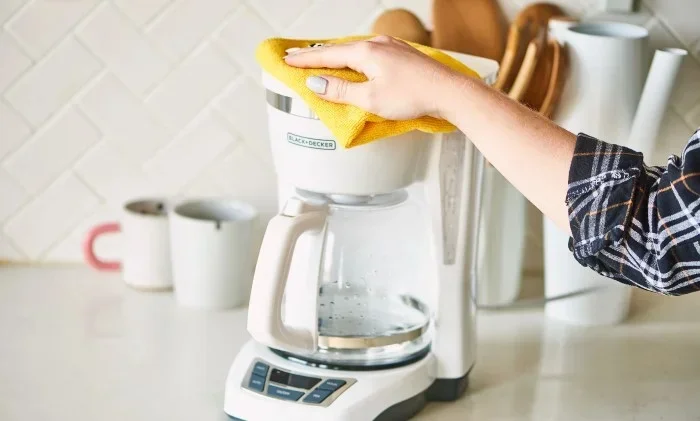
For the exterior, wipe down all surfaces with a damp microfiber cloth. If your machine has a stainless steel finish, use a bit of baking soda paste for extra shine. Avoid using abrasive scrubbers on the exterior. They can scratch the surface and make it look dull.
Do not forget the steam wand or spout if your machine has one. Wipe it down after every use to prevent coffee residue from building up. A quick rinse after each brew session goes a long way.
How Often Should You Clean Your Coffee Maker
Frequency matters when it comes to keeping your coffee machine in top shape. A quick rinse after every use takes only a few seconds. But deeper cleaning should happen on a regular schedule.
- After every use: Rinse the carafe, filter basket, and drip tray with warm water.
- Every week: Wipe down the exterior and do a quick vinegar rinse cycle.
- Every month: Perform a full deep clean with vinegar and baking soda.
- Every three months: Inspect all parts for wear and replace filters if needed.
Following this schedule keeps your coffee tasting great and your machine running efficiently. Think of it like maintaining any other kitchen appliance. Just as you would learn how to clean bottom tray of toaster oven or how to self clean a gas oven, regular care prevents buildup and extends the life of your equipment.
Common Mistakes to Avoid When Cleaning
Even with the best intentions, people make mistakes when cleaning their coffee makers. Here are some common errors and how to avoid them.
- Using too much vinegar: More is not always better. Too much vinegar can damage rubber seals and leave a strong taste. Stick to equal parts vinegar and water.
- Skipping the rinse cycles: Always run at least two to three plain water cycles after using vinegar. Skipping this step leaves a lingering sour taste.
- Using abrasive cleaners: Steel wool and harsh scrubbers scratch the interior and exterior. They create tiny grooves where bacteria can hide.
- Putting the carafe in the dishwasher every time: Hand washing is gentler and helps the glass last longer. Dishwashers can cause clouding over time.
- Ignoring the water filter: If your machine has a water filter, replace it regularly. A clogged filter affects water flow and coffee taste.
Avoiding these mistakes keeps your coffee maker in great condition for years. It also ensures that every cup of coffee tastes as fresh as it should.
Expert Tips for Keeping Your Coffee Maker Fresh
Beyond regular cleaning, a few simple habits make a big difference. These expert tips help you maintain a fresh coffee maker with minimal effort.
Always Empty the Carafe After Brewing
Do not leave brewed coffee sitting in the carafe for hours. Stale coffee leaves oils that build up and cause odors. Pour out any leftover coffee after each use. Rinse the carafe right away.
Use Filtered Water
Filtered water reduces mineral buildup significantly. It also improves the taste of your coffee. If you live in a hard water area, filtered water is a game changer for your coffee machine care routine.
Leave the Lid Open After Brewing
Moisture trapped inside the machine promotes mold and bacteria growth. Leaving the lid open after brewing allows everything to air dry. This simple habit reduces the need for deep cleaning.
Run a Lemon Juice Cycle Monthly
Lemon juice is a natural acid that cuts through grease and mineral deposits. Run a cycle with lemon juice and water once a month. It leaves a fresh citrus scent and adds extra cleaning power. This is a great alternative to vinegar when you want a lighter cleaning solution.
Deep Clean Before First Use on a New Machine
If you just got a new coffee maker, clean it before brewing your first cup. Just like you would learn how to use a brand new oven before cooking in it, you should always do a preliminary cleaning. Run two to three full water cycles to remove any manufacturing residue or dust.
Benefits of Using Natural Cleaners for Your Coffee Machine
Switching to natural cleaners has many advantages beyond just health. Here is a quick comparison of natural versus chemical cleaners.
- Cost: Vinegar and baking soda cost pennies per cleaning. Chemical cleaners can be expensive and need frequent repurchasing.
- Safety: Natural cleaners are non-toxic and food-safe. Chemical cleaners can leave residues that end up in your coffee.
- Effectiveness: Vinegar and baking soda dissolve mineral deposits and remove stains just as well as commercial products.
- Availability: You can find these items at any grocery store. No need to order specialty coffee cleaning products online.
- Scent: Vinegar and lemon leave a fresh, clean scent. Chemical cleaners often have strong artificial fragrances that linger.
Natural cleaning is the clear winner in every category. It is cheaper, safer, and just as effective. Once you try it, you will never go back to chemical cleaners.
Quick Tips for Busy Mornings
Cleaning does not have to be time-consuming. Here are some quick tips to keep your coffee maker clean without slowing down your morning routine.
- Rinse the carafe and filter basket while you wait for your coffee to brew.
- Wipe the exterior with a damp cloth while the machine is still warm after brewing.
- Keep a small bottle of vinegar and water solution in your kitchen for quick weekly rinses.
- Set a monthly reminder on your phone for a deep clean session.
- Swap out your coffee filter regularly to prevent buildup and keep coffee tasting fresh.
These small habits take only a few minutes. But they add up to a cleaner coffee maker and better-tasting coffee every single day.
Conclusion
How to clean your coffee maker naturally is simpler than most people think. With just vinegar, baking soda, and a little bit of time, you can deep clean every part of your machine. Regular cleaning removes mineral buildup, kills bacteria, and eliminates odors. It also improves the taste of every cup you brew.
Follow the steps in this guide and make cleaning part of your routine. Your coffee maker will last longer, work better, and produce coffee that tastes amazing. Natural cleaning is safe, affordable, and better for your health and the environment.
Start today. Your morning coffee will thank you for it.
Frequently Asked Questions
Can I use apple cider vinegar instead of white vinegar to clean my coffee maker?
Yes, you can use apple cider vinegar as an alternative. However, white distilled vinegar works best because it has a higher acid concentration. Apple cider vinegar may leave a slight color or scent, so rinse extra thoroughly if you choose it.
How do I know if my coffee maker needs descaling?
Signs include slower brewing, weird tastes, or visible white deposits inside the machine. If your coffee tastes off or the machine makes unusual gurgling sounds, it is time to descale. Regular cleaning prevents these issues from getting worse.
Is baking soda safe for all coffee maker parts?
Baking soda is safe for most parts including the carafe, filter basket, and water reservoir. Avoid using it on delicate surfaces like aluminum or coated parts that may scratch. Always rinse thoroughly after using baking soda to prevent any lingering taste.
How long does it take to naturally clean a coffee maker?
A full deep clean takes about 45 minutes to an hour. This includes soaking, running cycles, and rinsing. Quick daily rinses only take a few minutes. Monthly deep cleans keep your machine in great shape without a big time commitment.
Can natural cleaning remove old coffee stains from my carafe?
Yes, baking soda paste is very effective at removing coffee stains. Make a thick paste with baking soda and water, apply it to the stains, and let it sit for 15 to 20 minutes. Scrub gently with a soft brush and rinse well. Stubborn stains may need a second treatment.
Do I need to clean my coffee maker if I use a paper filter?
Yes, absolutely. Paper filters catch coffee grounds but do not stop mineral deposits or bacteria from building up inside the machine. The water reservoir, carafe, and internal parts still need regular cleaning regardless of what type of filter you use.