How To Clean A Small Oven With Baking Soda And Vinegar
Discover how to clean a small oven with baking soda and vinegar using this proven, chemical-free method. This guide walks you through every step, from making a simple cleaning paste to tackling tough grease and grime. You will learn quick tips, common mistakes to avoid, and how to keep your oven sparkling between deep cleans.
Nobody loves cleaning the oven. It is one of those chores that most of us put off for as long as possible. But here is the thing a dirty oven does not just look bad. It can affect how your food cooks and even smell up your whole kitchen. The good news is that you do not need expensive store-bought cleaners to get the job done.
In this guide, we will show you exactly how to clean a small oven with baking soda and vinegar. This natural method works surprisingly well. It is safe, affordable, and uses ingredients you probably already have in your kitchen. Whether you have a compact toaster oven or a tiny countertop model, this approach fits perfectly. Let us get into it.
Key Takeaways
- Baking soda and vinegar are a powerful, natural combo that dissolves grease and grime without harsh chemicals.
- Cleaning a small oven is faster and easier than cleaning a large one, especially with this method.
- Regular maintenance prevents buildup and makes future cleaning sessions much quicker.
- Homemade oven cleaner saves money compared to store-bought chemical products.
- Safety first always remove racks and ensure the oven is cool before starting.
- The vinegar spray activates the baking soda and helps lift stubborn stains naturally.
- Consistency is key a monthly routine keeps your small oven in top shape.
📑 Table of Contents
- Why Baking Soda And Vinegar Work Best For Small Oven Cleaning
- What You Need Before You Start
- Step-By-Step Guide To Clean A Small Oven
- How To Clean A Small Oven Door Effectively
- Quick Tips For Maintaining A Clean Small Oven
- Common Mistakes To Avoid When Cleaning A Small Oven
- How Often Should You Clean A Small Oven
- Benefits Of Using Natural Oven Cleaning Methods
- How To Handle Stubborn Stains And Burnt-On Food
- Final Thoughts On Cleaning A Small Oven
Why Baking Soda And Vinegar Work Best For Small Oven Cleaning
If you have ever wondered why this combination is so popular for oven cleaning, the answer is simple. These two household items team up to create a powerful cleaning reaction. Together, they break down grease, food splatters, and burnt-on stains without releasing toxic fumes. For anyone looking to clean a small oven naturally, this duo is hard to beat.
The Science Behind This Natural Combo
Baking soda is a mild alkali. It dissolves grease and dirt easily. Vinegar is a mild acid. When you combine the two, they fizz and bubble. That fizzing action helps lift grime from surfaces. It softens tough stains so you can wipe them away with minimal effort. This makes the whole process of oven cleaning much gentler on both you and your appliance.
Why This Method Beats Chemical Cleaners
Commercial oven cleaners often contain harsh chemicals. They can leave behind strong odors that linger for days. Some people experience skin irritation or breathing issues from these products. With a baking soda and vinegar approach, you avoid all of that. You also save money. A box of baking soda and a bottle of white vinegar cost very little and last through many cleaning sessions.
For small ovens especially, this method is ideal. The interior of a compact oven is smaller and easier to reach. You do not need to spray chemical solutions into deep corners. A simple paste and spray do the trick quickly and effectively.
What You Need Before You Start
Before you dive into the cleaning process, gather your supplies. Having everything ready makes the job faster and smoother. You do not want to stop halfway through to hunt for a sponge or a bowl.
Essential Supplies
Here is your shopping list for a natural small oven cleaning session:
- Baking soda about half a cup for the paste
- White vinegar one cup for the activating spray
- Warm water a few cups for rinsing and wiping
- A small bowl for mixing the paste
- A spray bottle for the vinegar solution
- A soft cloth or sponge for wiping
- A scrub brush or old toothbrush for tough spots
- Rubber gloves to protect your hands
- A putty knife or plastic scraper for stubborn baked-on food
Safety Precautions
Safety matters even when you are using natural cleaners. Always make sure your oven is completely cool before you start. Never mix baking soda and vinegar inside the oven while it is plugged in. Work in a well-ventilated area. If you have sensitive skin, wear gloves. Keep children and pets away from the cleaning area while you work.
Step-By-Step Guide To Clean A Small Oven
Now for the part you have been waiting for. Here is the full process for how to clean a small oven with baking soda and vinegar. Follow these steps carefully and your oven will look brand new.
Step 1: Remove The Racks
Start by pulling out all the oven racks. Set them aside on a flat surface like a bathtub or large sink. Removing the racks gives you full access to the oven interior. It also lets you clean each piece separately, which is much more effective. A small oven usually has one or two racks, so this step is quick and easy.
Step 2: Make Your Cleaning Paste
In a small bowl, mix about half a cup of baking soda with just enough warm water to form a thick paste. The consistency should be like toothpaste. Not too runny, not too thick. This paste is the heart of your natural oven cleaning solution. It will stick to the walls and break down grease over time.
Step 3: Apply The Paste
Using your fingers or a spoon, spread the baking soda paste evenly across the inside of the oven. Focus on the walls, the floor, and the ceiling of the oven cavity. Avoid touching the heating elements directly. Cover all areas with visible grime or stains. For a small oven, this should only take a couple of minutes since the surface area is compact.
Step 4: Let It Sit And Work
This is the step most people skip, but it is crucial. Let the paste sit for at least twelve to twenty-four hours. The longer it sits, the more it breaks down the grease and baked-on food. For light grime, four to six hours may be enough. For tough, stubborn stains, overnight is best. During this time, the baking soda works its magic without any effort from you.
Step 5: Scrub And Wipe Clean
After the paste has had time to work, put on your gloves. Use a damp cloth or sponge to wipe away the baking soda paste. You will see the grime come off easily. For any spots that are still stuck, use a scrub brush or an old toothbrush. The gentle abrasion of the baking soda helps lift stains without scratching the oven surface.
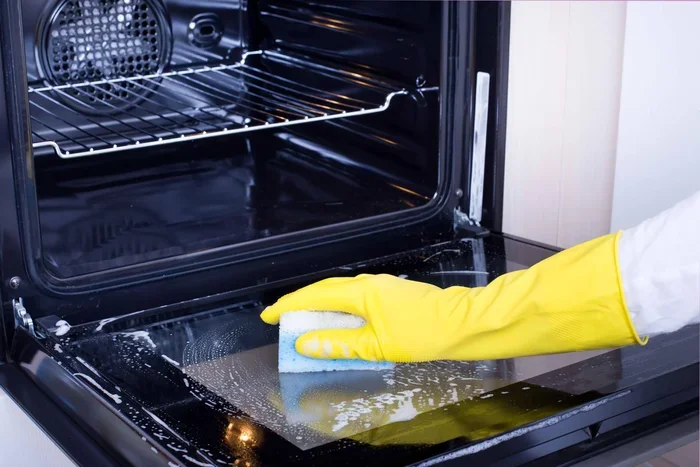
Step 6: Tackle The Oven Door
Do not forget the oven door. Apply some of the remaining baking soda paste to the door glass and the door frame. Let it sit for about thirty minutes. Then wipe it clean with a damp cloth. For the glass door, you may notice some stubborn streaks. We will cover that in more detail in a later section.
Step 7: Clean The Racks Separately
Now it is time to clean those oven racks you set aside earlier. Fill a sink or bathtub with warm water and add a quarter cup of baking soda. Submerge the racks and let them soak for at least an hour. After soaking, scrub them with a brush or sponge. Rinse thoroughly with clean water and dry them completely before putting them back in the oven.
Step 8: Final Rinse And Wipe Down
Once you have scrubbed the interior, do a final wipe-down with a clean, damp cloth. This removes any remaining baking soda residue. Then, spray a light mist of vinegar inside the oven. The vinegar will react with any leftover baking soda, creating a fizzy foam that lifts the last bits of dirt. Wipe everything dry with a clean towel. Your small oven is now clean and fresh.
How To Clean A Small Oven Door Effectively
The oven door is often the most visible part of the appliance. When it is dirty, the whole oven looks dirty. Glass oven doors can accumulate a thick layer of grease and food splatter over time. Here is how to handle it.
Start by making a thinner baking soda paste, using more water than you would for the interior walls. Spread it across the glass door. Let it sit for about thirty minutes. Then take a damp microfiber cloth and scrub in gentle circular motions. The glass should start looking clearer right away.
For really tough spots on the glass, spray some undiluted vinegar directly onto the paste. The reaction will help loosen the stain. Use a plastic scraper or putty knife to gently lift any remaining residue. Finish by wiping the glass with a clean damp cloth. You will be amazed at how clear and shiny the door looks after this simple process.
Quick Tips For Maintaining A Clean Small Oven
Cleaning your oven once is great. Keeping it clean over time is even better. Here are some easy habits that will make future oven cleaning sessions much faster and less frustrating.
Daily Habits That Prevent Grime Buildup
- Use a baking sheet or aluminum foil under your dishes to catch drips and splatters.
- Wipe up spills immediately after the oven cools down. Do not let food sit and bake onto the walls.
- Cover your food when cooking to minimize splashing.
- Line the oven floor with parchment paper for messy recipes like roasted vegetables or baked pasta.
Monthly Deep Cleaning Routine
Set a reminder to do a quick deep clean once a month. This does not need to be a full session. Just spray the interior with a vinegar solution, wipe down the walls, and check the door glass. A little regular maintenance goes a long way. It keeps your small oven in great shape and prevents the buildup of tough, baked-on grime.
Another great habit is to run a steam clean after every few uses. Place a heat-safe bowl of water inside the oven and heat it on high for five minutes. The steam loosens light grease and food particles, making your next deep clean much easier.
Common Mistakes To Avoid When Cleaning A Small Oven
Even with the best intentions, people make mistakes when cleaning their ovens. Here are some common pitfalls and how to avoid them.
- Using too much water when making the baking soda paste. A thick paste works better than a runny one. It clings to the walls and stays in place long enough to do its job.
- Skipping the soak time for the racks. Racks need time to loosen baked-on grease. Do not rush this step.
- Using abrasive scrubbers on the oven interior. Harsh pads can scratch the surface and damage the coating. Stick with soft sponges or cloths.
- Forgetting to clean the oven door seal The rubber gasket around the door traps grease and food particles. Wipe it down with a damp cloth during each cleaning session.
- Not drying the racks before reinstalling Wet racks placed back in a warm oven can cause rust over time. Always dry them completely.
- Using apple cider vinegar instead of white vinegar White vinegar works best because it is clear and does not leave any residue or staining behind.
How Often Should You Clean A Small Oven
The frequency of cleaning depends on how often you use your oven. If you cook daily, a light wipe-down every two weeks and a deep clean once a month works well. If you use your oven less frequently, a monthly deep clean is usually enough. The key is to stay consistent. Regular cleaning prevents grease from building up to the point where it becomes difficult to remove.
For those who bake frequently, pay extra attention to the oven floor and walls. Flour, sugar, and butter can create a sticky residue that hardens over time. Catching these spills early makes the entire process of oven cleaning much simpler and faster.
Benefits Of Using Natural Oven Cleaning Methods
Switching to a natural cleaning approach offers several advantages beyond just a clean oven. First, it is better for your health. Chemical cleaners can release volatile organic compounds into your kitchen air. These fumes can irritate your eyes, throat, and lungs. A baking soda and vinegar method eliminates this risk entirely.
Second, it is better for the environment. Natural cleaners do not introduce harmful chemicals into the water supply. They are biodegradable and safe for septic systems. Third, it saves money. You do not need to buy expensive specialty oven cleaners every time. A box of baking soda and a jug of vinegar can last you through dozens of cleaning sessions.
Finally, it is safer for your oven. Harsh chemical cleaners can degrade the enamel or coating inside your oven over time. A gentle natural approach preserves the surface and extends the life of your appliance. For small oven owners especially, this means your compact appliance stays in great working condition for years.
How To Handle Stubborn Stains And Burnt-On Food
Sometimes despite your best efforts, you encounter stains that just will not budge. Do not panic. There are a few extra tricks you can try. First, make a stronger paste using less water and more baking soda. Apply it directly to the stubborn spot and let it sit for several hours. The concentrated baking soda works harder on tough areas.
Second, use the vinegar spray more aggressively. Spray the area generously and let the fizzing action work for ten to fifteen minutes before scrubbing. Third, for really extreme cases, you can make a paste with baking soda and a few drops of dish soap. The soap adds extra cutting power to the natural abrasive action of the baking soda. Just rinse thoroughly afterward to remove any soap residue.
Another effective trick is to heat the oven slightly after applying the paste. Set it to 200 degrees Fahrenheit for about ten minutes. The warmth activates the baking soda and helps it penetrate deeper into the stain. Then turn off the oven, let it cool, and wipe clean. This method works wonders on baked-on food that has been there for weeks.
Final Thoughts On Cleaning A Small Oven
Cleaning a small oven does not have to be a dreaded chore. With the right approach, it becomes a quick and satisfying task. The baking soda and vinegar method is simple, effective, and safe. It uses ingredients you already trust in your kitchen. It costs almost nothing. And it delivers results that rival any commercial product.
Remember, the secret to an easy cleaning experience is consistency. Regular maintenance prevents heavy buildup. When you do need a deep clean, this natural method has you covered. Whether you are dealing with light splatters or tough burnt-on grime, baking soda and vinegar handle the job beautifully.
So the next time your small oven starts looking less than spotless, skip the chemical sprays. Reach for that box of baking soda and a bottle of vinegar instead. Your oven, your kitchen, and your health will all thank you. A clean oven cooks better, smells better, and lasts longer. It is one of the simplest home maintenance tasks you can do. Start today and feel the difference.
Frequently Asked Questions
Can I use apple cider vinegar instead of white vinegar to clean a small oven?
White vinegar is the best choice because it is clear and leaves no residue or stains behind. Apple cider vinegar can leave a slight discoloration on oven surfaces, especially on glass doors. Stick with white vinegar for the cleanest results every time you clean a small oven.
How long should I let the baking soda paste sit inside the oven?
For best results, let the paste sit for at least twelve to twenty-four hours. Overnight is ideal because it gives the baking soda plenty of time to break down grease and grime. For light stains, four to six hours may be enough, but longer soaking always produces better cleaning results.
Is it safe to use baking soda and vinegar on all oven types?
Yes, this method is safe for most oven types including electric, gas, and convection models. It works especially well for small ovens, toaster ovens, and countertop models. Just avoid getting the paste directly on the heating elements. Always check your oven manufacturer guidelines if you are unsure.
What if the baking soda paste dries out before I am ready to scrub?
No problem. Just spray some vinegar or warm water onto the dried paste. It will reactivate and soften, making it easy to wipe away. You can also add a little more water to the paste before applying it if you live in a dry climate where it dries out quickly.
How often should I deep clean my small oven using this method?
A monthly deep clean is usually sufficient for most home cooks. If you use your oven frequently or cook messy recipes, you may want to clean it every two weeks. Regular light wiping between deep cleans keeps the job much easier and prevents tough buildup from forming.
Can I use this method to clean oven racks as well?
Absolutely. Soaking the racks in a baking soda and warm water solution works great for removing grease and food residue. After soaking for an hour or more, scrub them with a brush and rinse thoroughly. This natural approach works just as well on racks as it does on the oven interior.
=== CONCLUSION ===
Learning how to clean a small oven with baking soda and vinegar is one of the simplest and most effective home maintenance skills you can develop. This natural method is safe, affordable, and incredibly effective at removing grease, grime, and baked-on food stains. By following the steps outlined in this guide, you can keep your small oven looking and performing like new without exposing your family to harsh chemicals.
Remember to gather your supplies beforehand, let the paste do the heavy lifting, and maintain a regular cleaning schedule. A little consistency goes a long way. Your oven will stay cleaner for longer, and each cleaning session will be faster and easier than the last. Start using this method today and enjoy the satisfaction of a sparkling clean oven.