How Much Watts Does A Air Fryer Use And Why It Matters
An air fryer typically uses between 1,400 and 1,800 watts, making it one of the most energy-efficient kitchen appliances. Understanding air fryer wattage helps you cook smarter, reduce your electricity bill, and pick the right model for your needs.
Have you ever wondered how much power your air fryer actually pulls? It is a simple question, but the answer affects your cooking, your energy bill, and even your kitchen safety. Air fryer wattage is something most people overlook until they get a surprise on their electricity statement.
Here is the good news. Air fryers are among the most energy-efficient appliances in any kitchen. They use far less power than a full-size oven, and they cook food faster too. In this guide, we break down exactly how many watts an air fryer uses, why it matters, and what you can do to save energy without sacrificing your crispy fries.
Key Takeaways
- Most air fryers use 1,400 to 1,800 watts, which is less than a standard oven.
- Higher wattage means faster cooking but also higher energy use per session.
- Air fryers save energy because they cook food much faster than conventional ovens.
- Wattage affects cooking performance, crispiness, and how evenly food cooks.
- Checking your air fryer’s wattage label helps you estimate monthly electricity costs.
- Energy-efficient models can lower your kitchen power consumption significantly.
- Knowing your wattage helps you avoid overloading home circuits.
📑 Table of Contents
- What Is Air Fryer Wattage?
- How Much Electricity Does An Air Fryer Actually Use?
- How Much Watts Does A Air Fryer Use By Type
- Does Higher Wattage Mean Better Air Fryer?
- How to Reduce Air Fryer Energy Use
- Common Mistakes People Make With Air Fryer Power
- How Much Does It Cost to Run an Air Fryer?
- Final Thoughts
What Is Air Fryer Wattage?
Wattage is the measure of electrical power an appliance consumes. Every air fryer has a rated wattage printed on its label or in the manual. This number tells you how much electricity the device draws while running at full power.
Most countertop air fryers fall between 1,200 watts and 1,800 watts. Smaller models designed for one or two people often sit around 1,200 to 1,400 watts. Larger units with bigger baskets can reach 1,700 or even 1,800 watts. The wattage of an air fryer directly impacts how fast it heats up and how well it cooks food.
Why Wattage Matters for Cooking
Higher wattage means more heat. More heat means your air fryer reaches the target cooking temperature faster. This is why a 1,700-watt model can roast vegetables in 15 minutes, while a 1,200-watt unit might take 20 or more. The difference adds up over time, especially if you use your fryer daily.
Wattage also affects how evenly food cooks. A powerful air fryer circulates hot air more consistently, giving you that perfect crisp on the outside without drying out the inside. If you have ever wondered why some air fryers produce better results than others, wattage is a big part of the answer.
How Much Electricity Does An Air Fryer Actually Use?
Watts tell you the rate of power use, but what you really want to know is how much it costs. To figure this out, you need to understand kilowatt-hours, or kWh. This is the unit your electricity company uses to bill you.
Here is a simple way to think about it. A 1,500-watt air fryer running for one hour uses 1.5 kWh. If your electricity rate is around $0.13 per kWh, that one hour costs less than 20 cents. Compare that to a standard oven, which uses 2,500 to 5,000 watts and takes much longer to cook the same meal.
Air Fryer vs. Oven Energy Use
The energy savings from using an air fryer instead of a regular oven are real and significant. A conventional oven might run for 30 to 45 minutes to cook something an air fryer handles in 15 to 20 minutes. That is a huge difference in electricity consumption.
Let us look at a quick comparison:
- Air Fryer (1,500W): Uses about 0.75 kWh for a 30-minute cook session.
- Conventional Oven (3,000W): Uses about 1.5 kWh for the same 30 minutes.
- Toaster Oven (1,200W): Uses about 0.6 kWh for 30 minutes but may need longer cooking times.
As you can see, air fryers are incredibly efficient. They use less power and cook faster, which is a win-win for your wallet and your kitchen.
How Much Watts Does A Air Fryer Use By Type
Not all air fryers are the same. Different types and sizes come with different power ratings. Here is a closer look at how wattage varies across common air fryer categories.
Compact Air Fryers (2-3 Quart)
These small units are perfect for singles or couples. They typically use 1,000 to 1,400 watts. Because they heat up quickly and cook small portions, they are extremely energy-efficient. A compact fryer might use only 0.5 kWh for a full cooking cycle.
Mid-Size Air Fryers (4-6 Quart)
This is the most popular size for families. Most models in this range use 1,400 to 1,700 watts. They offer a great balance between cooking capacity and power use. If you want a reliable all-around fryer, this is the category to look at.
Large Air Fryers and Air Fryer Toaster Ovens (6+ Quart)
Bigger families or people who cook in bulk will want a larger model. These units often use 1,700 to 2,000 watts. They can handle bigger batches of food, but they also draw more power. A toaster oven air fryer combo like those from Breville or Farberware may fall into this range too. If you are curious about using one of these, check out our guide on how to use a Farberware air fryer toaster oven for helpful tips.
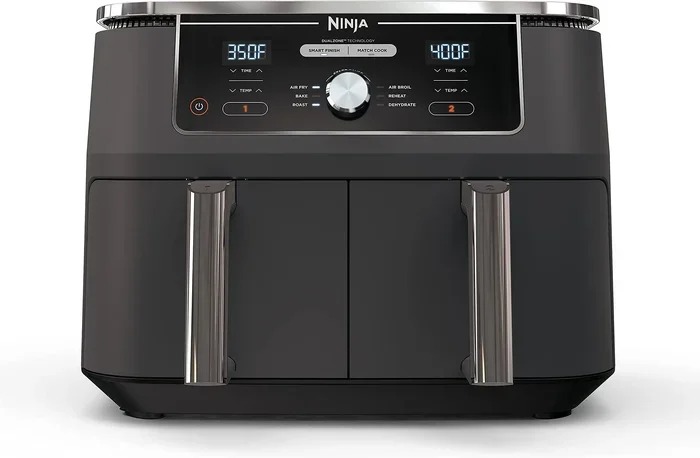
Ninja Air Fryer Models
Ninja is one of the most popular air fryer brands, and their models vary in wattage. The Ninja Foodi series often uses around 1,750 watts. If you are shopping for a Ninja model, it is worth checking the specific wattage before you buy. You can also learn more about how much the Ninja air fryer oven costs to help with your decision.
Does Higher Wattage Mean Better Air Fryer?
Not necessarily. Higher wattage does not automatically mean a better air fryer. It means the appliance heats up faster and can reach higher temperatures. But cooking performance depends on many factors beyond just wattage.
Airflow design, basket size, heating element placement, and temperature control all play a role. A well-designed 1,400-watt air fryer can outperform a poorly designed 1,800-watt model. The key is to look at the overall package, not just the number on the label.
What to Look for in Wattage
When comparing air fryers, consider what you actually cook. If you mostly reheat leftovers or make small snacks, a 1,200-watt unit works great. If you roast large meals or cook for a crowd, you may want something closer to 1,700 watts. Matching the wattage to your cooking habits saves both energy and money.
Also, think about your kitchen’s electrical setup. Most standard home outlets in the US handle 15 amps at 120 volts, which supports up to 1,800 watts. If your air fryer uses more than that, you may need a dedicated circuit. This is an important safety consideration many people forget.
How to Reduce Air Fryer Energy Use
Even though air fryers are already efficient, there are simple steps you can take to use even less energy. These tips are easy to follow and can make a real difference on your monthly bill.
1. Preheat Only When Necessary
Many recipes call for preheating, but not all of them truly need it. For quick-cook items like frozen fries or reheated pizza, you can often skip preheating. This saves both time and electricity.
2. Do Not Overfill the Basket
Overcrowding the basket blocks airflow and forces the fryer to work longer. When food cooks evenly, it finishes faster and uses less power per meal. A single layer of food with some space between pieces is the sweet spot.
3. Use the Right Temperature and Time
Setting the temperature too high or cooking longer than needed wastes energy. Follow recipe guidelines closely and use a food thermometer to check doneness. Precision cooking saves watts and produces better results.
4. Clean Your Air Fryer Regularly
Built-up grease and food residue can affect how efficiently your fryer heats. A clean appliance runs better and uses less electricity. This is a simple habit that pays off over time.
5. Choose Energy-Efficient Models
When buying a new air fryer, look for models with good energy ratings and efficient heating elements. Some brands focus on energy-efficient design and use less wattage while still delivering great cooking results. Reading reviews and checking specifications before you buy can save you money in the long run.
Common Mistakes People Make With Air Fryer Power
There are a few common errors that increase energy waste and reduce the life of your air fryer. Avoiding these mistakes keeps your appliance running efficiently.
- Opening the basket too often: Each time you open it, heat escapes and the fryer uses more power to recover the temperature.
- Ignoring the wattage label: Not knowing your fryer’s wattage makes it hard to estimate energy costs accurately.
- Using the air fryer for large meals: For big roasts or full turkeys, a regular oven might actually be more efficient. Air fryers shine with smaller to medium portions.
- Running the fryer for too long: Overcooking wastes electricity and ruins food quality. Set a timer and check early.
If you are curious about how different kitchen appliances compare in terms of power use, understanding convection oven wattage can also be helpful. For example, our guide on how to use an Oster convection toaster oven covers similar energy topics that apply across countertop cooking devices.
How Much Does It Cost to Run an Air Fryer?
Let us put some real numbers on this. If you use your air fryer for 30 minutes every day, here is what a typical month might look like:
- 1,500-watt air fryer running 30 minutes daily uses about 22.5 kWh per month.
- At $0.13 per kWh, that is roughly $2.93 per month or about $35 per year.
- A conventional oven used for the same cooking would cost two to three times more.
These numbers show just how affordable air frying can be. Even with rising electricity rates, an air fryer remains one of the cheapest ways to cook crispy, delicious food at home.
Final Thoughts
Air fryer wattage is more than just a number on a label. It affects your cooking speed, food quality, energy costs, and even kitchen safety. Most air fryers use between 1,400 and 1,800 watts, which makes them wonderfully efficient compared to traditional ovens. By understanding your fryer’s power needs and following a few simple energy tips, you can enjoy perfectly cooked meals while keeping your electricity bill low.
Whether you own a compact 1,200-watt model or a powerful 1,800-watt unit, knowing how much power you use puts you in control. Smart cooking starts with smart energy choices, and your air fryer is one of the best tools for the job.
Frequently Asked Questions
How many watts does a typical air fryer use?
Most air fryers use between 1,400 and 1,800 watts. Smaller models may use around 1,200 watts, while larger or combo units can reach up to 2,000 watts. The exact number depends on the brand, size, and model.
Does an air fryer use less electricity than an oven?
Yes, air fryers use significantly less electricity than conventional ovens. They cook faster and require less power overall. A typical air fryer session uses about half the energy of the same meal cooked in a full-size oven.
Can I run an air fryer and microwave on the same circuit?
It depends on your circuit capacity. A standard 15-amp circuit at 120 volts supports up to 1,800 watts. Running both appliances at the same time could trip the breaker, so it is best to use separate outlets for high-wattage devices.
Does higher wattage mean faster cooking?
Generally yes. Higher wattage means the air fryer heats up faster and reaches cooking temperature more quickly. However, cooking performance also depends on airflow design and basket size, not just wattage alone.
How can I find the wattage of my air fryer?
Check the label on the back or bottom of the unit. You can also look in the user manual or on the manufacturer’s website. The wattage is always listed as a number followed by “W” or “watts.”
Is it cheaper to use an air fryer than a stove?
In most cases, yes. Air fryers use less power and cook food faster, which reduces overall energy use. Over time, this adds up to meaningful savings on your electricity bill compared to using a stove or oven.