How Many Degrees To Cook Salmon In Oven For Best Results
Learning how many degrees to cook salmon in oven is the key to perfectly baked fish every time. Most experts recommend 400°F to 425°F for tender, flaky salmon with crispy skin. This guide covers exact temperatures, cooking times, and simple tips to get restaurant-quality results at home.
There is something magical about a perfectly baked salmon fillet. The outside turns golden and slightly crispy, while the inside stays tender and flaky. But getting that perfect result depends on one simple thing: temperature. If you have ever wondered how many degrees to cook salmon in oven, you are in the right place.
This guide breaks down everything you need to know about salmon oven temperature. We will cover the best settings, cooking times, and simple tricks that make a huge difference. Whether you are a beginner or a seasoned cook, you will find practical advice here. Let us dive in and make your next salmon dinner a hit.
Key Takeaways
- Best Temperature Range: 400°F to 425°F is the sweet spot for oven-baked salmon
- Internal Temperature Matters: Cook salmon to 145°F for food safety and perfect doneness
- Skin-Side Down: Always start salmon skin-side down for crispy, golden skin
- Thickness Changes Time: Thicker fillets need more time; thin pieces cook fast
- Avoid Overcooking: Pull salmon off the heat just before it reaches target temp
- Resting Is Key: Let salmon rest for 3-5 minutes after baking for juicier results
📑 Table of Contents
- Why Temperature Matters When Baking Salmon
- Best Oven Temperature for Salmon
- How Long to Cook Salmon at Different Temperatures
- Step-by-Step Guide to Perfect Oven-Baked Salmon
- Common Mistakes to Avoid When Baking Salmon
- Expert Tips for Restaurant-Quality Salmon
- Quick Tips Summary
- FAQ: Common Questions About Cooking Salmon in the Oven
- Final Thoughts on Baking Salmon
Why Temperature Matters When Baking Salmon
Temperature is the single most important factor in cooking salmon. Too hot and the outside burns while the inside stays raw. Too low and you end up with dry, overcooked fish. Getting the right salmon degrees fahrenheit ensures even cooking from edge to center.
Salmon is a delicate fish. It has natural oils that keep it moist and tender. But high heat can push those oils out too fast. Low heat takes too long and dries the fish out. The goal is to find the balance where the salmon cooks through gently and stays juicy.
The Science Behind Cooking Salmon
When you apply heat to salmon, the proteins in the fish start to denature. This means they unwind and重组. At around 120°F, the salmon is still raw and translucent. As the temperature rises, the flesh turns from clear to opaque pink. By 145°F, the proteins are fully set and the fish is firm and flaky.
The internal temperature salmon is what really matters. The oven temperature sets the environment, but the fish itself needs to reach the right internal heat. This is why a simple meat thermometer can be your best friend in the kitchen.
Best Oven Temperature for Salmon
So, how many degrees to cook salmon in oven should you actually use? The answer depends on what you are going for. Here are the most common temperature ranges and what they do best.
400°F: The Gold Standard
Most chefs and home cooks agree that 400°F is the best all-around temperature for baking salmon. At this heat, the fish cooks evenly and develops a beautiful golden crust. The inside stays moist and tender. A standard 1-inch thick fillet takes about 12 to 15 minutes at 400°F.
This temperature works great for both skin-on and skinless fillets. It also handles different thicknesses well. If you are new to baking salmon, start here. You really cannot go wrong with 400°F.
425°F: For Faster Cooking and Crispy Skin
If you want crispy skin and a slightly faster cook time, bump the temperature up to 425°F. This is a popular choice for oven-baked salmon with the skin on. The higher heat renders the skin fat quickly and makes it crackle.
At 425°F, a 1-inch fillet cooks in about 10 to 12 minutes. The key is to watch it closely. Salmon can go from perfect to overcooked in just a couple of minutes at this temperature. Use a timer and check the internal temp early.
375°F: For Gentle, Low-and-Slow Cooking
Some people prefer a lower temperature, especially for thicker cuts or delicate salmon varieties. At 375°F, the fish cooks more slowly and gently. This can result in a more uniform texture throughout the fillet.
The trade-off is a longer cook time. A 1-inch fillet at 375°F might take 18 to 22 minutes. This method works well if you are cooking salmon with a sauce or glaze that needs time to caramelize without burning.
How Long to Cook Salmon at Different Temperatures
Temperature and time go hand in hand when baking salmon. Here is a simple breakdown to help you plan your cooking. These times are for a standard 1-inch thick fillet at room temperature.
- 375°F: 18 to 22 minutes
- 400°F: 12 to 15 minutes
- 425°F: 10 to 12 minutes
These are general guidelines. The actual time depends on the thickness of your fillet, whether it is skin-on, and how done you like your salmon. Always use an instant-read thermometer to check for doneness.
Adjusting for Thickness
Thicker fillets need more time. A 1.5-inch thick piece might need an extra 3 to 5 minutes at any temperature. Conversely, thin salmon portions under half an inch can cook in as little as 6 to 8 minutes at 400°F.
The best approach is to measure the thickest part of the fillet. Start checking for doneness a few minutes before the expected time. You can always put it back in for a couple more minutes, but you cannot undo an overcooked fillet.
Skin-On vs. Skinless Cooking Times
Skin-on salmon takes slightly longer to cook because the skin acts as an insulator. If you are cooking skin-on at 400°F, add about 2 minutes to the standard time. The skin also protects the flesh from drying out, which is a nice bonus.
Skinless fillets cook faster and more evenly. They are great for quick weeknight dinners. Just be careful not to overcook them since there is no protective skin layer.
Step-by-Step Guide to Perfect Oven-Baked Salmon
Now that you know the right temperatures, let us walk through the process. Follow these steps for consistently great results every time you bake salmon.
Step 1: Prep the Salmon
Take your salmon fillet out of the fridge 15 to 20 minutes before cooking. Letting it come to room temperature helps it cook more evenly. Pat the fillet dry with paper towels. This is especially important if you want crispy skin.
Season the salmon simply with salt, pepper, and a drizzle of olive oil. You can add garlic, lemon slices, or fresh herbs if you like. Keep it simple to let the natural flavor of the fish shine through.
Step 2: Preheat the Oven
Preheat your oven to the desired temperature before the salmon goes in. Whether you choose 400°F or 425°F, give the oven at least 10 to 15 minutes to fully heat up. A properly preheated oven ensures even cooking from the moment the salmon enters.
Use an oven thermometer if you are unsure about your oven’s accuracy. Many home ovens run hotter or cooler than their settings suggest. Knowing the true temperature helps you cook more precisely.
Step 3: Place the Salmon Correctly
Place the fillet skin-side down on a parchment-lined baking sheet. The skin should face the hot oven surface. This allows the skin to crisp up while the flesh cooks gently on top.
If your fillet has thin and thick ends, fold the thin tail under to create an even thickness. This prevents the thin parts from drying out while the thick center catches up.
Step 4: Bake and Monitor
Put the baking sheet on the center rack of your oven. Set a timer for the recommended time based on your temperature and fillet thickness. Start checking the salmon internal temperature a few minutes before the timer goes off.
Insert the thermometer into the thickest part of the fillet, horizontally. You want the reading to reach 145°F for fully cooked salmon. For a slightly more medium-rare center, pull it at 125°F to 130°F. The fish will continue to cook as it rests.
Step 5: Rest and Serve
Remove the salmon from the oven and let it rest for 3 to 5 minutes. This resting period allows the juices to redistribute throughout the fillet. The result is a more moist and flavorful piece of fish.
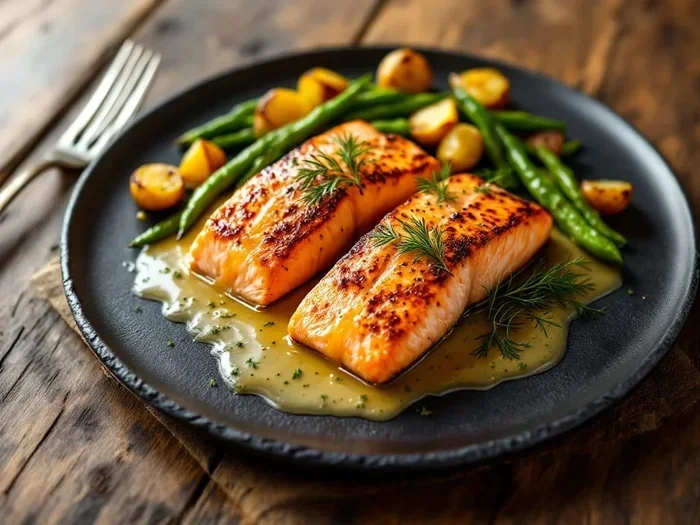
Serve your roasted salmon with lemon wedges, fresh dill, or your favorite side dishes. Asparagus, roasted potatoes, and a simple salad all pair beautifully with oven-baked salmon.
Common Mistakes to Avoid When Baking Salmon
Even experienced cooks sometimes make mistakes when baking salmon. Here are the most common ones and how to avoid them.
Starting with Cold Salmon
Putting a cold fillet straight into a hot oven causes uneven cooking. The outside overcooks while the inside stays cold. Always let your salmon come to room temperature for about 15 minutes before baking. This small step makes a big difference in the final result.
Overcooking the Fish
Overcooked salmon is dry, chalky, and loses its beautiful flavor. The most common cause is leaving it in the oven too long. Trust your thermometer and pull the salmon out as soon as it hits 145°F internally. Remember, the fish continues cooking after you take it out.
Skipping the Parchment Paper
Baking salmon directly on a bare sheet pan often leads to sticking and uneven browning. Line your pan with parchment paper or a silicone baking mat. This ensures the salmon releases easily and the skin crisps up evenly.
Using Too Much Oil
A light drizzle of olive oil is all you need. Too much oil causes the salmon to fry rather than bake. It can also make the skin greasy instead of crispy. Less is more when it comes to preparing salmon for the oven.
Opening the Oven Door Too Often
Every time you open the oven door, heat escapes and the temperature drops. This can cause your salmon to cook unevenly. Resist the urge to check on it constantly. Trust your timer and only open the door when it is time to check the temperature.
Expert Tips for Restaurant-Quality Salmon
Want to take your salmon cooking tips to the next level? Here are some pro tricks that make a noticeable difference.
Score the Skin
If you are cooking skin-on salmon, use a sharp knife to make 2 to 3 shallow scores on the skin side. This prevents the fillet from curling up in the oven. It also helps the heat penetrate more evenly through the skin.
Brine for Extra Moisture
A quick 10-minute brine in salted water (1 tablespoon salt per cup of water) can dramatically improve the texture of your salmon. The brine helps the fish retain moisture during cooking. This is especially helpful for leaner salmon varieties.
Finish with a Hot Broil
For an extra crispy top, switch your oven to broil for the last 1 to 2 minutes of cooking. Watch it closely during this step. The broiler can go from golden to burnt in seconds. This trick gives your salmon a beautiful caramelized finish.
Use a Baking Sheet With a Wire Rack
Elevating the salmon on a wire rack set over a baking sheet allows hot air to circulate underneath. This promotes even browning on both sides and prevents the bottom from getting soggy. It is a small change that elevates your results significantly.
Quick Tips Summary
Here is a quick recap of the essential salmon cooking guide points to remember:
- Preheat your oven to 400°F or 425°F for best results
- Always let salmon come to room temperature before baking
- Place fillet skin-side down on parchment paper
- Use an instant-read thermometer to check doneness
- Target 145°F internal temperature for fully cooked salmon
- Rest the fish for 3 to 5 minutes after baking
- Avoid common mistakes like cold starts and overcooking
Mastering the right salmon oven settings is easier than most people think. Once you nail the temperature and timing, you will be able to bake perfect salmon without even thinking about it. It becomes second nature after a few tries.
FAQ: Common Questions About Cooking Salmon in the Oven
What is the best temperature to bake salmon?
The best temperature to bake salmon is 400°F for most fillets. This provides a great balance of crispy exterior and moist, flaky interior. If you prefer extra crispy skin, 425°F works well too. For a gentler cook, 375°F is a good option for thicker cuts.
How long does it take to cook salmon at 400 degrees?
A standard 1-inch thick salmon fillet takes about 12 to 15 minutes at 400°F. Thicker fillets may need up to 18 minutes. Always check the internal temperature with a thermometer. The salmon is done when it reaches 145°F in the thickest part.
Should I cook salmon skin-side up or down?
Always cook salmon skin-side down. The skin protects the delicate flesh from direct heat and renders into a crispy, delicious layer. Placing it skin-side down on a parchment-lined baking sheet gives you the best texture and prevents sticking.
Can you overcook salmon in the oven?
Yes, overcooking salmon is very common and easy to do. Salmon dries out quickly once it passes the ideal temperature. The key is to pull it out just before it reaches 145°F internal temp, as the residual heat will continue cooking the fish during resting.
What internal temperature is safe for salmon?
The FDA recommends an internal temperature of 145°F for cooked salmon. This ensures the fish is safe to eat and has a firm, flaky texture. For a more medium-rare center, many chefs pull salmon at 125°F to 130°F and let carryover cooking finish the job.
Do I need to flip salmon while baking?
No, you do not need to flip salmon while baking. Keeping it skin-side down throughout the cook ensures even cooking and crispy skin. The top flesh side cooks gently from the oven heat without needing to be turned over.
Final Thoughts on Baking Salmon
Cooking salmon in the oven does not have to be complicated. The answer to how many degrees to cook salmon in oven comes down to a simple range: 400°F to 425°F for most situations. These temperatures deliver perfectly cooked salmon with crispy skin and a tender, juicy center every time.
Remember to use a thermometer, let the fish rest before serving, and avoid the common mistakes we covered. With these tips in your toolkit, you can serve restaurant-quality baked salmon any night of the week. Practice a few times, trust your instincts, and soon you will not even need a recipe. Your salmon fillet temperature game will be on point.
The beauty of oven-baked salmon is its simplicity. A little salt, a hot oven, and a few minutes of patience are all you need. Once you get the hang of it, you will wonder why you ever ordered salmon at a restaurant. So preheat that oven, grab a fresh fillet, and get cooking. Your taste buds will thank you.