Can I Make Filter Coffee In A French Press At Home
Yes, you can make filter coffee in a French press at home. By using a paper filter and adjusting your grind size, water temperature, and brewing time, you can transform your French press into a tool for producing clean, bright coffee similar to drip coffee. This guide covers every step, from equipment needed to common mistakes to avoid.
Have you ever looked at your French press and wondered if it could do more than just make that rich, bold cup you love? The idea of using a French press for filter coffee might sound unusual, but it is actually a clever trick that many coffee lovers swear by. If you have been curious about trying something new with your favorite brewing tool, you are in the right place.
Making filter coffee in a French press at home is simpler than you might think. You do not need expensive equipment or fancy gadgets. With the right technique, a little patience, and some basic knowledge, you can enjoy a clean, smooth cup of coffee that rivals what you would get from a drip machine. This guide will walk you through everything you need to know.
Filter coffee and French press coffee are two popular coffee brewing methods, but they work in very different ways. A standard drip coffee maker passes hot water through a basket of grounds and a paper filter, producing a light, clean cup. A French press steeps the grounds in hot water and then uses a metal plunger to separate the liquid from the solids. The result is a heavier, more full-bodied drink. But what if you could combine the best of both worlds?
That is exactly what we are going to explore. By the end of this article, you will understand how to adjust your French press technique to brew something closer to filter coffee. We will cover grind size, water temperature, timing, and troubleshooting common issues. Let us get started.
Key Takeaways
- Use a medium-fine grind: A finer grind than usual French press coffee helps create a cleaner cup.
- Try the immersion-drip method: Steep the coffee briefly, then pour through a paper filter for best results.
- Water temperature matters: Aim for 195°F to 205°F for optimal extraction.
- Adjust your coffee ratio: Use 1:15 to 1:17 coffee-to-water ratio for balanced flavor.
- Patience is key: Let the coffee bloom and steep for the right amount of time.
- Clean your French press thoroughly: Residual oils can affect the taste of your filter coffee.
📑 Table of Contents
- Understanding Filter Coffee vs French Press Coffee
- Can You Really Make Filter Coffee in a French Press?
- What You Need to Get Started
- Step-by-Step Guide to Making Filter Coffee in a French Press
- Tips for the Best Results
- Common Mistakes to Avoid
- Why This Method Works
- Comparing Results: Traditional French Press vs Filter-Style French Press
- Final Thoughts
Understanding Filter Coffee vs French Press Coffee
Before we dive into the how-to, it helps to understand the key differences between these two brewing methods. Both use the same basic ingredient, roasted coffee beans ground and mixed with hot water, but the process and the result are quite different.
How Filter Coffee Works
Filter coffee, also known as drip coffee, relies on gravity. Hot water is heated and then dripped over a bed of coffee grounds sitting in a paper or metal filter. As the water passes through, it extracts flavors and oils from the grounds. The liquid drips into a carafe or mug below. The paper filter catches most of the fine particles and oils, which gives filter coffee its characteristic clean and bright taste.
The coffee ratio for filter coffee is usually around 1:15 to 1:17, meaning one gram of coffee for every 15 to 17 grams of water. The water temperature should be between 195°F and 205°F. Most drip machines handle the timing automatically, but the brewing time typically lasts about 5 to 6 minutes from start to finish.
How French Press Coffee Works
A French press uses immersion brewing. You add coarse coffee grounds to the bottom of the press, pour hot water over them, and let everything steep together for about 4 minutes. Then you press the plunger down, which separates the grounds from the liquid. Because the metal mesh filter lets oils and fine particles through, French press coffee tastes richer, heavier, and more robust.
The standard coffee ratio for French press is about 1:12 to 1:15, which makes for a stronger cup. The coarse grind size is essential because fine grounds will slip through the mesh and make your coffee gritty. The brewing time is shorter than filter coffee, usually around 4 minutes.
Key Differences at a Glance
- Brewing method: Drip (gravity) vs immersion (steeping)
- Filter type: Paper or metal vs metal mesh
- Grind size: Medium for filter, coarse for French press
- Coffee taste: Clean and bright vs rich and full-bodied
- Brewing time: 5 to 6 minutes vs 4 minutes
- Oil content: Low (paper filters remove oils) vs high (mesh retains oils)
Understanding these differences is the first step toward making filter-style coffee in your French press. The goal is to mimic the clean, bright profile of drip coffee while using the immersion method your French press was designed for.
Can You Really Make Filter Coffee in a French Press?
The short answer is yes. The longer answer is that you can get surprisingly close to filter coffee results with a French press, but it requires some adjustments. A standard French press will never produce exactly the same cup as a drip machine, because the metal mesh filter is fundamentally different from a paper filter. However, with the right technique, you can significantly reduce the oils and sediments that make French press coffee heavy.
Think of it this way. If you love the convenience and richness of your French press but also enjoy the clean taste of filter coffee, this hybrid approach gives you the best of both worlds. You get the simplicity of using one device and the freedom to experiment with your coffee brewing technique.
Many home baristas have tried this method and found it works well for everyday mornings. It is especially useful if you do not own a drip coffee maker but still want a lighter, cleaner cup. The technique is straightforward and does not require any special equipment beyond what you already have.
What You Need to Get Started
Making filter-style coffee in a French press does not require a lot of gear. You probably already have everything you need in your kitchen. Here is a simple list of what will help you get the best results.
Essential Equipment
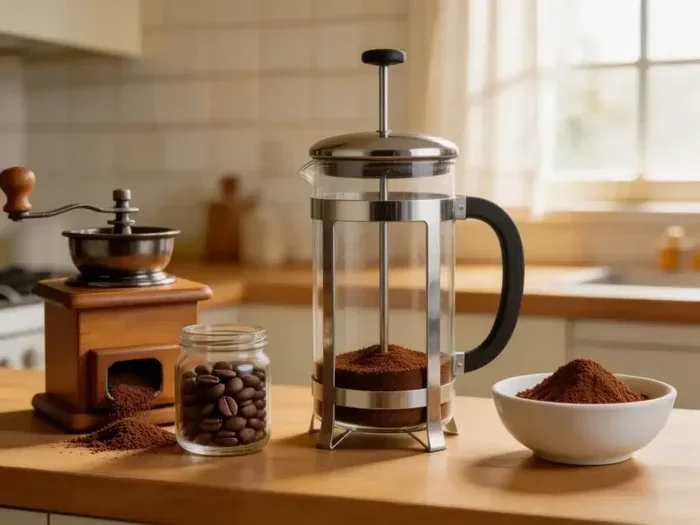
- A French press: Any size works, but a 34-ounce press is ideal for making 3 to 4 cups.
- A coffee grinder: You need to grind your beans fresh for the best coffee flavor. A burr grinder gives you the most consistent results.
- A paper coffee filter: This is the secret weapon. A standard size paper filter that fits inside your French press will help strain out fine particles and oils.
- A kettle: A gooseneck kettle gives you more control over pouring, but any kettle works fine.
- A kitchen scale: Measuring by weight ensures consistency every time you brew.
- A timer: Your phone timer works perfectly for tracking brewing time.
Choosing the Right Coffee Beans
The quality of your coffee beans matters a lot. Freshly roasted beans produce the best coffee taste. Look for beans that were roasted within the past two to four weeks. Medium roast beans work especially well for this method because they balance acidity and body without being too intense.
If you prefer a lighter, brighter cup, try a light roast. For a richer taste, go with a medium-dark roast. The beauty of making coffee at home is that you can experiment until you find your perfect coffee ratio and roast level.
Step-by-Step Guide to Making Filter Coffee in a French Press
Now for the fun part. Here is a detailed walkthrough of the process. Follow these steps closely, and you will be rewarded with a clean, smooth cup of coffee.
Step 1: Heat Your Water
Start by heating your water to between 195°F and 205°F. This is the sweet spot for coffee extraction. Water that is too hot will over-extract the grounds and make your coffee bitter. Water that is too cool will under-extract and leave your cup tasting flat and sour.
If you do not have a thermometer, bring your water to a boil and then let it sit for about 30 seconds. This cooling period brings it into the ideal range. Getting the water temperature right is one of the most important steps in any coffee brewing method.
Step 2: Grind Your Coffee
For this method, use a medium-fine grind. This is finer than what you would use for a standard French press but not as fine as espresso. The coarse grind used in traditional French press brewing lets too much sediment through when you are trying to achieve a cleaner cup.
A good rule of thumb is to grind about 30 grams of coffee for 500 milliliters of water. This coffee ratio of roughly 1:16 produces a balanced cup. Adjust to your taste by adding more coffee for a stronger brew or more water for a lighter one.
Step 3: Place the Paper Filter
This is the key difference from regular French press brewing. Take a standard paper coffee filter and place it inside the French press. You may need to fold it slightly to make it fit snugly. The paper filter will catch the fine particles and oils that the metal mesh normally lets through.
Before adding coffee, pour some hot water through the filter to rinse it. This removes any papery taste and preheats the French press. Discard the rinse water. This small step makes a big difference in the final coffee taste.
Step 4: Add Coffee Grounds and Pour Water
Add your ground coffee to the French press. Pour about 50 milliliters of hot water over the grounds and wait for 30 seconds. This step is called blooming. It allows the coffee to release carbon dioxide, which helps with even coffee extraction.
After blooming, slowly pour the remaining hot water over the grounds. Try to saturate all the coffee evenly. Put the lid on the French press but do not press the plunger down yet.
Step 5: Steep and Strain
Let the coffee steep for about 3 to 4 minutes. This is shorter than the typical 4 to 5 minutes for French press because we are aiming for a lighter, cleaner cup. Use your timer to keep track.
After steeping, slowly pour the coffee through the paper filter into your mug or carafe. Do not press the plunger. Instead, let gravity do the work. Pouring slowly helps the paper filter catch more particles and oils, giving you a cleaner coffee flavor.
If you have a lot of coffee to brew, you can pour it all through the filter in batches. The second pass through the filter will produce an even cleaner cup.
Step 6: Serve and Enjoy
Your filter-style coffee is ready to drink. You will notice it tastes lighter and cleaner than traditional French press coffee. The body is still there, but the heavy oils and sediments have been filtered out. Add milk, cream, or sweetener if you like, or enjoy it black to appreciate the pure coffee flavor.
Tips for the Best Results
Getting great coffee from your French press takes a little practice, but these tips will help you nail it from the start.
- Use fresh, filtered water. The water makes up over 98 percent of your coffee. Good water means good coffee. Avoid distilled water, which can taste flat.
- Grind just before brewing. Pre-ground coffee loses its freshness quickly. Grinding right before you brew preserves the coffee flavor and aroma.
- Experiment with steeping time. Try 3 minutes for a lighter cup and 4 minutes for something a bit more robust. Small changes make a big difference.
- Rinse your paper filter. This simple step removes any residual paper taste and preheats your brewing vessel.
- Keep your French press clean. Residual coffee oils can build up and affect the taste of your next brew. Wash it thoroughly after every use.
- Store your beans properly. Keep them in an airtight container away from light and heat. This keeps them fresh longer and ensures consistent coffee taste every time.
Quick Tips
Here are some fast reminders to keep in mind:
- Always use a medium-fine grind for filter-style French press coffee.
- The coffee ratio of 1:16 is a great starting point.
- Rinsing the paper filter prevents any papery aftertaste.
- Pouring slowly through the filter gives you a cleaner cup.
- Do not press the plunger. Let gravity do the work.
Common Mistakes to Avoid
Even experienced coffee makers run into problems sometimes. Here are the most common mistakes people make when trying this method and how to fix them.
Using Too Fine a Grind
If your grind is too fine, the paper filter will clog quickly and slow down the pour. This can also make your coffee taste over-extracted and bitter. Stick to a medium-fine grind for the best balance between cleanliness and flow rate.
Skipping the Bloom
Skipping the bloom means you miss out on even coffee extraction. The initial pour of water and 30-second wait allows gases to escape and the grounds to saturate evenly. This small step improves the overall coffee taste noticeably.
Using the Wrong Coffee Ratio
Too much coffee and your cup will taste strong and muddy. Too little and it will be weak and watery. The 1:16 ratio is a reliable starting point. From there, you can adjust based on your personal preference. If you like your coffee stronger, add more grounds rather than reducing the water.
Not Rinsing the Filter
This might seem like a minor step, but unrinsed paper filters can leave a slight papery taste in your coffee. Taking 10 seconds to rinse the filter with hot water makes a noticeable difference in the final cup.
Pressing the Plunger
The whole point of this method is to use the paper filter instead of the metal mesh plunger. Pressing the plunger defeats the purpose and pushes sediments through. Let the coffee flow through the filter naturally by pouring it out.
Why This Method Works
The reason this hybrid approach works is simple. By adding a paper filter to your French press, you get the best of both coffee brewing methods. You still enjoy the ease and convenience of using your French press, but you get the clean, bright taste that comes from paper filtration. The paper catches the fine particles and oils that would normally pass through the metal mesh.
This method also gives you more control over the coffee extraction process. You can adjust the grind size, steeping time, and pour speed to fine-tune your cup. Once you get the hang of it, you might find that you prefer this method over using a traditional drip machine.
Many people who live in small spaces or travel frequently appreciate this technique. It saves counter space and eliminates the need for a separate drip coffee maker. If you have ever wanted to make homemade coffee that tastes clean and refreshing without buying extra equipment, this is the way to do it.
Some coffee enthusiasts also use this method when they want to brew a larger batch but only have a French press on hand. The ability to produce multiple cups of clean coffee from a single device is a huge advantage. It is also a great trick to know when you are hosting guests and want to serve something different from your usual French press coffee.
If you are also interested in other kitchen techniques, you might enjoy learning about what button to press to preheat oven for baking, or exploring how to make bacon in the oven without parchment paper for a great breakfast pairing with your coffee.
Comparing Results: Traditional French Press vs Filter-Style French Press
To give you a clearer picture, here is a comparison of what you can expect from each method.
- Traditional French press: Rich, heavy body with visible oils and fine sediment. Stronger coffee taste and more mouthfeel.
- Filter-style French press: Cleaner, brighter cup with less oil and sediment. Lighter body that is closer to drip coffee.
- Standard drip coffee maker: Very clean and light. Convenient but less control over the brewing process.
The filter-style French press method gives you a cup that falls right in between. It is cleaner than traditional French press but still has more body and flavor than standard drip coffee. This makes it a fantastic middle ground for people who enjoy both styles.
Getting the right water temperature and brewing time is essential for this comparison to work in your favor. Too hot or too long, and the filter-style method will taste just as bitter as a poorly made French press. Take your time, follow the steps, and you will be rewarded.
If you love exploring kitchen techniques, you might also enjoy learning how to dry pasta in oven — both require patience, the right temperature, and a little practice to get it just right.
Final Thoughts
Making filter coffee in a French press at home is one of those simple kitchen hacks that can transform your morning routine. You do not need to buy a new machine or spend a lot of money. All you need is your existing French press, a paper filter, and a willingness to experiment.
The beauty of this method is its flexibility. You can adjust the grind size, steeping time, and coffee ratio until you find your perfect cup. Once you master the technique, you will have a reliable way to make clean, delicious filter coffee anytime you want.
So go ahead and give it a try. Your next morning cup of coffee might just become your new favorite way to start the day. Happy brewing!
Frequently Asked Questions
Can I use a French press to make regular filter coffee?
Yes, you can make filter-style coffee in a French press by adding a paper filter and adjusting your grind size and technique. It will not be exactly the same as drip coffee, but it produces a clean, bright cup that is very close.
What grind size should I use for filter coffee in a French press?
Use a medium-fine grind. It is finer than the coarse grind used for regular French press coffee but not as fine as espresso. This size helps achieve a clean cup without clogging the paper filter.
How long should I steep the coffee for filter-style French press brewing?
Steep for 3 to 4 minutes. This is slightly shorter than the 4 to 5 minutes used for traditional French press, and it helps create a lighter, cleaner cup of coffee.
Do I need a special paper filter for a French press?
No, you do not need a special filter. A standard round or square paper coffee filter that fits inside your French press works perfectly. Just rinse it before use to remove any papery taste.
Will filter-style French press coffee taste different from drip coffee?
Yes, it will taste slightly different. It has more body and flavor than standard drip coffee because the immersion method extracts more oils, but it is cleaner than traditional French press coffee thanks to the paper filter.
Can I reuse the coffee grounds for a second brew?
You can, but the second brew will be much weaker and less flavorful. The first extraction pulls out most of the desirable compounds. For the best coffee taste, it is better to use fresh grounds each time.
=== CONCLUSION ===
Making filter coffee in a French press at home is easier than you think and well worth the effort. By using a paper filter, adjusting your grind to medium-fine, and following the right steeping time and coffee ratio, you can enjoy a clean, smooth cup that bridges the gap between French press and drip coffee.
This method gives you more control over your coffee brewing experience without requiring any extra equipment. Whether you are a coffee beginner or a seasoned home barista, the filter-style French press technique is a valuable skill to have in your kitchen. Try it today and taste the difference for yourself.