What Temperature Water To Make Coffee Perfect Every Time
The ideal what temperature water to make coffee is between 195°F and 205°F (90°C–96°C). Water that is too hot or too cold will ruin your coffee extraction and flavor. Whether you use a drip coffee maker, French press, or pour over, getting the water temperature right is the single most important factor in brewing great coffee at home.
Making great coffee at home starts with one simple thing most people overlook. The temperature of your water matters more than almost anything else. If you have ever wondered about what temperature water to make coffee, you are in the right place.
Think of it this way. You would not cook a steak on a grill that is not hot enough. You would not bake cookies at the wrong oven temperature. The same logic applies to your morning cup. Brewing temperature is the foundation of great coffee flavor. Get it right, and everything else falls into place.
In this guide, we will walk through the exact temperatures, why they matter, and how to apply them to every brewing method you use at home. No fancy equipment needed. Just straightforward advice that helps you brew better coffee starting today.
Key Takeaways
- Ideal Brewing Range: The best water temperature for coffee falls between 195°F and 205°F.
- Too Hot Ruins Flavor: Boiling water (212°F) over-extracts coffee grounds and creates bitterness.
- Too Cold Under-Extracts: Water below 195°F produces weak, sour, and flat coffee.
- Method Matters: Different coffee brewing methods require slight temperature adjustments.
- Simple Tools Help: A basic thermometer or electric kettle with temperature control makes perfect brewing easy.
- Freshness Counts: Always use fresh, filtered water and grind beans just before brewing for the best results.
📑 Table of Contents
- Why Water Temperature Matters for Coffee
- What Temperature Water to Make Coffee: The Perfect Range
- Ideal Temperature for Different Coffee Brewing Methods
- How to Measure and Control Water Temperature
- Common Mistakes That Ruin Coffee Temperature
- How Water Quality Affects Coffee Temperature and Flavor
- Expert Tips for Perfect Coffee Every Time
- Final Thoughts on Coffee Brewing Temperature
Why Water Temperature Matters for Coffee
Water temperature is the engine behind coffee extraction. When hot water touches your coffee grounds, it pulls out flavors, oils, and aromas. This process is called coffee extraction. The temperature of the water controls how fast and how much gets extracted.
Too much extraction makes coffee bitter and harsh. Too little extraction leaves it sour and weak. The sweet spot is right in the middle. And that sweet spot depends entirely on hot water hitting your grounds at the right degree.
The Science Behind Brewing Temperature
Here is what happens at the molecular level. Heat energizes water molecules. These molecules move faster and penetrate the coffee grounds more deeply. They dissolve soluble compounds like acids, sugars, and oils. Each compound extracts at a different rate depending on temperature.
At lower temperatures, only the easiest compounds dissolve. These are often the sour and acidic ones. At higher temperatures, more compounds release, including bitter ones. The goal is to extract the balanced mix. That balanced mix gives you a smooth, rich, and satisfying cup.
Think about it like this. You want the full picture, not just one corner of it. The right ideal coffee temperature gives you that complete flavor profile.
What Temperature Water to Make Coffee: The Perfect Range
The National Coffee Association recommends a water temperature between 195°F and 205°F for optimal extraction. This range works for almost every brewing method. It is the gold standard that baristas and coffee professionals swear by.
Let us break it down further:
- 195°F to 200°F: Great for medium roast beans and balanced flavor.
- 200°F to 205°F: Ideal for dark roasts and full-bodied coffee.
- Below 195°F: Risk of under-extraction. Your coffee will taste sour.
- Above 205°F: Risk of over-extraction. Your coffee will taste bitter.
If you do not have a thermometer, here is a simple trick. Bring water to a boil and then let it sit for 30 to 45 seconds. This brings it down into the ideal range. It is an easy coffee brewing guide hack that works every time.
Why Boiling Water Is Not the Answer
Many people assume boiling water makes the best coffee. It does not. Boiling water is 212°F, and that is too hot for most beans. It scorches the grounds and pulls out harsh, bitter compounds. The result is a cup that burns your tongue and leaves a bad aftertaste.
Similarly, using water straight off the boil with delicate beans like light roasts will destroy their subtle flavors. Light roasts have more complex notes that need gentler heat. A slightly lower temperature around 195°F preserves those nuances beautifully.
Ideal Temperature for Different Coffee Brewing Methods
Not all brewing methods are the same. Each one interacts with water and coffee grounds differently. The right water temperature for coffee can shift slightly depending on your method. Here is a detailed look at the best temperatures for each popular brewing style.
| Brewing Method | Recommended Temperature | Why This Range Works |
|---|---|---|
| Drip Coffee Maker | 195°F – 205°F | Standard range for even extraction through paper filters |
| Pour Over | 195°F – 205°F | Control over flow rate and temperature gives precision |
| French Press | 200°F – 205°F | Longer steeping time needs slightly higher heat |
| AeroPress | 175°F – 205°F | Versatile range depending on brew time and grind size |
| Espresso Machine | 190°F – 200°F | High pressure extracts faster, so slightly lower heat works |
| Cold Brew | Room temperature or cold | Long steep (12-24 hours) extracts without heat |
As you can see, most methods fall in the same sweet spot. The differences are small but meaningful. If you are using an AeroPress, you have more flexibility. You can experiment with lower temperatures for a brighter cup or higher temperatures for a bolder cup.
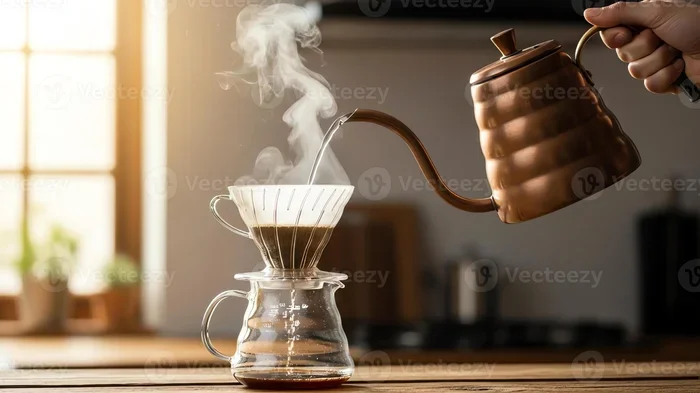
For pour over coffee, temperature control is especially important. Since water flows through grounds continuously, the heat of that water determines the pace of extraction. A gooseneck kettle with temperature settings is a great investment if you love this method.
French Press Temperature Tips
The French press is one of the most popular coffee brewing methods at home. It uses immersion, meaning the grounds sit in water for several minutes. Because of this longer contact time, you want your water at the higher end of the range, around 200°F to 205°F.
Here is a quick tip. Preheat your French press with hot water before adding grounds. This keeps the brewing temperature stable and prevents heat loss. It is a small step that makes a big difference in your final cup.
Pour Over Temperature Tips
Pour over brewing gives you the most control. You decide how fast the water flows, how much water you use, and the exact temperature. For the best results, heat your water to 200°F and pour in slow, steady circles. This ensures even saturation of all the coffee grounds.
If your water cools too quickly while pouring, you may need to use a bit more heat. Keep a kettle nearby to reheat between pours. Consistent coffee heat throughout the process is the key to a balanced cup.
How to Measure and Control Water Temperature
You do not need expensive gear to get the right temperature. But having the right tools makes life easier. Here are some practical ways to measure and control your brewing water.
Use a Kitchen Thermometer
A simple instant-read thermometer costs just a few dollars and takes the guesswork out of brewing. Boil your water, then check the temperature before pouring. Wait if it is too hot. Add a splash of cooler water if it is too hot.
This is the most reliable method for beginners. Once you get used to the feel of the right temperature, you can start eyeballing it.
Invest in a Temperature-Controlled Kettle
Electric kettles with temperature presets are a game changer. You can set the exact brewing temperature you want and the kettle will heat to that degree automatically. Many models let you save custom presets for different coffee styles.
If you drink multiple types of coffee, this is especially useful. You can switch between a lighter pour over setting and a bolder French press setting with the touch of a button.
The Boil-and-Wait Method
No thermometer or special kettle? No problem. The boil-and-wait method is a classic technique that works well. Simply bring your water to a full boil, then remove it from the heat and wait.
Wait about 30 seconds for a temperature around 205°F. Wait about 45 seconds for closer to 200°F. Wait about 60 seconds for around 195°F. This simple approach gives you a reliable range without any extra tools.
Preheat Your Brewer and Cup
Heat loss is a silent killer of great coffee. When hot water hits a cold French press or pour over dripper, the temperature drops fast. This can push your water below the ideal range before extraction even begins.
Rinse your brewer and cup with hot water before starting. This keeps everything warm and maintains a stable ideal coffee temperature throughout the brewing process.
Common Mistakes That Ruin Coffee Temperature
Even experienced coffee drinkers make mistakes with water temperature. Here are the most common ones and how to avoid them.
Using Water That Is Too Hot
This is the number one mistake. Many people assume hotter is better. It is not. Water that is boiling or near boiling extracts too many bitter compounds. The result is a harsh, unpleasant cup that masks the natural flavors of the beans.
If you use an espresso machine, check that the water temperature is set correctly. Some machines run too hot by default. A quick adjustment can dramatically improve your shot quality.
Using Water That Is Too Cool
On the flip side, water that is not hot enough will under-extract the grounds. Your coffee will taste sour, thin, and lifeless. This often happens when people reheat previously boiled water. Re-boiled water loses oxygen and heats unevenly.
Always use fresh water and heat it to the proper range. Do not reuse water that has already been boiled.
Ignoring Ambient Temperature
Here is something most guides do not mention. The temperature of your kitchen matters. In a cold room, your brewing equipment loses heat faster. In a warm kitchen, your water stays in the ideal range longer.
This is why preheating your brewer and cup is so important. It compensates for the ambient temperature and keeps your coffee extraction consistent.
Not Adjusting for Roast Level
Dark roast beans are more porous and extract faster than light roast beans. Because of this, dark roasts can handle slightly higher temperatures. Light roasts benefit from slightly lower temperatures to avoid burning their delicate flavors.
A good rule of thumb is to start at 200°F and adjust from there. If your coffee tastes bitter, lower the temperature by a few degrees. If it tastes sour, raise it slightly.
How Water Quality Affects Coffee Temperature and Flavor
Temperature is not the only factor. The water you use plays a huge role in how your coffee tastes. Hard water with high mineral content can alter extraction. Soft water may not extract enough flavor. Filtered water strikes the best balance.
Also, the starting temperature of your water matters. Cold tap water takes longer to reach the ideal range and may fluctuate during heating. Starting with room temperature filtered water gives you more control over the heating process.
Think of it this way. You would not use dirty oil in a car engine. Do not use bad water in your coffee maker. Clean, fresh, filtered water at the right temperature is the foundation of a great cup.
Expert Tips for Perfect Coffee Every Time
Here are some extra tips from experienced coffee makers that will level up your brewing game.
- Grind your beans fresh: Pre-ground coffee loses flavor fast. Grind just before brewing for the best results.
- Use a scale: Measuring your coffee and water by weight gives you consistency every time.
- Keep a brewing log: Note the temperature, grind size, and brew time. This helps you refine your process over time.
- Store beans properly: Keep coffee beans in an airtight container away from heat and light.
- Clean your equipment: Old oils and residue build up in coffee makers and affect flavor. Clean regularly.
- Experiment freely: Try different temperatures within the range and see what you like best. Your palate is the ultimate guide.
These tips may seem small, but they add up. Consistency is what separates a good cup from a great cup. When you control your what temperature water to make coffee, you control the entire brewing process.
For those who also enjoy warming food in the oven, the principles are similar. Just like you need the right temperature to warm pizza in oven, you need the right water temperature for coffee. Precision matters in both cases.
Final Thoughts on Coffee Brewing Temperature
Getting the what temperature water to make coffee right is the simplest and most impactful change you can make at home. You do not need expensive gear or years of experience. You just need to pay attention to the temperature of your water.
Stay in the 195°F to 205°F range. Use fresh, filtered water. Preheat your equipment. Adjust for your brewing method and roast level. Follow these steps and you will notice a difference in every single cup.
Great coffee is not about complicated techniques or fancy machines. It is about mastering the basics. And water temperature is the biggest basic of all. Start today. Your morning coffee will never taste the same.
Much like knowing the right what button to press to preheat oven ensures your food cooks properly, knowing the right water temperature ensures your coffee extracts perfectly. Small details create big results.
So go ahead. Brew a cup. Check the temperature. Taste the difference. You will wonder why you did not pay attention to this sooner.
Frequently Asked Questions
What is the best temperature to brew coffee?
The best temperature to brew coffee is between 195°F and 205°F. This range allows for optimal extraction of flavors, oils, and aromas from the coffee grounds. Water that is too hot or too cold will result in a cup that tastes either bitter or sour.
Can I use boiling water to make coffee?
You should not use boiling water directly on coffee grounds. Boiling water is 212°F and it over-extracts the coffee, making it bitter. Let boiling water cool for 30 to 45 seconds before pouring it over your grounds for the best flavor.
Does the type of coffee maker affect the ideal water temperature?
Yes, different coffee makers work best at slightly different temperatures. Drip coffee makers and pour over methods do well at 195°F to 205°F. French press brewing benefits from water closer to 205°F. Espresso machines work well between 190°F and 200°F due to the high pressure involved.
How can I measure water temperature without a thermometer?
The easiest way is the boil-and-wait method. Bring water to a full boil, then remove it from the heat and wait 30 to 60 seconds. This brings the temperature into the ideal brewing range. A temperature-controlled electric kettle is another great option if you want more precision.
Why does my coffee taste bitter or sour?
Bitter coffee usually means the water was too hot, causing over-extraction. Sour coffee usually means the water was too cool, causing under-extraction. Adjusting your water temperature by just a few degrees can dramatically improve the taste of your cup.
Does water quality affect coffee brewing temperature?
Water quality does not directly change the temperature, but it does affect extraction. Filtered water heats more evenly and produces a cleaner taste. Hard water with high mineral content can alter how flavors extract from coffee grounds, even at the right temperature.