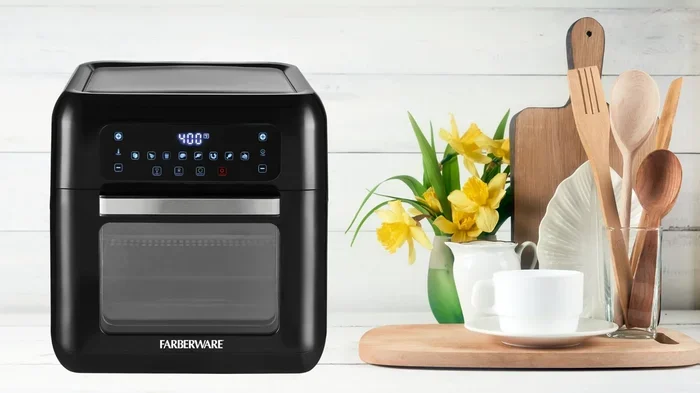
How Many Watts Does Your Toaster Oven Actually Use
Most toaster ovens use between 1,200 and 1,800 watts, with the average model drawing around 1,400 watts. Knowing how many watts your toaster oven actually uses helps you estimate electricity costs and make smarter energy choices. Compact toaster ovens tend to use less power, while larger convection models can draw significantly more. This guide breaks down wattage numbers, compares them to other appliances, and shows you how to cut your energy bill.
Have you ever wondered how many watts your toaster oven actually uses? It is a simple question, but the answer affects your electricity bill more than you might think. Toaster oven wattage varies widely depending on the model, size, and features. A small compact oven might sip power, while a large convection model can draw serious energy. Understanding this numbers game helps you cook smarter and spend less on electricity.
Many people assume that because toaster ovens are small, they must be cheap to run. That is not always true. A toaster oven power consumption depends on how long you cook, what temperature you use, and how often you fire it up. This guide breaks it all down for you. You will learn the real wattage numbers, see how they compare to other kitchen appliances, and pick up practical tips to lower your toaster oven energy cost. Let us dive in.
Key Takeaways
- Average wattage is 1,400W: Most standard toaster ovens fall in the 1,200 to 1,800 watt range.
- Size matters: Compact models use less power, while large convection ovens pull more watts.
- Toaster ovens are more efficient than full-size ovens: They use roughly half the energy for small cooking jobs.
- Energy cost is easy to calculate: Multiply watts by hours used and your local electricity rate.
- Usage habits affect power draw: Preheating, cooking time, and temperature settings all influence consumption.
- Look for energy-efficient models: Newer toaster ovens often have better insulation and faster heating.
- Small changes save money: Using the right size oven and avoiding unnecessary preheating reduces electricity usage.
📑 Table of Contents
- Understanding Toaster Oven Wattage
- Average Toaster Oven Wattage by Type
- How Toaster Oven Power Consumption Compares to Other Appliances
- What Affects Your Toaster Oven Wattage
- How to Calculate the Energy Cost of Running a Toaster Oven
- Tips to Reduce Toaster Oven Energy Usage
- Common Mistakes That Increase Toaster Oven Energy Use
- Expert Insights on Toaster Oven Efficiency
- Key Takeaways
- Conclusion
Understanding Toaster Oven Wattage
Before we get into specific numbers, it helps to understand what wattage actually means. Wattage is the rate at which an appliance uses electricity. The higher the wattage, the more energy the device pulls per hour. Think of it like the speed of a water hose. A bigger hose moves more water. A higher-wattage oven heats up faster but uses more power.
Every toaster oven has a label or manual that lists its power rating. This number tells you the maximum wattage the oven draws. But here is the catch. Not all ovens run at full power the entire time. They cycle on and off to maintain temperature. So the actual toaster oven electricity usage is often lower than the peak wattage suggests.
What Is a Watt, Really?
A watt is a unit of power. Your electricity bill charges you per kilowatt-hour (kWh). One kilowatt equals 1,000 watts. If your toaster oven watts are 1,400, it uses 1.4 kilowatts when running at full power. If you run it for one hour, that is 1.4 kWh of energy used. Multiply that by your electricity rate, and you get your cost.
Most homes in the US pay between $0.10 and $0.30 per kWh. So running a 1,400-watt oven for one hour costs roughly 14 to 42 cents. That does not sound like much. But if you use it daily, those costs add up fast.
Average Toaster Oven Wattage by Type
Not all toaster ovens are created equal. The wattage of toaster oven models varies a lot. Here is a closer look at what you can expect from different types.
Compact Toaster Ovens
Compact toaster ovens are small and lightweight. They typically use between 800 and 1,200 watts. These are great for singles or couples who mostly reheat food or make small meals. Because they use less kitchen appliance wattage, they are very energy-friendly. You will find many models in this range at affordable prices.
Compact ovens heat up quickly too. Less interior space means less air to warm. This is one reason they are so efficient for small tasks like toasting bread or reheating a slice of pizza.
Mid-Size Toaster Ovens
Mid-size models are the most popular. They typically draw between 1,200 and 1,500 watts. These ovens handle four slices of bread or a small pizza with ease. They strike a good balance between cooking capacity and energy efficiency. For most families, this is the sweet spot.
Many mid-size ovens also include convection fans. These fans circulate hot air for more even cooking. But they add a small power draw on top of the base wattage.
Large and Convection Toaster Ovens
Large toaster ovens and convection models can pull between 1,500 and 1,800 watts. Some premium models go even higher, up to 2,000 watts. These ovens can roast a whole chicken, bake a full sheet of cookies, or cook a small casserole. The trade-off is higher electricity usage.
If you use a large convection oven often, your toaster oven electricity bill will reflect that. But remember, even a 1,800-watt oven still uses less energy than a full-size range oven for most cooking tasks.
How Toaster Oven Power Consumption Compares to Other Appliances
One of the best ways to understand toaster oven wattage is to compare it with other common appliances. This gives you a real sense of where it stands on the energy scale.
Toaster Oven vs Regular Oven
A standard full-size electric oven typically uses 2,000 to 5,000 watts. That is a huge range, but even the low end is well above most toaster ovens. This means a toaster oven vs regular oven comparison strongly favors the toaster oven for small meals. You use roughly half the energy to cook the same amount of food.
Here is a quick comparison table to make this clear.
| Appliance | Typical Wattage | Best For |
|---|---|---|
| Compact Toaster Oven | 800 – 1,200W | Small meals, toasting, reheating |
| Mid-Size Toaster Oven | 1,200 – 1,500W | Family meals, baking, roasting |
| Large Convection Toaster Oven | 1,500 – 1,800W | Large meals, multi-dish cooking |
| Full-Size Electric Oven | 2,000 – 5,000W | Large roasts, big batch cooking |
| Microwave | 600 – 1,200W | Quick reheating, defrosting |
| Electric Stovetop (per burner) | 1,000 – 3,000W | Stovetop cooking |
As you can see, the toaster oven vs microwave watts comparison is close. Microwaves often use fewer watts. But microwaves do not brown or crisp food the way ovens do. For tasks that need that golden finish, a toaster oven is the better choice.
Toaster Oven vs Air Fryer
Air fryers are essentially small countertop convection ovens. Most air fryers use between 1,400 and 1,700 watts. That is very similar to a mid-size or large toaster oven. The difference is often in how efficiently they heat. Some air fryers cook faster, which can offset the higher wattage. But in general, energy consumption appliance comparisons come down to cooking time and temperature.
What Affects Your Toaster Oven Wattage
The number on the label is just the starting point. Several factors influence how much power your oven actually draws during a cooking session.
Oven Size and Capacity
Bigger ovens need more energy to heat up. A large compact oven wattage model with a spacious interior will always pull more watts than a tiny personal oven. More air to heat means more work for the heating element wattage. This is simple physics.
Cooking Temperature and Time
Higher temperatures require more energy. If you set your oven to 450 degrees, it uses more power than if you set it to 350 degrees. Similarly, a one-hour cooking session uses more electricity than a 15-minute session. Toaster oven energy usage per hour rises with both temperature and duration.
Preheating Habits
Many people preheat their toaster ovens before cooking. This adds extra energy use. Some recipes truly need a preheated oven, especially for baking and roasting. But for simple tasks like reheating leftovers, skipping the preheat can save energy. Every little bit helps reduce your toaster oven electricity bill.
Age and Condition of the Oven
Older ovens may have worn-out heating elements. A damaged element can cause the oven to draw more power than it should. Newer models often have better insulation and more efficient heating technology. If your oven is more than 10 years old, you might be wasting energy without realizing it.
How to Calculate the Energy Cost of Running a Toaster Oven
Figuring out your toaster oven power consumption is simpler than you might think. You just need three pieces of information.
- The wattage of your oven (found on the label or manual).
- The number of hours you use it per day.
- Your local electricity rate per kWh.
Here is the formula. Multiply the wattage by the hours used. Divide by 1,000 to get kWh. Then multiply by your electricity rate.
Let us do a quick example. Say your oven uses 1,400 watts. You cook for 30 minutes a day. That is 0.5 hours. So 1,400 times 0.5 equals 700 watt-hours, or 0.7 kWh. If your rate is $0.15 per kWh, your daily cost is about 10.5 cents. Over a month, that is roughly $3.15. Not bad at all.
But what if you use the oven for two hours a day? That doubles the cost to about $6.30 per month. And if you run a 1,800-watt model? The numbers climb higher. This is why understanding watts to kilowatts conversion matters. It puts you in control of your energy spending.
Quick Tips for Estimating Cost
- Use a plug-in power meter to measure real-time consumption.
- Track your usage for a week and average it out.
- Check your electricity bill for your exact per-kWh rate.
- Remember that cycling on and off means actual usage is often less than peak wattage suggests.
Tips to Reduce Toaster Oven Energy Usage
Want to lower your toaster oven electricity bill without giving up your favorite meals? These practical tips can help.
Choose the Right Size Oven
Match your oven size to your cooking needs. If you only toast bread and reheat small portions, a compact model is perfect. Do not buy a large convection oven if a smaller one does the job. This is one of the easiest ways to reduce power consumption.
Avoid Preheating When Possible
Skip preheating for simple tasks. Reheating a sandwich or warming up leftovers does not need a preheated oven. You save 3 to 5 minutes of full-power energy every time. Over weeks and months, this adds up.
Use the Right Cookware
Dark, thin pans heat up faster and cook food more evenly. This reduces cooking time and saves energy. Avoid overcrowding the oven, too. Air needs to circulate for efficient cooking. A crowded oven takes longer and uses more watts.
Keep the Oven Clean
Grease and food buildup on the heating elements can reduce efficiency. Clean elements heat more effectively. A clean oven also smells better and cooks more evenly. This is an easy maintenance habit with real energy savings.
Turn It Off Early
Many ovens hold heat well after turning off. If you are baking or roasting, try turning off the oven 5 to 10 minutes early. The residual heat finishes the job. This small habit can noticeably cut your toaster oven energy usage over time.
Look for Energy-Efficient Features
When shopping for a new oven, look for models with good insulation, convection fans, and precise temperature controls. These features help the oven heat faster and maintain temperature with less energy. Some newer models even have energy-saving modes that adjust power based on the cooking task.
Common Mistakes That Increase Toaster Oven Energy Use
We all have habits that quietly drive up our electricity bills. Here are some common mistakes to avoid.
- Opening the door too often. Every time you open the door, heat escapes. The oven works harder to recover the temperature. This increases toaster oven watts draw significantly.
- Using the oven for tiny tasks. Reheating a single roll in a full-size oven wastes energy. Use a microwave or toaster for very small jobs.
- Ignoring the manual. Many ovens have specific energy-saving instructions in the manual. Reading it takes five minutes and can save you money for years.
- Running a damaged oven. A worn heating element or broken seal wastes energy. If your oven takes longer to heat or stays cool at the edges, get it checked.
- Overcooking food. Setting the timer too long or cooking at too high a temperature wastes electricity. Follow recipes closely and use a timer.
Expert Insights on Toaster Oven Efficiency
Energy experts agree that toaster ovens are among the most efficient cooking appliances for small to medium meals. According to the Department of Energy, using a toaster oven instead of a full-size oven can save 50 to 75 percent of the energy used for the same meal. That is a huge difference over a year of regular cooking.
Experts also point out that convection toaster oven watts are worth considering. While convection models use slightly more power, they cook food faster. The faster cooking time often offsets the extra wattage. This makes them a smart choice for frequent cooks who want both speed and efficiency.
One thing to keep in mind is that toaster oven power rating is not the whole story. The real-world energy consumption appliance behavior depends on how you use it. A well-used, efficient small oven will almost always beat a large, rarely used oven in terms of total energy cost.
How to Pick an Energy-Efficient Toaster Oven
When shopping, look for these features. A tight-sealing door keeps heat inside. Good insulation holds temperature steady. A convection fan speeds up cooking. And an auto-shutoff feature prevents wasted energy. All of these contribute to lower toaster oven electricity usage over the life of the appliance.
Also, check the toaster oven watts on the energy label. The Energy Star program certifies some countertop ovens for efficiency. Choosing one of these certified models ensures you are getting a product designed to use less power without sacrificing performance.
Key Takeaways
- Average wattage is 1,400W: Most standard toaster ovens fall in the 1,200 to 1,800 watt range.
- Size matters: Compact models use less power, while large convection ovens pull more watts.
- Toaster ovens are more efficient than full-size ovens: They use roughly half the energy for small cooking jobs.
- Energy cost is easy to calculate: Multiply watts by hours used and your local electricity rate.
- Usage habits affect power draw: Preheating, cooking time, and temperature settings all influence consumption.
- Look for energy-efficient models: Newer toaster ovens often have better insulation and faster heating.
- Small changes save money: Using the right size oven and avoiding unnecessary preheating reduces electricity usage.
Conclusion
So, how many watts does your toaster oven actually use? The answer depends on your specific model, but most ovens fall between 1,200 and 1,800 watts. Understanding this number gives you the power to make informed decisions about your kitchen energy use. A toaster oven wattage check is one of the simplest things you can do to manage your electricity costs.
Comparing your oven to other appliances shows just how efficient it really is. A toaster oven uses far less energy than a full-size oven, and it cooks faster too. By following the tips in this guide, you can reduce your toaster oven energy cost even further. Choose the right size, avoid common mistakes, and adopt energy-smart cooking habits.
Every watt counts. Every kilowatt-hour matters. When you understand your toaster oven electricity usage, you take control of your energy footprint. Start today. Check your oven’s wattage, calculate your costs, and make small changes that add up to big savings over time.
The bottom line is simple. A toaster oven power consumption check takes just a few minutes. The savings it reveals can last for years. So go ahead, find your oven’s wattage, and start cooking smarter today.
Frequently Asked Questions
How many watts does a typical toaster oven use?
A typical toaster oven uses between 1,200 and 1,800 watts, with the average model drawing around 1,400 watts. Compact models may use as little as 800 watts, while large convection ovens can reach 1,800 watts or more.
Is a toaster oven more energy-efficient than a regular oven?
Yes, a toaster oven is significantly more energy-efficient for small to medium cooking tasks. It uses roughly half the energy of a full-size electric oven because it heats up faster and has a smaller interior to warm.
How can I reduce my toaster oven electricity bill?
You can reduce your electricity bill by avoiding preheating when not needed, using the right size oven for the task, keeping the oven clean, and turning it off a few minutes early. These small habits add up to meaningful savings over time.
Does a toaster oven use more watts than a microwave?
A toaster oven typically uses more watts than a microwave. Microwaves usually run between 600 and 1,200 watts, while toaster ovens average 1,200 to 1,800 watts. However, microwaves cook differently and are not always a direct replacement for oven tasks like baking or roasting.
How do I find the wattage of my toaster oven?
You can find the wattage on the product label on the back or bottom of the oven, in the user manual, or on the manufacturer’s website. The wattage number is usually printed clearly and is listed as the maximum power draw.
Can using a toaster oven save money on electricity?
Yes, using a toaster oven can save money because it uses less energy than a full-size oven for most cooking tasks. The savings depend on how often you cook, what you cook, and how long your cooking sessions are. Over time, the reduced energy use translates to lower electricity bills.