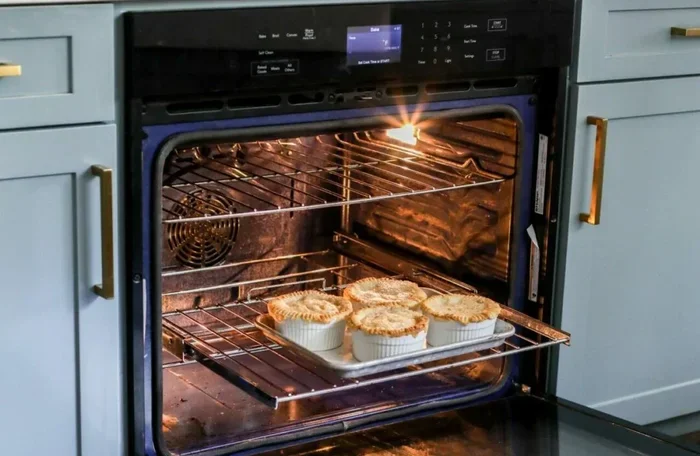
Does A Convection Oven Cook Faster Than A Regular Oven
Yes, a convection oven cooks faster than a regular oven — typically 20-25% quicker thanks to its fan that circulates hot air around the food. Understanding how this works helps you adjust recipes, save energy, and get evenly baked, roasted, and browned dishes every time.
Have you ever wondered whether that sleek convection oven sitting in your kitchen actually cooks food faster? You are not alone. Many home cooks hear the term “convection oven” and assume it means everything cooks quicker. But the real question is — does a convection oven cook faster than a regular oven, and what does that mean for your daily cooking?
The short answer is yes. A convection oven cooks food faster than a conventional oven. But the full story is more interesting than that. It is not just about speed. It is about how the heat moves, why it matters, and how you can use this knowledge to improve your meals. In this article, we will break it all down in simple terms.
Whether you are a beginner baker or someone who roasts dinner every night, understanding your oven makes a big difference. You will learn how convection works, why it speeds things up, and the simple tweaks you need to make when switching from a regular oven to a fan-forced one. Let us dive in.
Key Takeaways
- Faster Cooking: A convection oven reduces cooking time by 20-25% compared to a regular oven.
- Even Heat Distribution: The built-in fan eliminates hot spots for consistent results.
- Lower Temperature Needed: Reduce your recipe temperature by 25°F when using convection mode.
- Better Browning and Crispiness: The circulating air creates a crispy exterior on meats and baked goods.
- Energy Savings: Shorter cook times mean less electricity or gas used overall.
- Recipe Adjustments Are Key: Always check if your recipe is designed for convection or conventional cooking.
- Not Ideal for All Foods: Delicate dishes like soufflés and custards may need a regular oven setting.
📑 Table of Contents
- What Is a Convection Oven and How Does It Work?
- So, Does a Convection Oven Cook Faster Than a Regular Oven?
- Why Does Convection Cooking Reduce Time?
- How to Adjust Recipes for Convection Cooking
- What Foods Benefit Most From Convection Cooking?
- Energy Efficiency and Cost Savings
- Common Mistakes People Make With Convection Ovens
- Expert Tips for Getting the Best Results
- Frequently Asked Questions
- Final Thoughts
What Is a Convection Oven and How Does It Work?
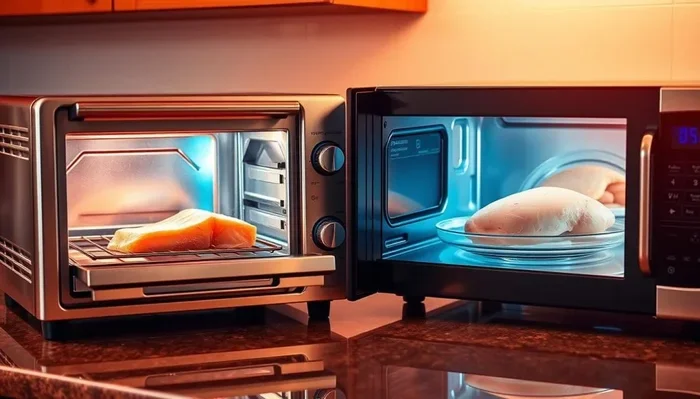
A convection oven has a fan and an exhaust system built into it. The fan blows hot air around the cooking chamber. This moving air surrounds the food on all sides. In a regular oven, the heat comes from static heating elements on the top and bottom. The air does not move much. That creates uneven temperatures inside the oven.
Think of it like this. A regular oven is like a room with a heater on one wall. The side near the heater feels warm. The far side feels cooler. A convection oven is like that same room with a ceiling fan running. The warm air reaches every corner evenly.
The Role of the Fan and Exhaust System
The fan in a convection oven does the heavy lifting. It pushes the heated air across the food and out through an exhaust vent. This constant flow of hot air does three important things:
- Speeds up cooking: Moving heat transfers to food faster than still air.
- Dries the surface: The airflow removes moisture from the outside of food. This helps with browning and crisping.
- Reduces hot spots: The fan evens out temperature differences inside the oven cavity.
Most modern convection ovens also have a third heating element behind the fan. This ensures the air being blown around is already hot. Some models call this a “true convection” or “third-element convection” oven. These are the most effective at cooking evenly and quickly.
So, Does a Convection Oven Cook Faster Than a Regular Oven?
Yes, it does. On average, a convection oven cooks food about 25% faster than a conventional oven. That means a recipe that takes 60 minutes in a regular oven might take only 45 minutes in a convection oven. The difference can be even more noticeable with certain types of food.
The reason comes down to physics. When hot air moves, it transfers heat energy to the surface of the food more efficiently. The moving air also carries heat into the tiny crevices and uneven surfaces of food. In a still-air oven, those areas would heat up much more slowly.
Cooking Time Comparison: Convection vs Regular Oven
Here is a simple comparison to show how much faster a convection oven really is:
| Dish | Regular Oven Time | Convection Oven Time | Time Saved |
|---|---|---|---|
| Whole Chicken (4 lbs) | 1 hour 40 min | 1 hour 15 min | ~25 min |
| Chocolate Chip Cookies | 12-14 min | 9-11 min | ~3 min |
| Roasted Vegetables | 35-40 min | 25-30 min | ~10 min |
| Lasagna | 50-60 min | 35-45 min | ~15 min |
| Pork Tenderloin | 30 min | 22-25 min | ~7 min |
As you can see, the time savings add up. Over a week of cooking, those minutes become hours saved. And because the food cooks more evenly, you also get better results with less effort.
Why Does Convection Cooking Reduce Time?
The science behind convection cooking is straightforward. Heat transfer happens in three ways: conduction, convection, and radiation. In a regular oven, you rely mostly on radiation from the heating elements and some natural convection from rising hot air. A convection oven adds forced convection, which is the most efficient method of heat transfer.
When the fan blows hot air directly onto the surface of your food, the heat penetrates faster. The boundary layer of cool air that normally forms around food gets swept away. This means the food is constantly bathed in hot air. No insulating layer builds up. No cold spots linger.
The Impact of Air Circulation on Cooking Speed
Air circulation is the single biggest factor in why convection ovens cook faster. Here is how it affects different stages of cooking:
- Preheating: Convection ovens preheat faster because the fan helps distribute heat quickly.
- Cooking: The constant airflow delivers heat to the food surface without delay.
- Browning: The moving air removes moisture from the surface faster, which accelerates the Maillard reaction — the chemical process that creates browning and flavor.
- Resting: Because food cooks more evenly, it often needs less resting time after coming out of the oven.
All of these factors combine to make the overall cooking process noticeably quicker. This is especially true for dense foods like roasts, casseroles, and baked goods that need heat to penetrate through thick layers.
How to Adjust Recipes for Convection Cooking
This is where many home cooks get confused. You cannot simply take a recipe written for a regular oven and set it in a convection oven without any changes. The results will likely be overcooked or dried out. Here is what you need to do instead.
Lower the Temperature
The general rule is to reduce the cooking temperature by 25°F when using a convection oven. If a recipe says 375°F, set your convection oven to 350°F. The faster heat transfer means the food reaches the target internal temperature more quickly. Without this adjustment, you risk burning the outside while the inside stays undercooked.
Some experienced cooks reduce by 20°F instead of 25°F. It depends on your specific oven model and how powerful the fan is. Start with 25°F and adjust over time as you learn your oven’s quirks.
Reduce the Cooking Time
In addition to lowering the temperature, you should also reduce the cooking time. A good starting point is to check for doneness about 20-25% earlier than the recipe suggests. Use a meat thermometer for meats, and check baked goods with a toothpick test a few minutes before the expected finish time.
Here is a simple step-by-step approach:
- Lower the temperature by 25°F.
- Set a timer for 20% less than the original recipe time.
- Check for doneness early.
- Adjust the next time based on results.
Use the Right Bakeware
The type of pan you use matters more in a convection oven than in a regular one. Light-colored, thin aluminum pans work best. Dark, heavy pans absorb more heat and can cause over-browning on the bottom. If you only have dark pans, try lowering the temperature an extra 5°F.
Avoid covering the oven rack or blocking the airflow with foil. The fan needs space to move air freely. Also, do not overfill the oven. Leave room between pans so the hot air can circulate around each dish.
What Foods Benefit Most From Convection Cooking?
Not all foods respond the same way to convection cooking. Some foods truly shine in a fan-forced oven. Others do better in a regular oven. Knowing which is which helps you get the best results every time.
Foods That Cook Better in a Convection Oven
Certain foods really take advantage of the circulating hot air. These include:
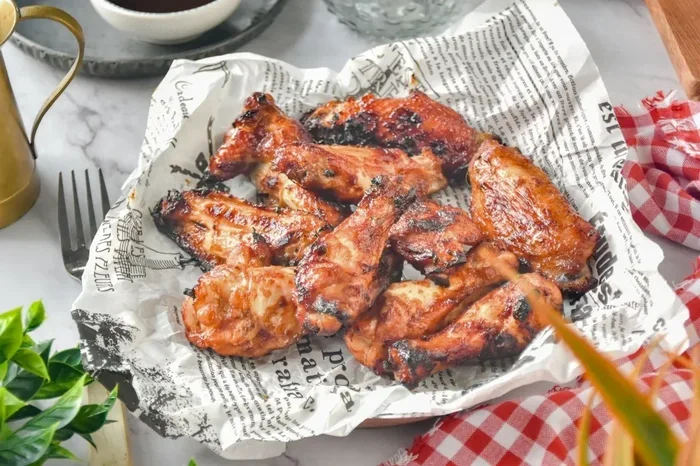
- Roasted meats: Chicken, turkey, pork loin, and beef roasts all benefit from even heat and faster cooking. The surface browns beautifully while the inside stays juicy.
- Root vegetables: Potatoes, carrots, and parsnips roast faster and develop a crispy exterior.
- Baked goods: Cookies, pastries, and scones bake more evenly. The even heat prevents the dreaded hot-spot burning.
- Casseroles and baked pasta: These dishes heat through more quickly and evenly.
- Toasted nuts and seeds: They toast more uniformly without needing constant stirring.
Foods That Do Better in a Regular Oven
Some foods do not play well with the fan. Avoid convection mode for these items:
- Soufflés and meringues: The moving air can cause them to collapse or develop uneven textures.
- Custards and flans: The gentle, even heat of a regular oven sets these proteins more smoothly.
- Delicate cakes: Some sponge cakes and angel food cakes can dry out or develop a crust too quickly in convection mode.
- Bread dough proofing: The fan can dry out the surface of rising dough.
Many ovens now offer a “convection bake” and “convection roast” setting. Convection roast typically uses the fan plus a heating element at the bottom. This is great for meats. Convection bake uses the fan with a more even heat distribution. It works well for most baked goods.
Energy Efficiency and Cost Savings
One benefit that often gets overlooked is how much energy a convection oven saves. Because food cooks faster, the oven uses less electricity or gas overall. Over time, this adds up to real savings on your utility bills.
Let us look at a quick comparison:
- Regular oven: A 60-minute roast uses more energy because the heating elements stay on longer.
- Convection oven: The same roast finishes in 45 minutes. The elements run for a shorter period.
The difference might seem small for one meal. But if you cook dinner at home most nights, those savings become meaningful. Plus, shorter cooking times mean less heat buildup in your kitchen during the summer months. Your air conditioner does not have to work as hard either.
Tips for Maximizing Energy Efficiency
Here are some quick ways to get the most out of your convection oven while keeping energy costs low:
- Always preheat, but only for 5-8 minutes. Convection ovens preheat faster than regular ovens.
- Avoid opening the oven door frequently. Each time you open it, heat escapes and the fan works harder to recover.
- Cook multiple dishes at once when possible. The airflow can handle multiple racks if you leave enough space.
- Use the convection setting for roasting and baking, but switch to regular mode for delicate items.
- Keep the oven clean. Grease and food residue on the walls can absorb heat and reduce efficiency.
Common Mistakes People Make With Convection Ovens
Even experienced cooks make mistakes when switching to a convection oven. Being aware of these pitfalls helps you avoid them and get consistent results.
Mistake 1: Not Adjusting Temperature or Time
The most common error is treating a convection oven exactly like a regular oven. You set the same temperature and same time, and then wonder why the food is overcooked. Remember: lower the temperature by 25°F and check for doneness earlier.
Mistake 2: Overcrowding the Oven
The fan needs airflow to work properly. If you pack the oven full of pans, the air cannot circulate. This defeats the purpose of convection cooking. Leave at least 2 inches of space between pans and between pans and the oven walls.
Mistake 3: Using the Wrong Pan
Dark, nonstick pans absorb more heat and can cause the bottom of your food to burn in a convection oven. Stick with light-colored, aluminum pans for the best results. If you must use dark pans, reduce the temperature by an extra 5°F.
Mistake 4: Ignoring the Fan
Some convection ovens let you turn the fan on or off. If you are cooking something delicate, you can turn the fan off and use the oven in regular mode. Do not assume the convection setting is always the right choice.
Expert Tips for Getting the Best Results
Professional chefs and experienced home cooks share a few tips that make a big difference when using a convection oven:
- Invest in an oven thermometer: Even the best convection ovens can have temperature variations. An oven thermometer helps you verify that the dial matches the actual temperature inside.
- Use low-sided baking sheets: High-sided pans block the airflow and prevent even cooking. Choose flat, rimless baking sheets for cookies and roasted vegetables.
- Rotate pans halfway through: Even with a fan, the back of the oven may run slightly hotter. Rotating pans ensures uniform browning.
- Let food rest before serving: Convection-cooked food can be hotter on the outside. A short rest allows the heat to distribute evenly through the item.
- Read your oven manual: Different brands and models have different convection settings. Understanding your specific oven helps you use it to its full potential.
Frequently Asked Questions
Can I use regular aluminum foil in a convection oven?
Yes, you can use aluminum foil in a convection oven. However, avoid covering the back wall or blocking the fan area. Foil can reflect heat and disrupt the airflow pattern, leading to uneven cooking. Use it sparingly to cover food that might over-brown on top.
Is convection better for baking cookies?
Yes, convection ovens are excellent for baking cookies. The circulating air helps cookies bake evenly on all sides. You will notice more uniform color and texture across the entire batch. Just remember to reduce the temperature by 25°F and check a minute or two earlier than the recipe suggests.
Do I need special cookware for a convection oven?
No special cookware is required. You can use the same pans and dishes you use in a regular oven. However, light-colored, thin aluminum pans work best because they do not absorb too much heat. Avoid very deep or tall pans that might block the airflow from the fan.
How much faster does a convection oven cook compared to a regular oven?
A convection oven typically cooks food 20-25% faster than a regular oven. This means a dish that takes 60 minutes in a conventional oven will be done in about 45-48 minutes in a convection oven. The exact time difference depends on the type of food, the oven model, and how full the oven is.
Should I use convection for roasting a turkey?
Yes, convection is ideal for roasting a turkey. The fan circulates hot air around the bird, cooking it more evenly and helping the skin get crispy and golden. Use a convection roast setting if your oven has one, and reduce the temperature by 25°F. The turkey will also cook faster, saving you significant time on Thanksgiving or holiday meals.
Can a convection oven be used for dehydrating food?
Yes, a convection oven works well for dehydrating fruits, vegetables, and jerky. The constant airflow removes moisture from the food surface, which is exactly what dehydration requires. Set the temperature low (around 130-170°F) and leave the oven door slightly ajar if your model does not have a built-in moisture vent.
Final Thoughts
The answer to the question “does a convection oven cook faster” is a clear and definitive yes. A convection oven cooks food faster, more evenly, and with better browning than a regular oven. The fan-forced air circulation is the key to all these benefits.
But speed is only part of the story. A convection oven also gives you better results. Your roasts come out juicier. Your baked goods rise more evenly. Your vegetables get perfectly crispy without burning. Once you learn how to adjust your recipes and cooking habits, you will wonder how you ever cooked without one.
Start by making simple changes. Lower your temperature by 25°F. Check your food a few minutes early. Use light-colored pans. These small adjustments make a huge difference. In time, using a convection oven will feel completely natural. You will wonder why you ever settled for uneven, slower cooking in a regular oven.
So go ahead and embrace the power of your convection oven. Experiment with new recipes. Try roasting things you never thought to roast. Enjoy the faster cook times and the energy savings. Once you experience the difference, you will never look back.